Do Fireplace TV Stands Get Hot How Safe Are They Really
Affiliate links — we may earn a commission
I plugged in my electric fireplace TV stand on a cold January evening. The flames danced behind the glass, and my living room glowed warm. But then, my Samsung TV was right on top of it. I worried if it would get hot enough to damage my TV.
This worry led me to research and test these units. They use LED technology for flame effects, unlike traditional fireplaces. Some models just show visuals, while others actually heat up. The heat output varies by model.
I love how these units combine an entertainment center with a cozy fireplace. They don’t need a chimney or venting. Brands like Ameriwood Home, Walker Edison, and ClassicFlame make them perfect for small spaces.
They have built-in storage for your PlayStation, Roku, or soundbar. Cable management keeps things tidy. Designs range from sleek modern to warm rustic farmhouse. They cost more than a regular TV console, but you get two pieces in one.
The big question is about temperature safety. I spent weeks researching this so you don’t have to. What I found might surprise you.
Key Takeaways
- Electric fireplace TV stands use LED technology for flame effects and don’t produce real fire.
- Not all models generate heat — some offer flame visuals only, making them cool to the touch.
- The electric fireplace tv stand heat output typically ranges from 4,000 to 5,000 BTUs for heated models.
- Heat vents direct warm air forward or downward, away from the TV sitting on top.
- Fireplace tv console temperature safety depends on proper ventilation and following manufacturer guidelines.
- These units don’t require chimneys, gas lines, or special installation — just a standard wall outlet.
- Trusted brands carry UL or ETL safety certifications to meet strict electrical standards.
Understanding How Electric Fireplace TV Stands Work
I was surprised when I first saw an electric fireplace TV stand. I thought it had actual fire behind the glass. But it doesn’t. These units use light, mirrors, and smart tech to mimic a cozy fire without danger.
Before you worry about overheating, let’s explore what’s inside these units.
Visual Flame Effects vs Heating Elements
Electric fireplace TV stands come in two types. Some just show visual flames for ambiance without heat. Others have infrared or fan-forced heating to warm your space. The best part? Most heated models let you run the flames and heater separately.
This means you can enjoy a fire effect in any season without overheating your room.
LED Technology and Energy Consumption
Today’s units use LED lights for fire effects. This is clean, efficient, and doesn’t use much power. Here’s a look at how much it costs:
| Mode | Wattage | Estimated Cost Per Hour |
|---|---|---|
| Flame-Only (LED) | 10–20 watts | $0.01–$0.02 |
| Low Heat + Flames | 750 watts | $0.10–$0.12 |
| High Heat + Flames | 1,500 watts | $0.20–$0.25 |
Difference Between Flame-Only and Heating Models
If you live in a warm place or a small space, choose a flame-only model. It’s safe for your electronics because it doesn’t produce heat. For cooler areas, heated models offer real warmth. Just make sure to check the safe temperature for your TV before mounting it.
Do Fireplace TV Stands Get Hot During Operation
Many people wonder: will my fireplace TV stand turn into a mini furnace? The answer varies by model. Some stay cool, while others warm up a bit. But even the warm ones are designed to be safe.
Let’s look at what happens with heat from electric fireplace tv stand units. This way, you can relax and enjoy your setup.
Temperature Ranges of Different Models
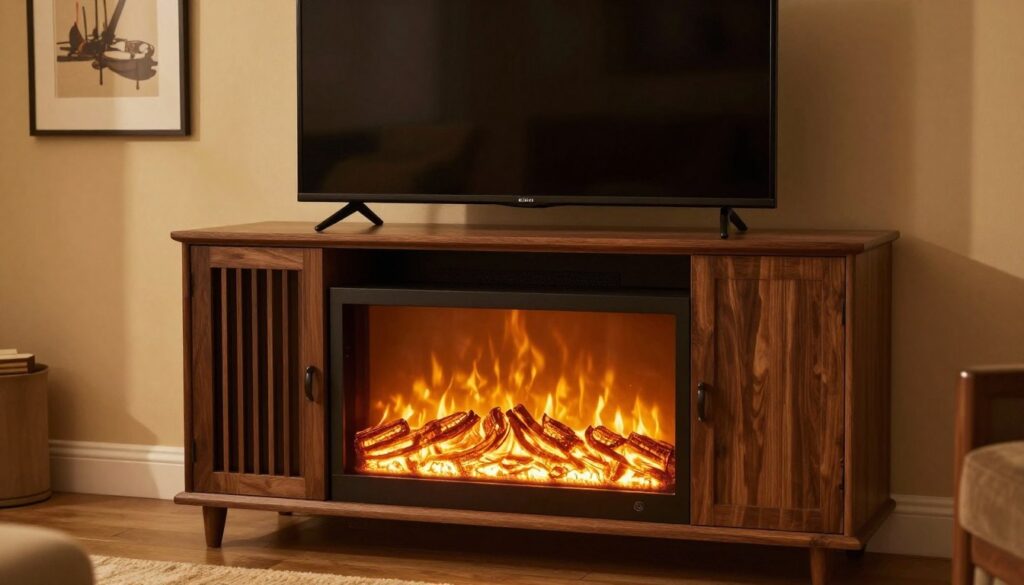
Flame-only models don’t produce heat. They use LED lights to mimic flames, so they stay cool. But heating models are different.
Standard fan-forced units warm up to 400 square feet. Infrared models, like those from Duraflame and ClassicFlame, can heat up to 1,000 square feet. They do this without drying out the air.
| Model Type | Heat Output (BTU) | Room Coverage | Surface Temperature |
|---|---|---|---|
| Flame-Only LED | 0 | N/A | Cool to touch |
| Standard Fan-Forced | 4,600–5,100 | Up to 400 sq ft | Warm (not hot) |
| Infrared Quartz | 5,200–5,800 | Up to 1,000 sq ft | Warm (not hot) |
Cool-to-Touch Surfaces and Safety Glass
Is an electric fireplace media console hot to touch? Good news: most modern units have tempered safety glass and insulated casings. Even at full blast, the outside stays safe for kids and pets.
No real flames means no combustion risk. It’s a big plus.
Heat Distribution Patterns
Here’s the clever part. Most heating units vent warmth downward or forward, not upward toward your TV. This design choice is tied directly to fireplace tv stand ventilation requirements that manufacturers build into every unit.
Your electronics sit above a warm — not scorching — surface. This keeps them well within safe operating temperatures.
“The biggest misconception is that electric fireplace stands radiate heat like a wood-burning fireplace. They don’t — they’re closer to a space heater with a gorgeous light show.” — National Fire Protection Association guidelines on electric heating appliances
Safety Features Built Into Modern Fireplace TV Stands
When I first wondered if fireplace TV stands get hot, I was worried. I thought my living room might become a disaster movie scene. But, modern units have amazing safety tech that makes most concerns disappear. Let’s look at the features that keep things cool.
Automatic Overheat Protection Systems
Every good electric fireplace has a thermostat that watches the temperature. If it gets too hot, the unit turns off by itself. This is key for keeping the electric fireplace tv stand safe over time.
UL and ETL Certification Standards
Before I buy, I check for UL or ETL certification. These labels show a lab tested the product for safety and meets North American standards. Without it, I don’t buy.
Anti-Tip Hardware and Stability Features
Tipping is a big risk, with kids or pets around. Most quality units come with wall-anchoring hardware. I always use it, even if the stand seems stable. Important stability features include:
- Wall-mount anchor straps or brackets
- Wide, low-profile base designs
- High-density MDF construction that resists warping
- Cool-touch tempered safety glass panels
Proper Ventilation Design
Good airflow stops components from overheating and makes your unit last longer. Manufacturers need 2–4 inches of space around vents. Blocking these can quickly cause problems — a topic I explore more in the next section on protecting electronics from heat.
A safety feature only works if you actually use it. Read your manual, anchor your stand, and respect those clearance guidelines.
Heat Output and Room Coverage Capabilities
Electric fireplace TV stands are supplemental heaters, not furnace replacements. I learned this the hard way during a cold January in my apartment. Knowing what these units can and can’t do is key to fireplace tv console temperature safety.
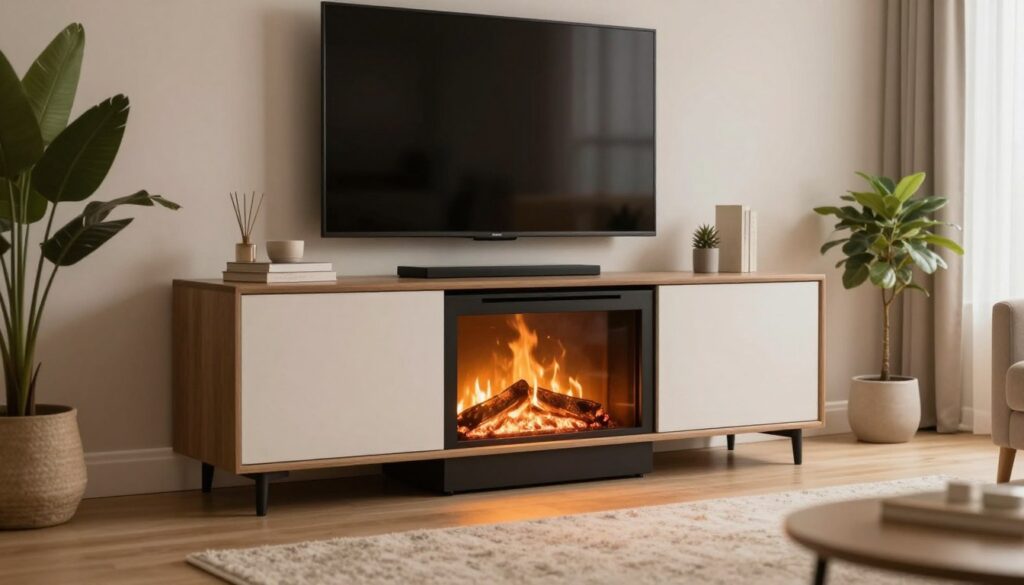
Most fan-forced models produce 4,600 to 5,100 BTUs. This is enough to warm a cozy 400-square-foot room. Infrared models from brands like Duraflame and ClassicFlame are even stronger, covering up to 1,000 square feet without drying out the air. That’s pretty impressive for a piece of furniture, right?
| Heating Type | BTU Range | Room Coverage | Humidity Impact |
|---|---|---|---|
| Fan-Forced | 4,600–5,100 BTU | Up to 400 sq ft | Slight reduction |
| Infrared | 5,000–5,200 BTU | Up to 1,000 sq ft | No reduction |
| Flame-Only (No Heat) | 0 BTU | N/A | None |
Do electric fireplace stands overheat when running at full capacity? With built-in thermostats and adjustable settings, the answer is rarely. Most units cycle on and off to keep your chosen temperature. I keep mine on the medium setting, and my living room stays perfectly toasty.
My favorite feature is separate flame and heat controls. I run the flames year-round for ambiance but only kick on the heater during colder months. This way, I avoid any fireplace tv stand heat damage to nearby electronics during summer.
- Open floor plans and rooms over 1,000 sq ft need central heating as a primary source
- Infrared models feel warmer at lower energy costs
- Adjustable thermostats prevent energy waste and excessive heat buildup
Bottom line: treat your electric fireplace stand as a helpful sidekick to your main HVAC system, not the hero of winter.
Protecting Your Electronics From Heat Damage
Your flat-screen TV isn’t cheap. Neither is your PlayStation 5 or that soundbar you spent weeks researching. So I want to make sure you understand how to keep your gear safe when it sits on or above a unit that generates warmth.
Safe Temperature Zones for TVs and Devices
The safe temperature for tv above fireplace stand placement is typically below 100°F. Most major TV brands like Samsung and LG rate their sets for operating temperatures up to 104°F. Exceeding that range can warp internal components, dim the display, or shorten the TV’s lifespan. Flame-only models produce zero heat, which makes them the safest option for your electronics.
Proper Ventilation and Cable Management
Meeting fireplace tv stand ventilation requirements is non-negotiable if you’re running a heating model. I recommend keeping these tips in mind:
- Use open shelves for cable boxes, streaming devices, and gaming consoles that need airflow.
- Reserve closed cabinets for items that don’t generate heat — movies, controllers, remotes.
- Route cords through rear cable cutouts and wire channels to prevent blocked vents.
When an electric fireplace media console hot to touch concern arises, it’s usually because airflow around the heater outlet got restricted. Keep at least two inches of clearance behind and around the unit.
Manufacturer Weight and Size Limits
Every stand has a weight rating. Your combined load — TV, soundbar, consoles, décor — must stay well under that number. Overloading causes shelves to sag and risks the entire unit tipping forward.
| Guideline | Recommended Specification |
|---|---|
| TV Width vs. Stand Width | Stand should extend 2–4 inches beyond TV on each side |
| Screen Center Height | At or below eye level when seated (about 42 inches from floor) |
| Max Operating Temp Near TV | Below 100°F |
“The number one rule with entertainment furniture is never assume — always check the spec sheet.” — Consumer Reports
Getting these details right now saves you from a costly replacement later. Up next, I’ll walk you through the most common safety mistakes people make — and how to dodge every single one.
Common Safety Mistakes to Avoid
Many people wonder if fireplace TV stands get hot. But, they rarely ask what they might be doing wrong. Most safety issues come from user mistakes, not the product itself. Let’s look at the biggest mistakes and how to avoid them.
Overloading Weight Capacity
Every stand has a weight limit. Ignore it, and shelves sag, joints crack, and your expensive TV hits the floor. Always check the manufacturer’s specs before loading up a unit. Stacking heavy items above the flame display can block light diffusion and stress the frame at the same time.
Blocking Ventilation Areas
Heat from electric fireplace tv stand units needs somewhere to go. Shoving the unit flush against a wall or cramming books around the vents traps warmth inside. This raises internal temperatures and creates a genuine fire risk. Follow the clearance guidelines printed in your manual. They exist for a reason.
Using Extension Cords With High-Wattage Units
A 1,500-watt heater on a thin extension cord is a recipe for melted wiring. The National Fire Protection Association warns against this practice every year. Plug your unit directly into a wall outlet — no power strips, no daisy chains.
Placing Units in Humid Environments
Basements and bathrooms seem cozy, but moisture warps wood finishes and corrodes electrical components fast. Keep your stand in a dry, climate-controlled room.
“The majority of home heating fires result from misuse, not equipment failure.” — U.S. Consumer Product Safety Commission
| Mistake | Risk Level | Quick Fix |
|---|---|---|
| Exceeding weight capacity | High | Check specs before mounting TV |
| Blocked vents | High | Maintain 3-inch clearance on all sides |
| Extension cord use | High | Plug directly into wall outlet |
| Humid placement | Medium | Use in dry, ventilated rooms only |
| Flammable items near unit | High | Keep curtains and paper 3+ feet away |
Choosing Between Flame-Only and Heated Models
I’ll be honest — this decision kept me up at night when I was shopping for my own unit. The choice between flame-only and heated models comes down to one big question: do you actually need warmth, or just the vibe?
Flame-only models use LED technology to create a cozy glow without producing any warmth. They’re perfect for apartments, bedrooms, or anyone living in Texas who wants ambiance in July. You never have to worry about them overheating because there’s nothing to overheat. No filters to clean. No vents to unclog. Just plug it in and enjoy.
Heated models bring real supplemental warmth to the party. Most offer adjustable thermostats, multiple heat settings, and separate flame/heat controls. This last feature is a game-changer — run the flames year-round and kick on the heater only when it’s cold. When evaluating electric fireplace tv stand heat output, most heated units push between 4,000 and 5,000 BTUs, warming rooms up to 400 square feet.
| Feature | Flame-Only Models | Heated Models |
|---|---|---|
| Annual Energy Cost | $5–$15 | $50–$100 |
| Year-Round Use | Yes | Yes (with separate controls) |
| Supplemental Warmth | None | Up to 400 sq ft |
| Maintenance Required | Minimal | Filter cleaning needed |
| Overheat Protection | Not applicable | Built-in sensors |
Fireplace tv console temperature safety matters most with heated models. Look for units with auto-shutoff sensors and cool-to-touch glass. These features protect your electronics — a concern I’ll dig into more in the installation section ahead.
I always tell friends: buy the heated model if you live somewhere with real winters. Buy flame-only if you just want your living room to feel like a mountain lodge without the electric bill to match.
Installation and Placement Best Practices
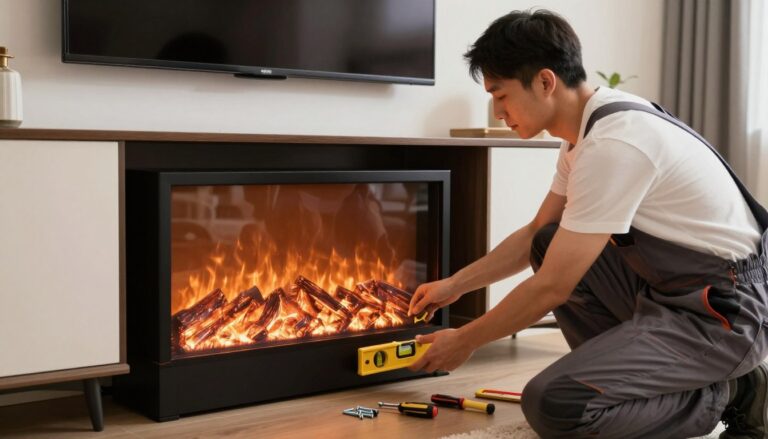
Setting up your fireplace TV stand correctly is key. I’ve seen many rush the installation, leading to heat damage or a wobbly stand. Here’s how to do it right.
Measuring Your Space Correctly
Start by measuring your space. Measure the TV width, the stand’s depth, and the wall space. Your TV should fit perfectly on the stand. Check the packaging for exact dimensions from brands like Ameriwood and Walker Edison.
Match your room’s size to the stand’s heating power. Most 1,500-watt models heat up to 400 square feet.
Maintaining Proper Clearances
Every stand has minimum clearance rules. Ignoring these can make the stand too hot. Keep at least 3 feet clear in front of the heater vent.
Also, leave a few inches between the unit and the wall. This ensures your TV stays cool.
Electrical Requirements and Outlet Placement
Always plug the stand directly into a wall outlet. Using extension cords or power strips is dangerous. Place the stand near a dedicated 120-volt, 15-amp outlet. If needed, get a licensed electrician to install one.
Room Layout Considerations
Think about your daily routine when choosing a spot. Keep these tips in mind:
- Center the TV screen at seated eye level to avoid neck strain
- Avoid blocking walkways or doorways with heat output
- Position seating 6–8 feet from the screen for optimal viewing
- Keep the unit away from high-humidity areas like bathrooms
Planning ahead can prevent common safety mistakes.
Conclusion
So, do fireplace TV stands get hot? The short answer is: not enough to lose sleep over. Modern electric fireplace TV stands are designed with your safety in mind. Flame-only models produce zero heat, making them perfect for year-round use.
Heated models stay surprisingly cool on the outside, thanks to cool-touch surfaces and built-in overheat protection. I’d say that’s a pretty solid deal for something that looks this good in your living room.
Most fireplace entertainment center safety concerns come down to user error, not product design. Blocking vents, using flimsy extension cords, and ignoring weight limits are the real culprits behind problems. Stick to the manufacturer’s guidelines, keep up with basic maintenance like dusting and glass cleaning, and your unit will reward you with years of reliable performance.
It’s not rocket science — just common sense with a cozy glow.
Picking between a heated and flame-only model really depends on your climate, room size, and whether you actually need supplemental warmth. Either way, meeting fireplace tv stand ventilation requirements keeps your electronics safe and your unit running smoothly. I recommend measuring your space, checking your outlet setup, and reading the fine print before buying.
A little prep work upfront saves a lot of headaches down the road.
At the end of the day, electric fireplace TV stands are one of the safest ways to bring that crackling-fire vibe into your home. UL and ETL certifications, smart safety features, and thoughtful design make these units a reliable choice for families across the United States. Do your homework, install it right, and enjoy the ambiance — guilt-free and worry-free.
Do fireplace TV stands get hot enough to damage my television?
Is an electric fireplace media console hot to touch during use?
Do electric fireplace stands overheat if left running for extended periods?
What is the electric fireplace TV stand heat output, and can it warm my entire room?
What is the safe temperature for a TV above a fireplace stand?
Are there specific fireplace entertainment center safety concerns I should know about?
How much heat from an electric fireplace TV stand reaches surrounding furniture?
How do I choose between a flame-only and a heated electric fireplace TV stand?
What does fireplace TV console temperature safety look like on a daily basis?
Can I use an electric fireplace TV stand year-round without worrying about heat damage?

giveitlegs@live.com
Contributing writer covering Honest reviews & buying help for fireplace TV stands and electric media consoles..