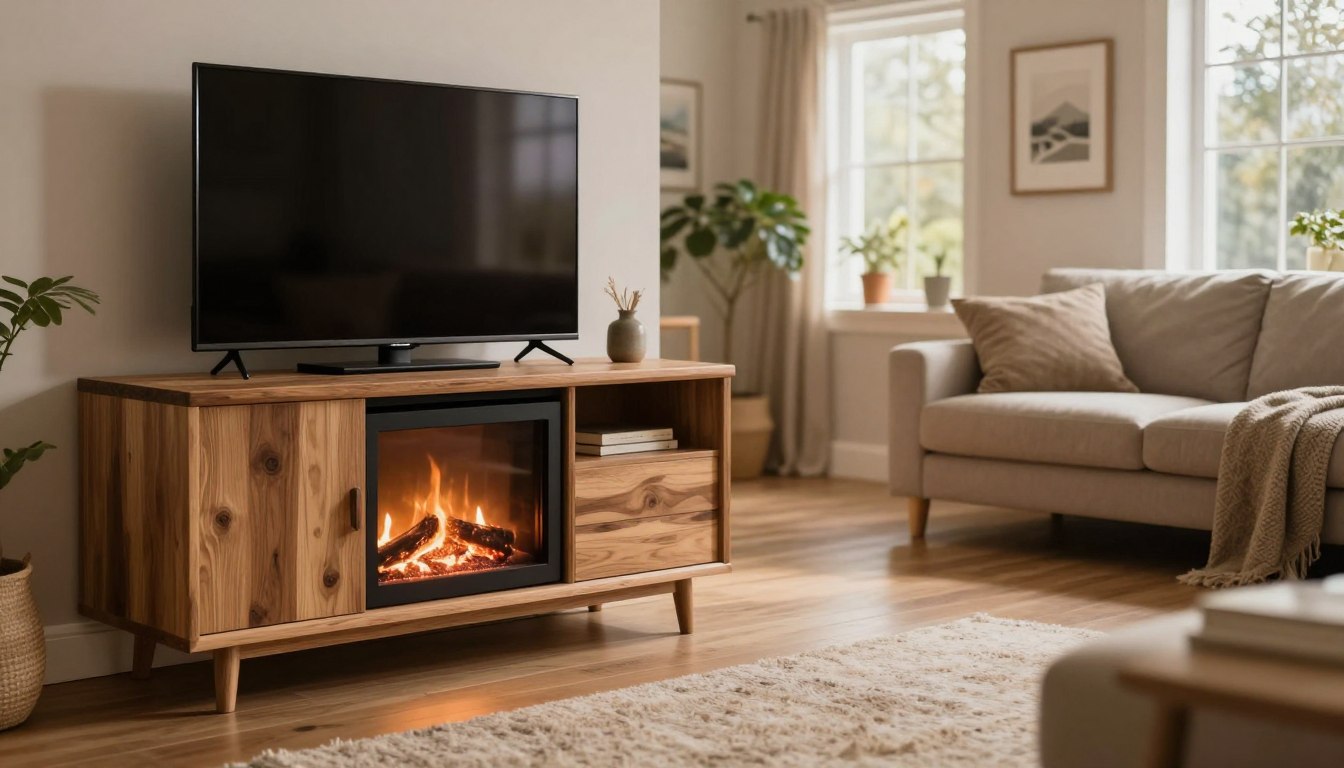
Can Fireplace TV Stand Save on Furnace Bills?
Affiliate links — we may earn a commission
I remember the winter of 2022 like it was yesterday. My furnace bill hit $387 in January, and I nearly choked on my coffee. That number stared back at me from the screen, cold and unforgiving — much like the weather outside. Something had to change, and fast.
That’s when I stumbled across an idea that sounded almost too good. Can a fireplace TV stand save on furnace costs while keeping my living room cozy? I was skeptical. A piece of furniture that heats a room? It felt like buying a Swiss Army knife and expecting it to perform surgery.
But here’s what caught my attention. These units pull between 750 and 1,500 watts per hour for heating. That’s roughly $15 to $25 a month if you run one about four hours daily at typical U.S. electricity rates. The LED flame effects? They sip a tiny 2 to 10 watts — pure ambiance with almost no energy cost.
The real magic lies in something called zone heating. Instead of blasting your entire home with expensive furnace heat, you warm only the room you’re actually sitting in. It’s the kind of logic that make you wonder why we didn’t all think of it sooner. Electric fireplace energy efficiency isn’t about replacing your HVAC — it’s about being smarter with when and where you use it.
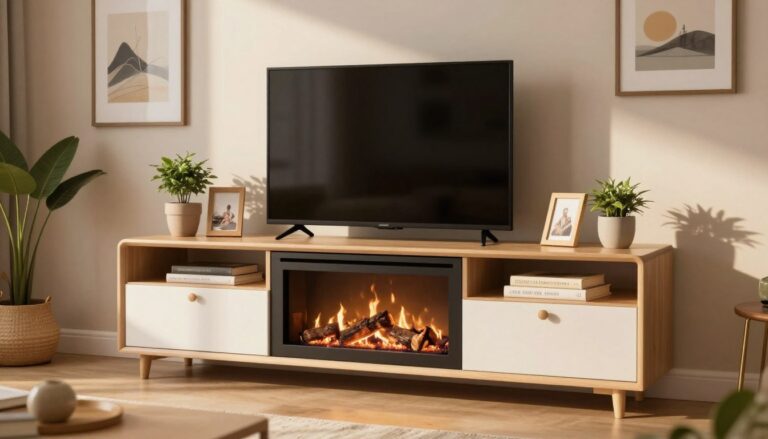
Brands like Duraflame, Twin Star, and Walker Edison have turned these units into genuine dual-purpose furniture. They hold your Samsung or LG TV on top while pushing warm air into your space from below. You get entertainment and heat from one spot in the room.
I spent months testing whether you can lower furnace usage with fireplace stand setups in a real home — not a lab. The results surprised me, and some of them might surprise you too.
Key Takeaways
- Electric fireplace TV stands consume 750–1,500 watts for heating, costing about $15–$25 per month at average U.S. electricity rates.
- Zone heating lets you warm only the room you occupy, cutting reliance on whole-home furnace systems.
- LED flame effects use just 2–10 watts, providing cozy ambiance at nearly zero energy cost.
- Electric fireplace energy efficiency works best as a supplement to central heating — not a full replacement.
- You can lower furnace usage with fireplace stand strategies by dropping your central thermostat a few degrees.
- Real savings depend on your local electricity rates, home insulation, and how many hours you run the unit daily.
Understanding How Electric Fireplace TV Stands Work as Supplemental Heating
At first, I thought electric fireplace TV stands were just a trick. A piece of furniture that heats your room? It sounded too good to be true. But, the science behind them is real, and I’m now a fan.
The Mechanics Behind Electric Fireplace Heat Output
Electric fireplace TV stands use a ceramic or coil heating element and a fan. This combo pushes warm air into your room. The best part? Almost all the electricity turns into heat. There’s no chimney or vent, so no energy goes to waste.
LED lights create the flames, using just 40–100 watts per hour. That’s like a standard lamp. These units turn on instantly, with no warm-up time. They’re also safe, with ETL or CSA certifications.
Zone Heating vs. Central Heating Systems
Electric fireplaces heat just one room, not your whole house. This saves energy and money. Zone heating means you only warm the space you’re using, not the whole house.
BTU Output and Room Coverage Capabilities
Standard electric fireplaces produce 750 to 1,500 watts, or up to 5,100 BTUs. This is enough to warm 400–600 square feet. Here’s a quick look at how much they cost and how well they work:
| Wattage Setting | BTU Output | Room Coverage | Estimated Hourly Cost |
|---|---|---|---|
| 750 watts (low) | 2,550 BTUs | Up to 300 sq ft | $0.10 |
| 1,000 watts (medium) | 3,400 BTUs | Up to 400 sq ft | $0.13 |
| 1,500 watts (high) | 5,100 BTUs | Up to 600 sq ft | $0.20 |
Costs based on the U.S. average electricity rate of $0.13 per kWh (EIA, 2024).
Now, the big question is: can these units really cut your furnace bills? That’s what I’ll explore next.
Can Fireplace TV Stand Save on Furnace Usage During Winter Months?
I love finding ways to save money and stay warm. So, does a fireplace TV stand help cut down on furnace use when it’s cold? Yes, but you need to use it wisely. The key is to lower your central thermostat by 3–5 degrees and heat only the room you’re in.
Real-World Heating Scenarios and Cost Comparisons
Let’s look at some real numbers. Using an electric fireplace TV stand for three hours a day costs about $0.54. That’s a small price compared to other heating options.
| Heating Source | Estimated Monthly Cost | Maintenance Needed |
|---|---|---|
| Electric Fireplace TV Stand | $15–$25 | Minimal |
| Gas Fireplace | $40–$60 | Annual inspection |
| Wood-Burning Fireplace | $50+ | Chimney cleaning, wood supply |
When people ask if electric fireplaces lower heating bills, I show them these numbers. The savings are clear.
When Zone Heating Makes Financial Sense
Zone heating works well for rooms up to 400 square feet. My living room fits perfectly in that range. I heat just that area while keeping the rest of the house cooler.
For medium rooms (400–600 sq ft), energy use is similar to zoned central heating.
Impact on Central Thermostat Settings
Being disciplined is key in the electric fireplace vs central heating debate. Lowering my thermostat from 72°F to 68°F while using my fireplace console significantly cuts furnace cycles. Running both systems full blast is a waste and increases costs.
I keep my furnace low and let the TV stand warm the room I’m in. That’s the smart way to do it.
Breaking Down the Energy Consumption: Electric Fireplace vs. Central Heating
I love comparing numbers. When it comes to heating costs, electric fireplaces and central heating systems have different stories. Let’s dive into the details.

Electric fireplace TV stands use 750 to 1,500 watts. This is similar to a standard space heater. At 1,500W for 3 hours a day, the cost is about $16 per month. On the other hand, my furnace can cost over $100 monthly in winter.
Electric fireplaces are very efficient. They turn nearly 100% of electricity into heat. This is more efficient than other heating options.
| Heating Source | Efficiency Rate | Emissions | Avg. Monthly Cost (3 hrs/day) |
|---|---|---|---|
| Electric Fireplace TV Stand | 99–100% | None | $16 |
| Gas Fireplace | 70–90% | CO, NOx | $20–$35 |
| Wood-Burning Fireplace | 50–80% | Particulates, CO | $30–$50+ |
| Central Gas Furnace | 80–95% | CO₂, NOx | $80–$150 |
Built-in thermostats control the heater. They turn it on and off as needed. This saves electricity. Timers also turn off the heater automatically, so I don’t heat empty rooms.
Want the fireplace’s glow without heat? Flame-only mode uses just 2 to 10 watts. That’s less than a nightlight. Heating only the room I’m in saves a lot of money.
- Best for: small to medium rooms (up to 400 sq. ft.)
- Worst for: heating an entire home as a primary source
- Sweet spot: supplementing central heat and lowering the thermostat a few degrees
Now, let’s think about whether zone heating is a good choice for your home and energy prices.
The Economics of Zone Heating with a Fireplace TV Stand
I love looking at numbers, and when they show savings, it’s even better. So, can a fireplace TV stand really help cut down on furnace costs? The answer is yes, and the numbers are quite compelling.
Calculating Monthly Savings on Heating Bills
Using an electric fireplace TV stand for 4 hours a day costs about $15–$25 a month. This might seem like extra money. But, lowering your central thermostat by 3–5 degrees can save a lot. I’ve seen homes save 30–50% on heating bills by using electric fireplaces wisely.
Initial Investment vs. Long-term Savings
Brands like Povison and RealCozy cost between $300–$800. That’s a big upfront cost. But, compare that to other heating options:
| Heating Method | Monthly Operating Cost | Maintenance Needed |
|---|---|---|
| Electric Fireplace TV Stand | $15–$25 | Minimal |
| Gas Fireplace | $40–$60 | Annual inspection required |
| Wood-Burning Fireplace | $50+ | Chimney cleaning, wood storage |
The electric option can pay for itself in just one heating season. Using a fireplace stand can make it even quicker to see savings.
Regional Cost Variations Based on Energy Prices
Where you live affects the cost. Electricity rates vary from $0.12/kWh in Idaho to $0.15/kWh or more in California. Always check your local rates before calculating savings. Even at higher rates, zone heating with a fireplace console is more cost-effective than running a central furnace all night.
- Use low heat settings when mild warmth is enough
- Set built-in timers to avoid heating empty rooms
- Pair with a programmable thermostat for maximum impact
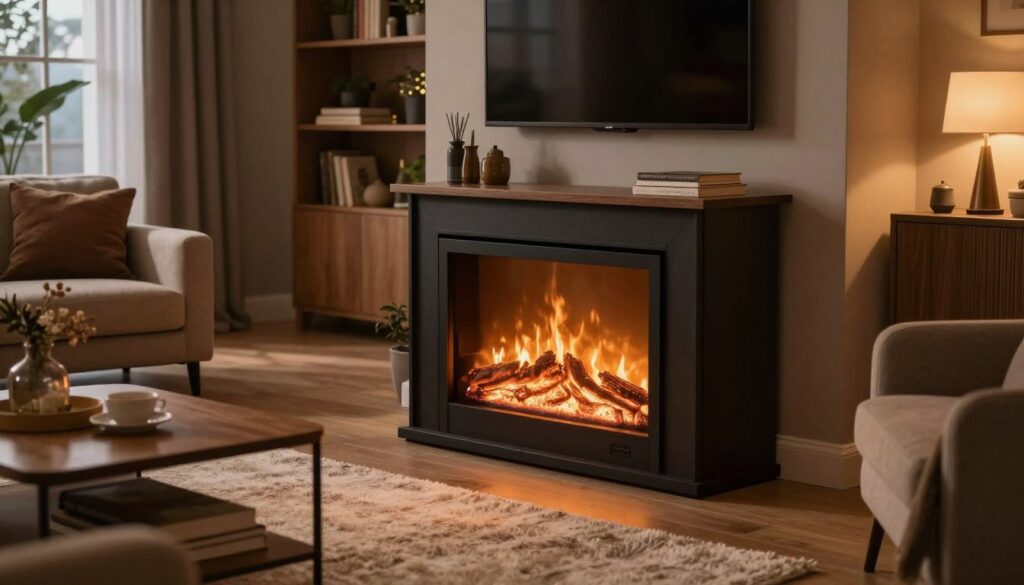
Maximizing Heat Efficiency with Your Electric Fireplace Console
Getting the most from your electric fireplace console is simple but strategic. It’s about where you place it, how you use its features, and the room’s layout. These factors all help cut costs.
Strategic Room Selection for Zone Heating
Zone heating works best in rooms where you spend most of your time. My living room and home office are perfect. The key is to keep doors closed.
This keeps warmth in one area, saving energy. I avoid heating rooms I don’t use often.
Thermostat and Timer Features That Cut Costs
Modern consoles, like those from Duraflame and Twin Star, have adjustable thermostats. They turn on and off to keep a set temperature. No need to watch it.
I set the timer to turn off at night. Using the 750W setting when the room is warm also saves energy.
Insulation and Room Size Considerations
Room size and insulation are key. Here’s what I’ve learned:
| Room Size | Insulation Quality | Heating Effectiveness | Recommended Wattage |
|---|---|---|---|
| Under 400 sq ft | Good | Excellent | 750W–1500W |
| 400–600 sq ft | Good | Good | 1500W |
| 400–600 sq ft | Poor | Fair | 1500W + supplemental |
| Over 600 sq ft | Any | Limited | Requires additional heating |
Drafty windows and thin walls make the unit work harder. Sealing gaps with weatherstripping helps a lot.
Comparing Electric Fireplace TV Stands to Other Supplemental Heating Options
I’ve spent way too many hours comparing every supplemental heating option on the market. Let me save you the trouble. When you weigh electric fireplace vs central heating costs alongside other alternatives, the fireplace TV stand holds its own — and looks way better doing it.
Standard space heaters pull the same 750–1,500 watts as a fireplace TV stand. They run about $12–$25 per month. But here’s the thing: a space heater sits on your floor like a sad little box. Fireplace TV stands give you ambient flame effects, media storage, and a place for your 65-inch screen. That’s a triple threat.
Gas fireplaces? Beautiful, sure. But professional installation, venting requirements, and $40–$60 monthly operating costs make my wallet wince. Wood-burning fireplaces cost $50 or more each month when you factor in chimney maintenance, ash cleanup, and firewood storage. I don’t need a lumberjack side hustle just to stay warm.
Fireplace tv stand heating costs stay predictable because electric units need zero installation, no venting, and no fuel storage. Models like the Povison 78.74″ Modern Fireplace TV Stand deliver the same 1,500W heat output whether you pick a 55-inch or 75-inch cabinet size.
| Heating Option | Monthly Cost | Installation Needed | Venting Required | Aesthetic Value |
|---|---|---|---|---|
| Electric Fireplace TV Stand | $12–$25 | No | No | High |
| Portable Space Heater | $12–$25 | No | No | Low |
| Gas Fireplace | $40–$60 | Yes (Professional) | Yes | High |
| Wood-Burning Fireplace | $50+ | Yes (Professional) | Yes | High |
The bottom line? Electric fireplace TV stands deliver the best balance of cost, convenience, and style for zone heating your favorite room.
Smart Usage Strategies to Lower Your Overall Heating Bills
Having an electric fireplace is just the start. The real savings come from how you use it. Making a few smart changes can cut your costs by 30–50%. Here are my top tips to help you save on heating bills.
Optimal Temperature Settings and Runtime
Don’t run your fireplace at full blast all day. I use it for 3–4 hours when my family is in the living room. Then, I switch to the 750W low setting to save energy. Timers help by turning it off when I’m asleep.
Combining Zone Heating with Central HVAC Adjustments
Using your fireplace smartly can really cut costs. Lowering your central thermostat by 3–5 degrees helps a lot. Closing room doors also helps keep the warmth in. This way, your main living area stays cozy without overworking the HVAC.
Seasonal Heating Patterns and Cost Management
I adjust my fireplace use with the seasons. In cold months, I use higher heat. In milder months, the low setting is enough. On warm nights, I just use the flame for ambiance, saving on energy.
“The cheapest energy is the energy you never use.” — Amory Lovins, Rocky Mountain Institute
| Strategy | Estimated Cost Reduction | Effort Level |
|---|---|---|
| Run 3–4 hours during peak occupancy | 20–25% | Low |
| Use 750W setting after warmup | 15–20% | Low |
| Lower central thermostat 3–5°F | 25–30% | Medium |
| Close doors to heated room | 10–15% | Low |
| Use timer for auto shutoff | 10–15% | Low |
| Flame-only mode in warmer months | 100% (no heat cost) | Low |
Real User Experiences: Success Stories and Limitations
I’ve spent weeks looking at real customer reviews. The answer is clear: can a fireplace TV stand save on furnace costs? For most people in average-sized rooms, yes—but with some important caveats.
Renters love these units. Apartment dwellers don’t have to deal with asking landlords for permission to install heating equipment. Brands like Povison offer fully assembled models, like their 78.74″ Modern TV Stand with LED effects. These units provide year-round ambiance right out of the box. No tools, no drama.
“I dropped my central thermostat from 72°F to 65°F and let my fireplace console handle the living room. My gas bill went down about $35 a month.”
This quote shows a common theme. Fireplace console heat savings are real when you lower your central thermostat. Running both systems at full blast? That’s a recipe for a bigger bill, not a smaller one.
Electric fireplaces are energy efficient in rooms under 400 square feet with good insulation. But, open floor plans over 600 square feet have a different story. Users in these spaces often struggle to feel warm without extra heat sources.
| Scenario | Monthly Savings | User Satisfaction |
|---|---|---|
| Small apartment (under 400 sq ft) | $30–$40 | Very High |
| Medium room, good insulation (400–600 sq ft) | $20–$30 | High |
| Large open floor plan (600+ sq ft) | $5–$10 | Mixed |
| Poorly insulated older home | $0–$15 | Low |
The sweet spot? A well-insulated room where you spend the most time. RealCozy brand users often say the dual-purpose appeal is the real win. Entertainment center meets space heater is what they love. Smart zone heating and disciplined thermostat habits make the difference between success and disappointment.
Conclusion
So, can a fireplace TV stand save on furnace bills? Absolutely, with a few smart choices. Zone heating with electric fireplaces warms only the rooms you use. This can cut your heating costs a lot, with monthly bills around $15 to $25.
Electric fireplaces are super efficient, turning almost all energy into heat. Gas furnaces do well at 70–90%, but wood-burning ones only manage 50–80%. Brands like Povison and RealCozy offer features like thermostats and timers for better control.
Using a TV stand fireplace works best in small rooms like living areas and bedrooms. Good insulation keeps the warmth in. Lowering your central thermostat and using the fireplace in your favorite room can save money.
I know it’s not a complete solution for high energy bills. But an electric fireplace TV stand is a smart, stylish way to lower heating costs every winter.
FAQ
Can a fireplace TV stand actually save on furnace costs?
How much does it cost to run an electric fireplace TV stand per month?
FAQ
Can a fireplace TV stand actually save on furnace costs?
Yes, it can save on furnace costs if you use it wisely. Using a fireplace TV stand for zone heating can help. This means heating only the room you’re in while lowering your central thermostat.
Real users say they save -40 a month on heating bills. But, running both your furnace and electric fireplace at full blast will cost more. The savings come from reducing your central HVAC workload, not from the electric fireplace being cheaper.
How much does it cost to run an electric fireplace TV stand per month?
Running an electric fireplace TV stand costs about -25 a month. This is based on using it 4 hours a day at average electricity rates. If you use it for 3 hours a day on the lower setting, your daily cost is around
FAQ
Can a fireplace TV stand actually save on furnace costs?
Yes, it can save on furnace costs if you use it wisely. Using a fireplace TV stand for zone heating can help. This means heating only the room you’re in while lowering your central thermostat.
Real users say they save $20-40 a month on heating bills. But, running both your furnace and electric fireplace at full blast will cost more. The savings come from reducing your central HVAC workload, not from the electric fireplace being cheaper.
How much does it cost to run an electric fireplace TV stand per month?
Running an electric fireplace TV stand costs about $15-25 a month. This is based on using it 4 hours a day at average electricity rates. If you use it for 3 hours a day on the lower setting, your daily cost is around $0.27.
Compare this to gas fireplaces costing $40-60 a month or wood-burning fireplaces costing more than $50 a month. The electric option is more affordable for your wallet.
Do electric fireplaces reduce heating bills compared to central heating?
Electric fireplaces can reduce heating bills. They achieve nearly 100% energy efficiency, converting almost all electricity into heat. Central gas furnaces are 70-90% efficient, and wood-burning fireplaces are 50-80% efficient.
Using zone heating to warm only the rooms you’re in can save energy. The catch is that electricity per BTU is more expensive than natural gas. So, the savings come from heating less space, not from a cheaper fuel source.
What is zone heating with an electric fireplace, and does it really work?
Zone heating means warming only the rooms you’re using. It’s like heating only the room you’re in instead of the whole house. With an electric fireplace TV stand, you can warm 400-600 square feet.
Close the doors to keep the warmth in and lower your central thermostat a few degrees. This can save 30-50% on operating costs when used smartly.
How energy efficient are electric fireplace TV stands compared to space heaters?
Electric fireplace TV stands consume the same wattage as space heaters, 750-1500 watts. They offer the same heat output as space heaters. What you get is a piece of furniture, storage space, and attractive LED flame effects.
The flame effects use only 2-10 watts. So, you get the same heating performance as a space heater, plus a piece of furniture and ambiance.
Can I use a fireplace TV stand as my primary heat source?
I wouldn’t recommend it. Fireplace TV stands are designed as supplemental heating, not a furnace replacement. They work well for rooms under 400 square feet and reasonably well for spaces up to 600 square feet with good insulation.
But, they won’t heat a 1,200-square-foot open floor plan or a poorly insulated older home well. The best use is alongside your central system, lowering your thermostat while the fireplace console handles heat savings in your most-used room.
How much electricity does the flame-only mode use on a fireplace TV stand?
The flame-only mode uses a very small amount of electricity, 2-10 watts. This is comparable to leaving a nightlight on. It means you can enjoy the cozy ambiance of flickering LED flames during warmer months without any meaningful impact on your electricity bill.
Models like the Povison 78.74″ Modern Fireplace TV Stand with LED effects provide year-round visual warmth for pennies. It’s the heating equivalent of ordering a water at a restaurant — technically consuming something, but your bill won’t notice.
What size room can a fireplace TV stand heat effectively?
Most electric fireplace TV stands can effectively warm rooms of 400-600 square feet when operating at their full 1500W setting. Small rooms up to 400 square feet heat efficiently with minimal energy consumption. These are your ideal candidates for fireplace TV stand heating costs that actually make sense.
Medium rooms in the 400-600 square foot range consume moderate energy comparable to zoned central heating. Once you exceed 600 square feet, you’ll likely need supplemental heating sources, and the cost-benefit equation starts tilting unfavorably.
Do electric fireplaces lower furnace usage if I have a large home?
Electric fireplaces can lower furnace usage, but the savings depend on your habits. In a large home, the strategy works like this: you spend most of your evening in the living room, so you drop your central thermostat from 72°F to 68-69°F and let the fireplace console provide heat savings in that specific room.
The rest of your house cools slightly, but nobody’s in those rooms, so who cares? The critical part — and I can’t stress this enough — is actually turning that central thermostat down. Without that step, you’re just adding an electricity consumer to your home, not replacing one.
Are there smart features on fireplace TV stands that help reduce heating costs?
Modern units come loaded with features that practically manage your energy budget for you. Built-in thermostats cycle the heater on and off to maintain your set temperature, preventing the unit from running continuously. Timer functions automatically shut off the unit after a set period, eliminating the classic “I fell asleep and it ran all night” scenario.
The low 750W setting suffices once your room approaches target temperature, cutting energy use in half. Brands like Povison and RealCozy incorporate these features across their lineups. Combined, these smart strategies can reduce your operating costs by 30-50% versus running on high continuously — that’s the difference between a supplemental heating solution and an electricity-guzzling decoration.
.27.
Compare this to gas fireplaces costing -60 a month or wood-burning fireplaces costing more than a month. The electric option is more affordable for your wallet.
Do electric fireplaces reduce heating bills compared to central heating?
Electric fireplaces can reduce heating bills. They achieve nearly 100% energy efficiency, converting almost all electricity into heat. Central gas furnaces are 70-90% efficient, and wood-burning fireplaces are 50-80% efficient.
Using zone heating to warm only the rooms you’re in can save energy. The catch is that electricity per BTU is more expensive than natural gas. So, the savings come from heating less space, not from a cheaper fuel source.
What is zone heating with an electric fireplace, and does it really work?
Zone heating means warming only the rooms you’re using. It’s like heating only the room you’re in instead of the whole house. With an electric fireplace TV stand, you can warm 400-600 square feet.
Close the doors to keep the warmth in and lower your central thermostat a few degrees. This can save 30-50% on operating costs when used smartly.
How energy efficient are electric fireplace TV stands compared to space heaters?
Electric fireplace TV stands consume the same wattage as space heaters, 750-1500 watts. They offer the same heat output as space heaters. What you get is a piece of furniture, storage space, and attractive LED flame effects.
The flame effects use only 2-10 watts. So, you get the same heating performance as a space heater, plus a piece of furniture and ambiance.
Can I use a fireplace TV stand as my primary heat source?
I wouldn’t recommend it. Fireplace TV stands are designed as supplemental heating, not a furnace replacement. They work well for rooms under 400 square feet and reasonably well for spaces up to 600 square feet with good insulation.
But, they won’t heat a 1,200-square-foot open floor plan or a poorly insulated older home well. The best use is alongside your central system, lowering your thermostat while the fireplace console handles heat savings in your most-used room.
How much electricity does the flame-only mode use on a fireplace TV stand?
The flame-only mode uses a very small amount of electricity, 2-10 watts. This is comparable to leaving a nightlight on. It means you can enjoy the cozy ambiance of flickering LED flames during warmer months without any meaningful impact on your electricity bill.
Models like the Povison 78.74″ Modern Fireplace TV Stand with LED effects provide year-round visual warmth for pennies. It’s the heating equivalent of ordering a water at a restaurant — technically consuming something, but your bill won’t notice.
What size room can a fireplace TV stand heat effectively?
Most electric fireplace TV stands can effectively warm rooms of 400-600 square feet when operating at their full 1500W setting. Small rooms up to 400 square feet heat efficiently with minimal energy consumption. These are your ideal candidates for fireplace TV stand heating costs that actually make sense.
Medium rooms in the 400-600 square foot range consume moderate energy comparable to zoned central heating. Once you exceed 600 square feet, you’ll likely need supplemental heating sources, and the cost-benefit equation starts tilting unfavorably.
Do electric fireplaces lower furnace usage if I have a large home?
Electric fireplaces can lower furnace usage, but the savings depend on your habits. In a large home, the strategy works like this: you spend most of your evening in the living room, so you drop your central thermostat from 72°F to 68-69°F and let the fireplace console provide heat savings in that specific room.
The rest of your house cools slightly, but nobody’s in those rooms, so who cares? The critical part — and I can’t stress this enough — is actually turning that central thermostat down. Without that step, you’re just adding an electricity consumer to your home, not replacing one.
Are there smart features on fireplace TV stands that help reduce heating costs?
Modern units come loaded with features that practically manage your energy budget for you. Built-in thermostats cycle the heater on and off to maintain your set temperature, preventing the unit from running continuously. Timer functions automatically shut off the unit after a set period, eliminating the classic “I fell asleep and it ran all night” scenario.
The low 750W setting suffices once your room approaches target temperature, cutting energy use in half. Brands like Povison and RealCozy incorporate these features across their lineups. Combined, these smart strategies can reduce your operating costs by 30-50% versus running on high continuously — that’s the difference between a supplemental heating solution and an electricity-guzzling decoration.

giveitlegs@live.com
Contributing writer covering Honest reviews & buying help for fireplace TV stands and electric media consoles..