Do Fireplace TV Stands Give Off Heat Yes or No Explained
Affiliate links — we may earn a commission
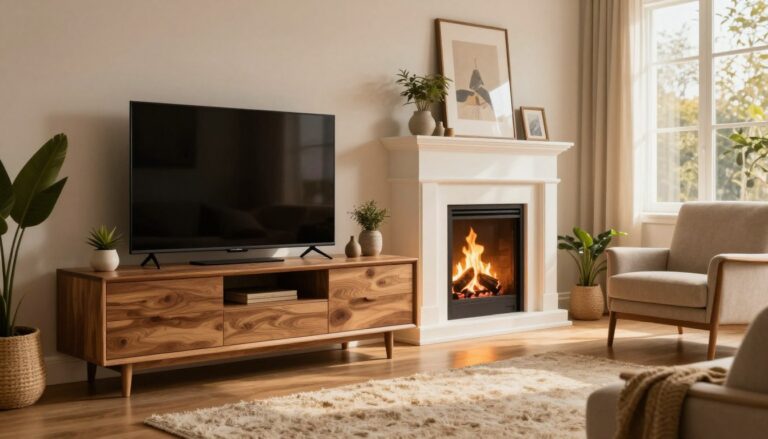
I fell in love with my fireplace TV stand on a cold January night. My apartment was freezing, thanks to bad insulation and no good heating. A friend suggested I try a Duraflame electric fireplace console from Walmart. I doubted it could warm up my TV stand.
That first night changed everything. I turned on the heater and soon felt like I was in a cozy cabin. The flames and warmth wrapped around me like a blanket. It was the comfort I didn’t know I was missing.
So, do fireplace TV stands give off heat? Yes, they do. These units have a built-in heater that warms up the room. A 120V model can heat up to 400 square feet. The 240V models can warm up to 1,000 square feet.
These stands are more than just pretty. They heat like a good space heater. The LED flames use very little power. So, you can enjoy the look without high electricity costs.
In this guide, I’ll cover everything about fireplace TV stand warmth. We’ll look at BTU ratings, room coverage, and costs. Whether you’re buying your first or wondering about your current one, I’ve got you covered.
Key Takeaways
- Electric fireplace TV stands produce real heat, not just decorative flames — they work as genuine supplemental heaters for your home.
- Standard 120V models deliver 4,600–5,600 BTUs, warming rooms up to 400 square feet comfortably.
- Upgraded 240V hardwired units reach up to 10,000 BTUs, covering spaces as large as 1,000 square feet.
- Most units run at about 1,500 watts per hour on full heat, comparable to a typical space heater.
- LED flame effects operate independently from the heater, using only 40–100 watts — so you can enjoy the ambiance year-round without high energy bills.
- These stands combine entertainment center functionality with zone heating, making them a smart two-in-one investment.
Understanding Electric Fireplace TV Stands and Their Heating Capabilities
At first, I thought electric fireplace TV stands were just a fancy idea. But they’re more than that. They bring warmth and style together in one piece of furniture. The heat they produce is impressive.
What Makes a Fireplace TV Stand Different from Regular TV Stands
Regular TV stands just hold your screen and maybe some remotes. Fireplace TV stands do that and more. They have a built-in electric insert that makes real heat. They also have lots of storage for your gadgets and keep everything organized.
The Dual Functionality of Modern Entertainment Centers
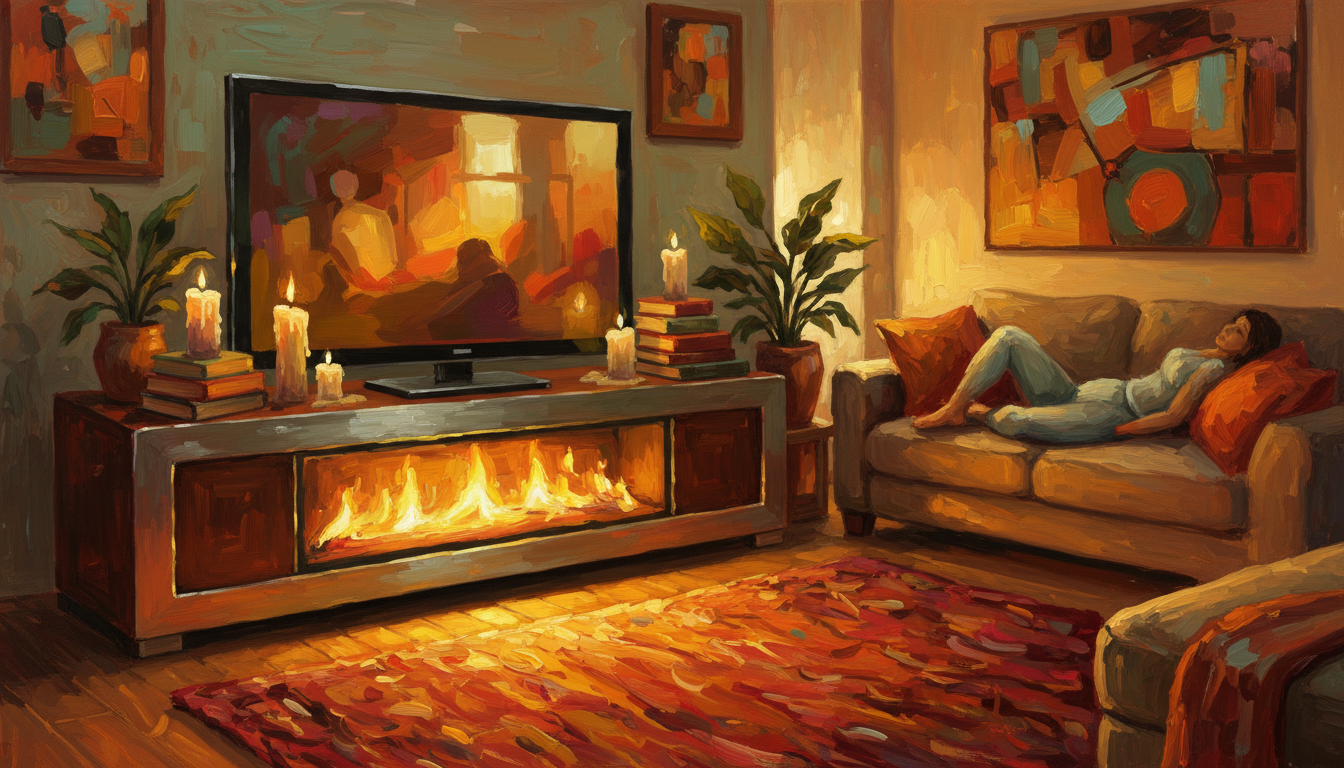
Dual functionality entertainment centers are amazing because they do two things at once. They’re both media hubs and space heaters in one. The flame effect works on its own, so you can enjoy it all year without overheating your room.
| Feature | Regular TV Stand | Fireplace TV Stand |
|---|---|---|
| Media Storage | Yes | Yes |
| Heat Production | None | 750–1,500 watts |
| Flame Ambiance | None | Year-round use |
| Energy for Visuals | N/A | 40–100 watts |
How LED Technology and Heating Elements Work Together
LED flame technology uses just 40 to 100 watts to create a realistic fire effect. The heating element uses between 750 and 1,500 watts. You can control both separately, so you can have heat, ambiance, or both.
This setup is key. It lets you adjust the heat while keeping the fire effect going all year. It’s a clever combination.
Do Fireplace TV Stands Give Off Heat
Do fireplace TV stands give off heat? I get this question all the time. I’m happy to explain what’s happening inside these units. This should clear up any doubts.
The Simple Answer: Yes, They Produce Real Warmth
These units are more than just looks. They’re designed to warm your space. Most electric fireplace TV stands can heat up to 5,100 BTUs. This can warm a room of about 400 square feet, like a cozy living room or bedroom.
Think of them as a space heater that also serves as furniture. You get real heat without needing a chimney, gas line, or firewood.
Understanding the Fan-Forced Heating System
The magic happens inside. A fan-forced heating system works like this:
- Internal heat coils warm the air
- A built-in fan blows across those coils
- Warm air circulates gently into your room
- The process repeats, raising the temperature steadily
This system is quiet, efficient, and feels like a gentle warm breeze. There’s no risk of carbon monoxide because there’s no combustion.
Separating Flame Effects from Heat Production
This part surprises many. The flames you see are completely separate from the heating element. LED lights and mirrors create the flickering flames. Some models, like Dimplex, even use water vapor to mimic smoke.
You can enjoy the glow of dancing flames on a warm summer night without turning your living room into a sauna.
| Feature | Heat Mode | Flame-Only Mode |
|---|---|---|
| Power Usage | Up to 1,500 watts | 40–100 watts |
| Produces Warmth | Yes | No |
| Visual Flame Display | Yes | Yes |
| Year-Round Use | Fall & Winter | All Seasons |
I love the independent control. It means you can have real warmth when you want it. And your electric bill stays manageable the rest of the year.
Electric Fireplace TV Stand Heat Output Measurements
Numbers don’t lie, and I love a good spec sheet. When shopping for an electric fireplace TV stand, the heat output specs tell you exactly what you’re getting. Let me break down the key measurements so you can match the right unit to your room.
BTU Ratings and What They Mean for Your Space
BTU ratings measure how much thermal energy a unit pushes into your room each hour. Think of it as a scoreboard for warmth. Most standard electric fireplace TV stands produce between 4,600 and 5,600 BTUs. That’s enough supplemental heat for a room up to 400 square feet — roughly the size of a large bedroom or cozy den.
A unit rated at around 5,000 BTUs runs on about 1,500 watts. That’s comparable to a portable space heater, but with way more style points.
Standard Models vs High-Voltage Units
Standard plug-in models draw power based on two settings. The flame effect alone uses just 40–100 watts. Flip on the heater, and you’re pulling 750–1,500 watts from a regular wall outlet. High-voltage hardwired units are a different beast, cranking out up to 10,000 BTUs and warming spaces up to 1,000 square feet. They do require a licensed electrician for installation.
Comparing 120V and 240V Heating Capabilities
Choosing between 120V vs 240V models comes down to your room size and heating goals. Here’s a quick comparison I put together:
| Feature | 120V Models | 240V Models |
|---|---|---|
| BTU Range | 4,600–5,600 BTUs | Up to 10,000 BTUs |
| Room Coverage | Up to 400 sq ft | Up to 1,000 sq ft |
| Wattage | 750–1,500 watts | 2,000–3,000 watts |
| Installation | Standard outlet plug-in | Professional hardwired |
| Best For | Bedrooms, offices, dens | Open living rooms, basements |
For most homes, a 120V model handles zone heating beautifully. If you need to warm a large open-concept space, the 240V route is worth the installation cost. Either way, understanding these electric fireplace TV stand heat output specs keeps you from overspending — or underspending — on the wrong unit.
How Much Heat Do Fireplace TV Stands Actually Produce
I get this question all the time, so let me break it down with real numbers. Fireplace TV stands produce between 4,600 and 5,600 BTUs at maximum power. They use about 1,500 watts per hour. This is enough to warm a 400-square-foot room, like a bedroom or home office.
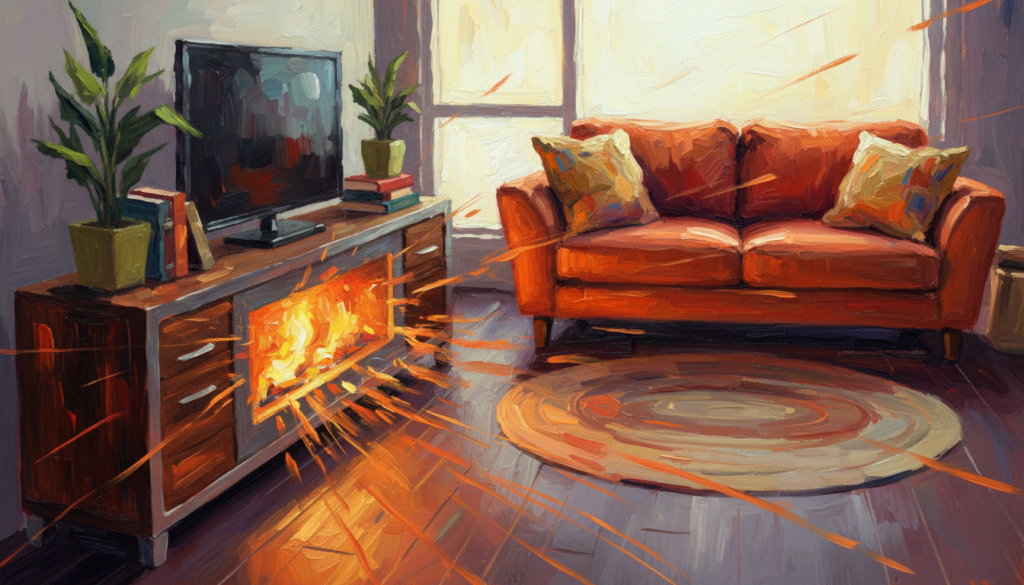
The heat output is similar to a standard portable space heater. But, you get the added beauty of flickering flames. This is a big plus. Most brands aim for a heat output of around 5,000 BTUs.
What I love most is zone heating. Instead of heating the whole house, you just warm the room you’re in. This saves money every month.
| Usage Scenario | Daily Runtime | Wattage | Estimated Monthly Cost |
|---|---|---|---|
| Light evening use | 2 hours | 1,500W | $10.80 |
| Moderate daily use | 3 hours | 1,500W | $16.20 |
| Heavy daily use | 5 hours | 1,500W | $27.00 |
*Based on the U.S. national average electricity rate of $0.12/kWh.
Remember, the heat a room keeps depends on its insulation and size. Rooms with poor insulation or high ceilings lose heat quickly. But, well-insulated spaces keep the heat longer, saving you money on electricity.
Fireplace TV Console Heating Capacity for Different Room Sizes
Every room is different, and I’ve learned that the hard way. The heating capacity you need depends on the room size. A cozy bedroom and a big living area need different heat levels. Let’s look at what you need for each space.
Coverage for 400 Square Foot Spaces
For small rooms like bedrooms and home offices, a 120V electric fireplace is perfect. It has 4,600 to 5,100 BTUs, enough for spaces up to 400 square feet. These units keep small areas warm, even when doors are closed.
Heating Performance in Larger 1000 Square Foot Areas
For big rooms, like a 1,000-square-foot great room, you need a 240V model with up to 10,000 BTUs. Standard units can’t heat such large areas. Zone heating is the best way to warm only the room you’re using.
Factors That Affect Room Warming Efficiency
Several things affect how well your unit heats a room. Here’s what I always check:
- Insulation quality in walls and ceilings
- Number and placement of windows
- Ceiling height (8 feet versus vaulted ceilings)
- Existing central heating support
| Room Size | Recommended BTUs | Voltage | Best Room Type |
|---|---|---|---|
| Up to 400 sq ft | 4,600–5,100 | 120V | Bedroom, Office |
| 400–600 sq ft | 5,100–7,000 | 120V–240V | Living Room |
| 600–1,000 sq ft | 7,000–10,000 | 240V | Great Room, Open Plan |
Smaller rooms with good insulation get the most heat from your fireplace. Remember this when you’re in a big, drafty space.
The Science Behind Electric Fireplace Entertainment Center Temperature
I love learning about science, and it’s even better when it keeps me warm on the couch. The warmth you feel from an electric fireplace depends on the heating technology inside. There are three main types, each warming you in its own way. Plus, they don’t burn fuel, so you won’t get any smoke, soot, or harmful gases.
Heat Coil Technology Explained
Most affordable models use heat coil technology. Metal coils get hot when electricity flows through them. A fan then blows warm air from these coils into the room. It’s like a hair dryer in your entertainment center, simple and effective for small to medium spaces.
Ceramic Plate Heating Systems
Ceramic plates work differently. They soak up electricity, heat up quickly, and send warmth directly to you and objects nearby. These systems give a more focused heat than fan-based ones. They’re also quieter because they don’t blow air around the room.
Infrared Technology for Direct Warmth
Premium units use infrared warmth systems, similar to how sunlight warms your skin. They heat you and your furniture directly, not the air first. This keeps the air from getting too dry, which is great in winter. Infrared systems can warm up to 1,000 square feet effectively.
| Feature | Heat Coil | Ceramic Plate | Infrared |
|---|---|---|---|
| Heating Method | Forced air over coils | Radiant heat from plates | Direct infrared rays |
| Noise Level | Moderate (fan) | Low | Very low |
| Effective Coverage | Up to 400 sq ft | Up to 600 sq ft | Up to 1,000 sq ft |
| Humidity Impact | Can dry air slightly | Minimal | Maintains natural levels |
| Price Range | $150–$350 | $250–$500 | $400–$800+ |
Fireplace TV Stand BTU Ratings and Energy Consumption
I love crunching numbers — exactly how much a cozy evening will cost. Let’s look at fireplace TV stand BTU ratings and their impact on your wallet.
Most electric fireplace consoles give off about 5,000 BTUs on a 120V outlet. That’s 1,500 watts of heat. Every watt turns into warmth, without any loss through a chimney or vent. Gas fireplaces, on the other hand, lose 20–30% of their heat through venting. Electric fireplaces win this round.
To find out your electricity usage costs, use this formula: (wattage ÷ 1,000) × hours of use × cost per kWh. Let’s see what typical energy consumption rates look like at the national average of $0.13 per kWh:
| Operation Mode | Wattage | Hourly Cost | Monthly Cost (3 hrs/day) |
|---|---|---|---|
| Heat + Flame | 1,500W | $0.20 | ~$18.00 |
| Flame-Only Ambiance | 40–100W | $0.01 | ~$1.50 |
| Low Heat Setting | 750W | $0.10 | ~$9.00 |
That flame-only mode is a steal. You get the glow of a crackling fire for about the price of a single latte per month. I run mine on summer evenings just for the vibe.
Understanding these electricity usage costs puts you in control. You’re not guessing — you’re budgeting. And with energy consumption rates this predictable, there are no surprise spikes on your power bill. The next section dives into whether these fireplace TV stand BTU ratings are enough to keep you warm through a real winter.
Are Fireplace TV Stands Warm Enough for Winter Comfort
Are fireplace TV stands warm enough for winter? Yes, but with a catch. They work well as extra heaters, not as a full furnace. Think of them as a cozy hug for one room, not a blanket for the whole house.

Zone Heating Benefits vs Central Heating
Fireplace TV stands offer great zone heating benefits. They let you heat only the room you’re in, saving energy. This can cut your energy costs by 10-15%, says the U.S. Department of Energy.
| Heating Method | Coverage Area | Average Monthly Cost | Best Use Case |
|---|---|---|---|
| Central Heating (Gas Furnace) | Entire Home | $100–$200 | Primary whole-home heat |
| Standard 120V Fireplace TV Stand | Up to 400 sq ft | $20–$40 | Single room zone heating |
| High-Voltage 240V Unit | Up to 1,000 sq ft | $40–$70 | Large room supplemental heat |
Supplemental Heat for Bedrooms and Living Rooms
I use my fireplace TV stand in the living room. It keeps that space warm. Bedrooms and dens also benefit. Standard models give off about 5,000 BTUs, enough for a medium-sized room.
Setting Realistic Expectations for Cold Climate Performance
If you live in cold places like Minnesota or Maine, don’t rely only on your TV stand. It works best with your furnace. Lower your thermostat a bit, turn on the TV stand heater, and stay warm without high bills.
- Pair with central heat in climates below 20°F
- Close doors to trap warmth in the target room
- Use a programmable thermostat on your furnace to maximize savings
Safety Features That Keep the Heat Under Control
When people ask if electric fireplace media stands warm rooms safely, I say they’re one of the safest heating options on the market. These units have serious safety features. They make traditional fireplaces look risky by comparison.
Cool-to-Touch Surfaces for Family Safety
The exterior of these units stays cool, even at full power. The heating elements are deep inside the cabinet. A fan blows warm air out through vents.
Your kids and pets can bump into the stand without getting burned. This is true family-friendly heating you can rely on every day.
Automatic Overheat Protection Systems
Every reputable electric fireplace TV stand has built-in temperature sensors. These sensors watch the internal heat levels all the time. If temperatures get too high, the unit turns off itself — no human help needed.
This single feature cuts down on fire risks from space heaters.
| Safety Feature | Electric Fireplace TV Stand | Wood-Burning Fireplace | Gas Fireplace |
|---|---|---|---|
| Cool-to-touch exterior | Yes | No | No |
| Auto shutoff protection | Yes | No | Some models |
| Carbon monoxide risk | None | High | Moderate |
| Flying sparks or embers | None | Yes | None |
| Chimney or venting required | No | Yes | Yes |
Why There’s No Risk of Carbon Monoxide or Smoke
Here’s my favorite part: zero combustion. No burning means no smoke, no soot, no carbon monoxide, and no toxic fumes. You won’t need a chimney, a vent, or even a CO detector for this unit.
The safety features built into these stands make them the top choice for family-friendly heating in any room of your home.
With no real flames, no hot embers, and no flying sparks, I feel completely at ease recommending these for households with young children or curious pets.
Fireplace TV Stand Heating Efficiency and Operating Costs
I love finding great deals, and fireplace TV stands offer just that. They turn 100% of electricity into heat. This is way better than gas fireplaces, which lose 20–30% of their energy through vents.
Let’s look at the costs. At an average electricity rate of about $0.13 per kWh, a 1,500-watt unit costs about 20 cents an hour. That’s cheaper than a cup of coffee from a gas station.
| Wattage Setting | Hourly Cost (at $0.13/kWh) | Daily Cost (4 Hours) | Monthly Cost (30 Days) |
|---|---|---|---|
| 750 Watts (Low) | $0.10 | $0.40 | $12.00 |
| 1,000 Watts (Medium) | $0.13 | $0.52 | $15.60 |
| 1,500 Watts (High) | $0.20 | $0.80 | $24.00 |
“Zone heating can reduce total home energy costs by up to 30% when you lower the central thermostat and heat only the rooms you’re using.” — U.S. Department of Energy
Smart heating habits save energy. Built-in thermostats turn the heater on and off to keep your room warm. This stops the heater from running all the time and wasting electricity. Plus, it turns off completely when not in use, wasting zero energy.
Zone heating is another big saver. Instead of heating the whole house, just warm the room you’re in. Key features include:
- Adjustable heat settings (low and high modes)
- Programmable timers that shut off automatically
- No heat loss through chimneys or ductwork
- Thermostat-controlled cycling for steady temperatures
In the next section, we’ll see how choosing between heat-only and flame-only modes can cut your energy bill even more.
Choosing Between Heat-Only and Flame-Only Operation Modes
I love how electric fireplace entertainment centers let you control temperature and ambiance. You can choose to run the heater and flame display independently. This flexibility is unmatched by traditional fireplaces.
Running Costs at 1500 Watts Per Hour
Running the heater at 1500 watts costs about 20 cents an hour. This is based on the U.S. average electricity rate. Using it three hours a day saves me around $16 to $18 monthly. It’s a great way to warm up a room without breaking the bank.
Energy Savings with LED Flame Effects at 40-100 Watts
Flame-only mode is super budget-friendly. The LED flame effects use only 40 to 100 watts. This means I can enjoy a cozy glow without overheating my living room. The monthly cost? Less than $2, which is cheaper than a fancy coffee.
Smart Features Like Timers and Thermostats
Newer models come with smart heating features that impress me. Timers and thermostats help save energy. Brands like Dimplex and Twin Star even offer app controls and Alexa compatibility.
| Feature | Heat-Only Mode | Flame-Only Mode |
|---|---|---|
| Wattage | 1500W | 40–100W |
| Hourly Cost (avg.) | $0.20 | $0.01–$0.02 |
| Monthly Cost (3 hrs/day) | $16–$18 | $1–$2 |
| Best Season | Fall and Winter | Spring and Summer |
| Smart Control Compatible | Yes | Yes |
Independent operation modes let me control costs and comfort. I don’t have to make any sacrifices.
Conclusion
So, do fireplace TV stands give off heat? Yes, they absolutely do. These units use fan-forced systems to push out real warmth. Standard 120V models give off between 4,600 and 5,600 BTUs.
On the other hand, 240V units can produce up to 10,000 BTUs. This is enough to warm spaces from 400 to 1,000 square feet, depending on the model.
My final heating assessment is clear: these units are smart supplemental heat sources. They cost about 20 cents per hour to run with the heater on. If you just want the cozy glow, flame-only mode uses under $2 of electricity per month.
Cool-to-touch surfaces and automatic overheat shutoffs keep your kids and pets safe. There’s no carbon monoxide, no smoke, and no stress.
Here’s my warmth capabilities summary in simple terms: you get a piece of furniture that holds your TV, heats your room, and looks great. I can’t think of many other home products that do this well. For anyone looking for both an entertainment center and a cozy heat source, an electric fireplace TV stand is perfect without breaking the bank.
Do fireplace TV stands give off heat or are the flames just for show?
How much heat do fireplace TV stands produce compared to a space heater?
What are the fireplace TV stand BTU ratings I should look for?
Do electric fireplace media stands warm a room effectively in winter?
What’s the fireplace TV console heating capacity for different room sizes?
How does the electric fireplace entertainment center temperature stay safe to touch?
How much does it cost to run the heater on a fireplace TV stand?
Can I use the flame effect without turning on the heat?
What heating technologies are used inside electric fireplace TV stands?
Are fireplace TV stands more energy-efficient than gas fireplaces?

giveitlegs@live.com
Contributing writer covering Honest reviews & buying help for fireplace TV stands and electric media consoles..