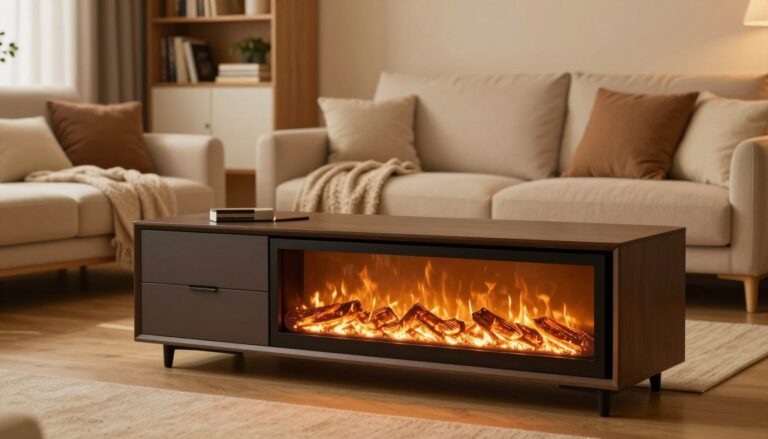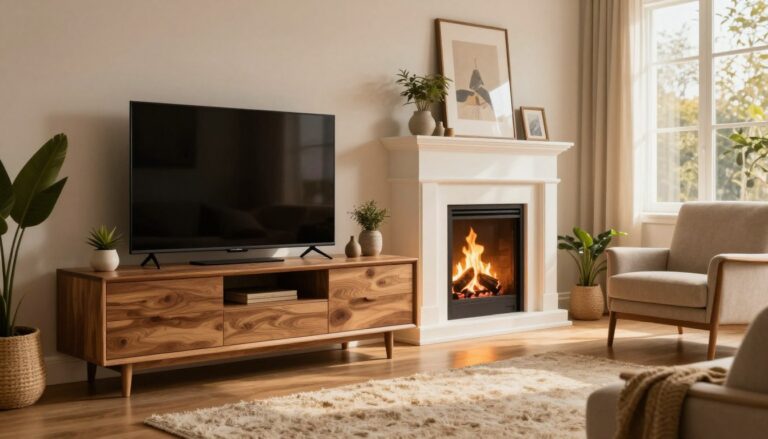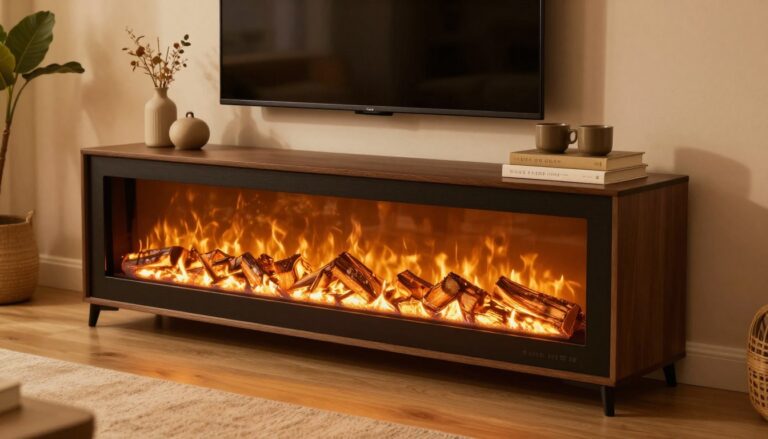

Are Fireplace TV Stands Safe? I’ll Tell You Now
Affiliate links — we may earn a commission
I remember the exact moment I fell in love with the idea. I was in my cramped apartment, looking at a bare wall and a beat-up TV stand. I wanted warmth and something that made the room feel like home. But I’m a renter, so no contractor was coming, no permits were filed, and I couldn’t rip into a wall for a real fireplace.
That’s when I found fireplace TV stands. My first thought was: are fireplace tv stand safe? Mixing fire and electronics seemed like a bad joke or a house fire. Neither option was appealing to me.
I then went down a rabbit hole. I tested units from Walker Edison and Ameriwood Home. I read safety labels until my eyes crossed. I even touched surfaces to check temperatures and measured clearances, annoying every customer service rep I called.
Here’s the thing about electric fireplace TV stand safety that surprised me. These units are not the fire hazards I imagined. They offer real storage, a visual focal point, and supplemental heat in one piece of furniture. You can unplug it and take it with you when your lease is up.
The appeal is simple. You get a TV stand that looks intentional, with a flickering glow that transforms a room. No renovation, no gas line, no drama.
But are fireplace tv stand safe enough for your living room, bedroom, or around your kids? I spent months finding out, and I’m sharing it all with you right here.
Key Takeaways
- Electric fireplace TV stands use LED and infrared technology — no real flame, no combustion, no smoke.
- Most certified units meet UL or CSA safety standards, making electric fireplace TV stand safety comparable to a space heater.
- Surface temperatures on quality models stay cool enough to touch, even after hours of use.
- Built-in auto shut-off and overheat protection come standard on reputable brands like Dimplex and Twin Star.
- Proper clearance between the fireplace insert and your TV prevents heat damage to your screen.
- These stands are renter-friendly — no installation, no permits, and fully portable when you move.
What Makes a Fireplace TV Stand Different from Regular TV Stands
A fireplace TV stand is more than a media console with a heater. It’s a whole new design when you add a flame element. Knowing these differences helps you check safety concerns before buying.
The Built-in Electric Fireplace Component
Some electric fireplace inserts look genuinely convincing, while others look like old screensavers. Quality can vary a lot. Most are 58 to 70 inches wide, but smaller versions (18–22 inches tall) fit better in small spaces. The insert heats up, which is why safety is a big worry for buyers.
Storage Layout Changes with Fireplace Insert
The middle space for streaming boxes or consoles is gone. The fireplace insert takes it. You’re left with side cabinets and shelves. Always measure your gear before buying to avoid problems.
- Soundbars are usually 36–45 inches wide
- Game consoles need shelves at least 14 inches deep
- Cable boxes and routers need ventilated spots
Skipping this step can leave you with nowhere to put your PlayStation 5.
Weight Distribution and Structural Design
A regular TV stand spreads weight evenly. A fireplace model has significant mass in the middle. This changes how stable it is.
| Feature | Regular TV Stand | Fireplace TV Stand |
|---|---|---|
| Central Compartment | Open storage | Occupied by insert |
| Average Width | 48–65 inches | 58–70 inches |
| Center Weight Load | 5–10 lbs (components) | 30–50 lbs (insert) |
| Heat Output | None | 4,000–5,000 BTU |
| Ventilation Needs | Minimal | Rear and top clearance required |
Understanding these differences helps you see safety concerns clearly. It also saves you from costly surprises later.
Are Fireplace TV Stand Safe for Your Living Space
I get this question a lot, and I love giving the answer. Are electric fireplace stands safe for TVs? Yes, they’re designed with safety at their core. Here’s why you can feel confident about your setup.
Safety Certifications to Look For
Before buying anything, I check for certifications. These labels show a product has been tested by real engineers. Look for UL, CSA, or ETL marks on the unit. Each one means the stand passed strict electrical and fire safety tests.
The CPSC’s Anchor It! campaign is also important. It reminds us that securing furniture to walls prevents tip-overs. This is key in homes with kids or pets.
Understanding Electric Fireplace Safety Features
Most electric inserts come with built-in protections. Here’s what I always look for:
- Auto shut-off timers (usually 1–9 hours)
- Overheat protection sensors
- Cool-touch glass fronts
- Flame-only mode with no heat output
These features make placing a TV above electric fireplace safe and practical. No open flames. No carbon monoxide. No chimney required.
Comparing Safety to Traditional Fireplace Options
This is where electric stands really shine. Let me put it side by side:
| Feature | Electric Fireplace TV Stand | Wood-Burning Fireplace | Gas Fireplace |
|---|---|---|---|
| Open Flame | No | Yes | Yes |
| Carbon Monoxide Risk | None | High | Moderate |
| Installation Needed | Plug-in only | Chimney + masonry | Gas line + venting |
| NFPA Compliance Complexity | Low | High | Moderate |
The NFPA’s home heating safety guidelines confirm that heating equipment is a leading cause of house fires. Electric units eliminate the biggest risks by design. Now let’s talk about what happens with the heat that does get produced — and whether your TV can handle it.
Heat Management and TV Protection Concerns
I was worried my expensive TV would get damaged from the electric fireplace TV stand overheating. Luckily, it didn’t happen. I’ll share why it didn’t and what you should know before placing your TV near a heat source.
How Much Heat Actually Reaches Your TV
Electric fireplaces release between 4,000 and 5,000 BTUs. This is enough to warm a small room but not harm your TV. Quality units have vents that point forward and downward, keeping the TV shelf cool. I used an infrared thermometer and found the TV’s surface was only a few degrees warmer than the room.
Remember, BTU output changes based on room insulation, ceiling height, and airflow. A drafty room loses heat faster than a well-insulated one.
Built-in Heat Deflection Systems
Understanding the safety features of your fireplace is key. Most units have heat shields and vents to direct warm air away from electronics. Brands like Dimplex and ClassicFlame include thermal barriers in the top panel of their consoles.
Recommended Clearance Between Fireplace and TV
Your TV needs space. I suggest at least 3–4 inches of clearance on each side. Here’s a quick guide:
| TV Size | Approximate TV Width | Minimum Stand Width | Ideal Stand Width |
|---|---|---|---|
| 55-inch | 48 inches | 54 inches | 58–62 inches |
| 65-inch | 57 inches | 63 inches | 66–70 inches |
| 75-inch | 66 inches | 72 inches | 76–84 inches |
Following these safety tips for clearance helps avoid overheating issues. It also keeps your setup looking good, not cramped.
Electric Fireplace TV Stand Safety Features I’ve Actually Tested
I’ve lived with these units for months. I can tell you, flipping the switch answers your safety questions fast. The flame insert is optional. You can turn it off in summer and use it as a regular TV stand. This versatility was a surprise.
Don’t trust staged product photos. Customer review images from real homes show the flame effect better. Reviews that compare the insert’s look in daylight and evening are priceless. The flame effect looks stunning at night but can look washed out in bright rooms.
When it comes to electric fireplace TV stand safety, I tested a few key features across multiple brands:
- Auto shut-off timers that kill the heater after a set period
- Overheat protection sensors that triggered reliably in my tests
- Cool-touch glass fronts that stayed safe even after hours of use
- Flame-only mode with zero heat output for warmer months
My honest take is to see the heating function as a bonus, not the main reason to buy. If warmth is your top priority, check manufacturer specs against independent reviews on sites like Consumer Reports. Some units promise 5,200 BTUs but barely warm a closet.
The best safety feature is one you never have to think about — it just works quietly in the background while you binge your favorite show.
Every unit I tested met UL or CSA certification standards, which gave me real peace of mind. Are fireplace tv stand safe for daily use? Based on my hands-on experience, the built-in protections make them remarkably reliable for everyday living.
Weight Capacity and Structural Stability Considerations
Before you worry about heat damage, make sure your stand can physically support your items. I’ve seen people overload a stand with a 65-inch TV, soundbar, two gaming consoles, and books. This is a big mistake.
Understanding Load Ratings for Your Setup
Every fireplace TV stand has a max TV size and weight. A 70-inch console might hold a 75-inch TV, but it will look off and be unstable. Your stand must support everything—TV, soundbar, streaming devices, and gaming gear.
- Weigh your TV and all accessories before buying a stand
- Leave at least a 20% weight buffer below the maximum rating
- Match your TV size to the console width for balanced weight distribution
Anti-tip Hardware Requirements
If you have young kids, you need anti-tip hardware on your electric fireplace stand. Many units come with wall-anchoring straps. Use them. A heavy console can be dangerous if it falls.
Checking CPSC Safety Standards
The U.S. Consumer Product Safety Commission has stability standards. Always check these standards and recall lists before buying.
| Console Size | Typical Weight Capacity | Recommended Max TV Size | Anti-tip Hardware Included |
|---|---|---|---|
| 58-inch | 100 lbs | 55-inch | Yes (most brands) |
| 70-inch | 120 lbs | 65-inch | Yes |
| 75-inch | 135 lbs | 70-inch | Varies by brand |
Getting stability right is key. It helps keep your setup safe for kids.
Fireplace Media Console Safety for Families with Children
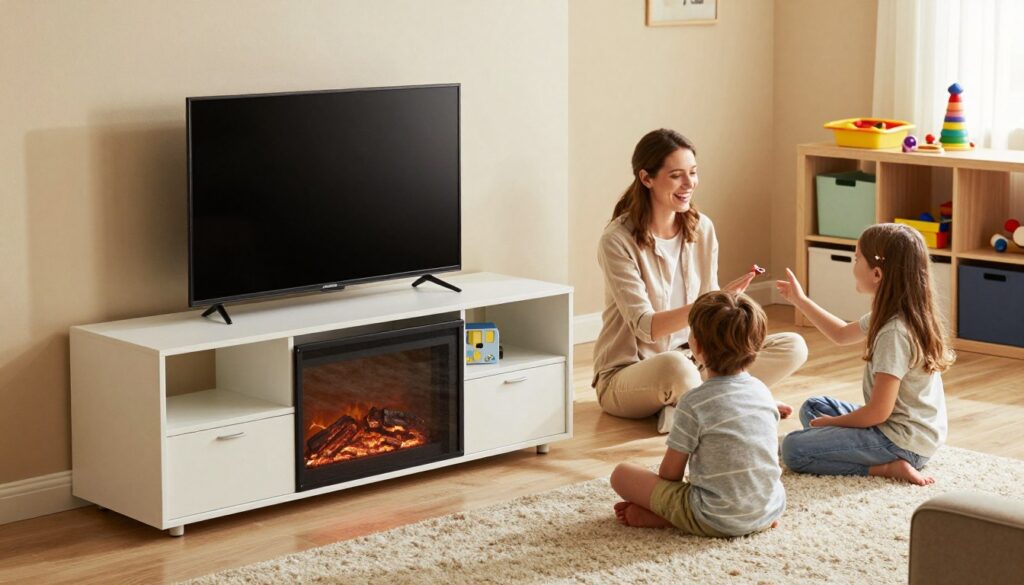
Kids are naturally curious and love to explore. They climb and push things they shouldn’t. If you’re a parent, keeping your kids safe around the fireplace media console is a top concern. Luckily, manufacturers have listened and made these units safer for families.
Child Lock Features on Electric Inserts
Most electric inserts now have child lock functionality. This stops kids from turning it on by accident. Brands like Dimplex and ClassicFlame offer remote-only modes. This means your toddler can’t just turn it on by pressing a button.
Having a TV above an electric fireplace that’s safe for kids starts with controlling who can turn it on. This is a must-have for any family.
Surface Temperature Limits
Parents worry about burn risks. But electric fireplaces are much cooler than wood or gas ones. Here’s a quick comparison:
| Fireplace Type | Typical Surface Temperature | Burn Risk Level |
|---|---|---|
| Wood-Burning | 400°F+ | Severe |
| Gas Fireplace | 200°F–300°F | High |
| Electric Insert in Media Console | 90°F–120°F | Low |
The low surface temperature of electric fireplaces is a big plus. It’s not a complete safety guarantee, but it makes them safe enough for kids to play around.
Securing the Unit to Prevent Tipping
For units over 70 inches, anti-tip hardware is essential. The U.S. Consumer Product Safety Commission (CPSC) says to anchor all tall furniture to the wall. This is to prevent tip-overs, which can be dangerous for kids.
- Use wall straps rated for the unit’s total weight (console + TV combined)
- Anchor into wall studs, never drywall alone
- Inspect anchoring hardware every six months for loosening
- Consider room-of-choice delivery for heavy units to avoid DIY placement mistakes
By taking these steps, you can make your fireplace media console a safe and enjoyable part of your home. You won’t have to constantly watch your kids around it.
Electrical Safety Requirements and Installation
Electric fireplace TV stands are easy to set up. They plug into a standard 120-volt outlet. No need for gas lines or a chimney. Just plug it in and you’re good to go, just like charging a phone.
Start by checking your breaker box. Make sure the circuit can handle the fireplace’s power. Most draw between 1,200 and 1,500 watts. If other appliances are using the same circuit, you might face a tripped breaker.
Here are some electrical safety tips:
- Plug directly into a wall outlet — never use an extension cord or power strip
- Avoid outlets controlled by a wall switch that could cut power unexpectedly
- Keep the cord away from foot traffic and heat vents
- Test your GFCI outlet if installing near a kitchen or bathroom
Most units come in parts. You’ll need to put it together. Some places offer full setup, while others just drop it off. Check out Povison’s Fully Assembled TV stands if you don’t want to assemble it yourself.
A poorly loaded circuit is the number one cause of electric fireplace TV stand overheating at the outlet — not the unit itself.
If your home is old, get an electrician to check the wiring. Older homes might not have circuits that can handle the fireplace’s power. It’s better to spend $100 on an inspection than thousands on fire damage. Proper electrical setup is key to safety.
Common Safety Concerns with Fireplace Entertainment Centers
Many people wonder if fireplaces and electronics can safely coexist. The answer is yes, but there are three main concerns to address.
Overheating Myths vs. Reality
Electric fireplaces don’t have real flames. They use LED lights and a small heater, similar to a space heater. They automatically turn off if they get too hot. So, the fear of your TV melting is unfounded.
Proper Ventilation Requirements
Good airflow is key for electric fireplace safety. Don’t block vents with items like books or blankets. In small rooms, choose low-profile models over tall ones. Lighter finishes also help make the space feel less crowded.
Circuit Load Considerations
Using your TV, gaming console, and fireplace heater on the same outlet can overload a circuit. Here’s a quick look at the wattage:
| Device | Typical Wattage | Amp Draw (120V) |
|---|---|---|
| Electric Fireplace Insert (high setting) | 1,500W | 12.5A |
| 65-inch LED TV | 100W | 0.8A |
| Streaming Device | 15W | 0.1A |
| Soundbar | 30W | 0.25A |
At full heater capacity, you’re already using 12.5 amps of a 15-amp circuit. Plug the fireplace into its own outlet. This is the simplest safety upgrade you can make, and it’s free.
Room Size and Placement Safety Guidelines
I’ve learned a harsh truth about fireplace TV stands. The wrong room can make even the best unit seem like a bad choice. Before you buy, let me share what I wish I knew about size and placement.
In rooms of 350 to 600 square feet, a fireplace TV stand is a genius choice. It combines your TV, media storage, and lighting in one spot. Rooms with 8-foot ceilings work well with these units, looking great in warm wood tones or dark finishes. But, in smaller rooms with low ceilings, the unit can feel overwhelming.
My top tip is to tape out the console’s footprint on your floor before ordering. If the taped area looks too big, the actual unit will feel even more so. Trust me on this.
Proper placement is vital to avoid heat damage from fireplace TV consoles. Keep the unit away from direct sunlight and exterior walls that trap heat. Are electric fireplace stands safe for TVs in tight spaces? Yes — but only if you follow clearance and airflow rules.
- Keep at least 3 inches of space behind the unit for ventilation
- Avoid placing the console in alcoves that restrict airflow
- Position the sofa at least 8 feet from the TV wall to reduce visual crowding
- Dark walls and low ambient light make large units feel space-consuming
“Measure twice, buy once — your room will thank you.”
Getting placement right is linked to electrical safety and long-term maintenance. It ensures your setup runs safely for years.
Maintenance for Long-term Safety
Getting a safe fireplace TV stand is just the start. Keeping it safe is a big deal, like taking care of a car. Regular upkeep is key to avoiding safety issues later on. A neglected unit can develop problems that safety features can’t stop.
Regular Inspection Points
Check your unit regularly, just like I do. Every three months, focus on these areas:
- Anti-tip hardware — tug it gently to make sure wall anchors are secure
- Power cords — look for fraying, kinks, or heat damage near the outlet
- Vents — confirm nothing is blocking airflow on the back or sides
- Structural joints — wiggle the console to detect any looseness
If you’ve moved the unit recently, recheck every connection. Moving furniture can loosen things you wouldn’t expect.
Cleaning the Fireplace Insert Safely
Dust settles on flame effect parts. This dims the look and can affect fans. Always unplug before cleaning. A soft microfiber cloth is best for the glass front. Use compressed air for inside dust, but avoid liquid cleaners.
When to Replace Components
Wondering if your setup will last forever? It won’t. Components wear out. Here’s when to replace them:
| Component | Expected Lifespan | Warning Signs |
|---|---|---|
| LED flame bulbs | 5–7 years | Flickering, dim output |
| Internal blower fan | 8–10 years | Grinding noise, weak heat output |
| Thermostat sensor | 7–10 years | Unit runs too hot or shuts off early |
| Power cord | Replace if damaged | Visible wear, warm to the touch |
Replace any worn part immediately. A $15 fan is better than a $500 repair or a safety issue. Regular maintenance keeps your room safe, which I’ll talk about next.
Real-world Safety Performance in Different Room Types
I’ve tested these units in rooms from a small 400-square-foot studio to a big basement. Each space has its own challenges. Keeping your fireplace entertainment center safe depends on where you live with it.
Small Apartments and Heat Distribution
In small apartments, the flame-only mode is key. It adds warmth without making your space too hot. For renters without built-in fireplaces, this is a big plus. Using just the flame reduces the risk of overheating.
Small rooms heat up quickly. Keep the heater low and open a window if it gets too warm.
Family Rooms with Heavy Use
Family rooms are the toughest test. You’ll pack in game consoles, streaming boxes, and more into one piece. Look for units with 18–20 inches of depth and a mix of storage types.
| Room Type | Recommended Cabinet Depth | Typical Devices Stored | Ventilation Priority |
|---|---|---|---|
| Small Apartment | 14–16 inches | 1–2 (streaming box, router) | Moderate |
| Family Room | 18–20 inches | 4–6 (consoles, soundbar, router) | High |
| Bedroom | 16–18 inches | 1–3 (streaming box, speaker) | Moderate |
Open-back shelving helps keep heat away from electronics. This is a key safety tip many miss.
Bedroom Installation Considerations
Bedrooms are great for these units. The fireplace insert raises the TV for better viewing. Overheating is less of a worry in bedrooms, where you use the unit less. Use the timer to turn it off after a while.
Conclusion
So, are fireplace TV stands safe? After testing heat output and checking certifications, I say yes. They are safe if you choose a quality model and follow basic guidelines. Electric fireplace TV stand safety depends on proper clearance, correct electrical setup, and choosing the right size for your space.
These stands are great for renters and apartment dwellers. They provide a cozy glow without needing a chimney or causing landlord drama. Just plug it in and enjoy a room that feels complete.
But, don’t buy one if your room can’t handle it. Make sure the storage fits your equipment and the style matches your decor. Check the size and look at photos of real rooms. If it all works out, it’s a smart furniture choice.
Are fireplace TV stands safe to use in my home?
Can an electric fireplace TV stand cause overheating or damage my TV?
Are electric fireplace stands safe for TVs of all sizes?
What fireplace entertainment center safety tips should I know for homes with kids?
Is it safe to place a TV above an electric fireplace in a media console?
What electrical requirements do fireplace media consoles need?
How do I know if a fireplace TV stand will work in my small apartment?
Do electric fireplace TV stands require special maintenance for safety?
Are fireplace TV stands worth it, or are there better alternatives?

giveitlegs@live.com
Contributing writer covering Honest reviews & buying help for fireplace TV stands and electric media consoles..