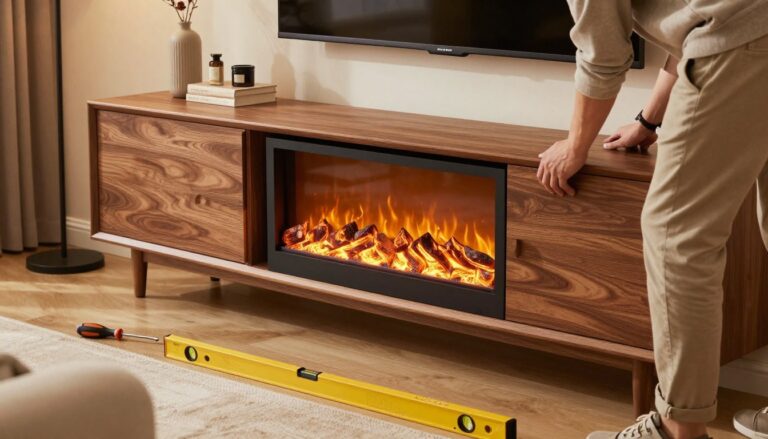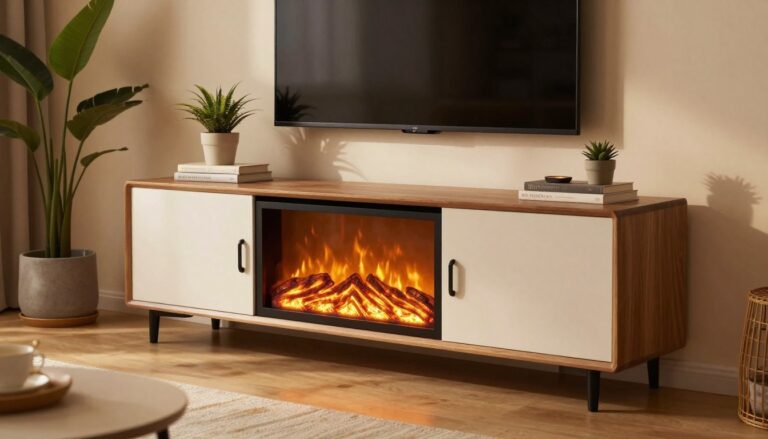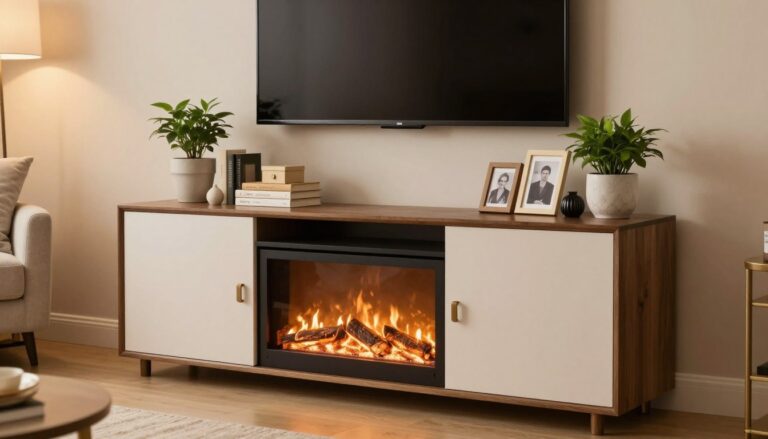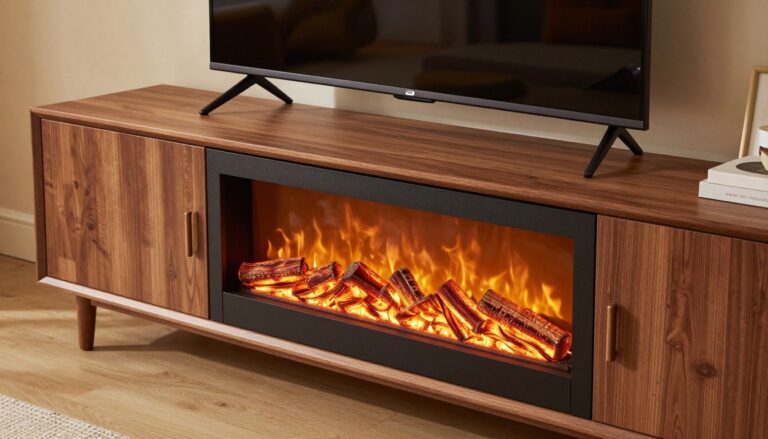
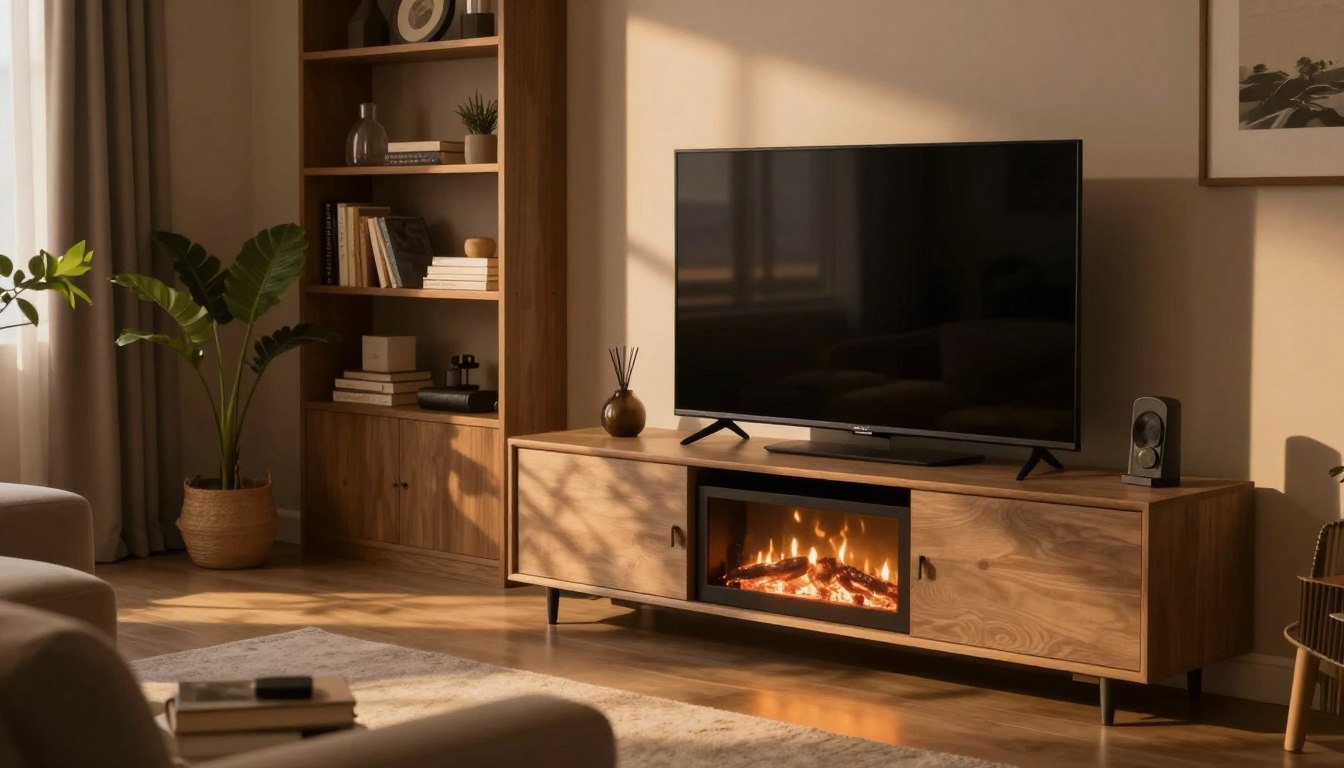
Do Fireplace TV Stands Overheat Electronics? Truth
Affiliate links — we may earn a commission
I plugged in my new Dimplex electric fireplace TV stand and panicked. My 65-inch Samsung was right on top. I thought, “Did I just make a very expensive mistake?” My palms got sweaty, and my wife gave me that look.
So, I obsessed over it for weeks. I read every forum, review, and safety report I could find. The question haunted me: do fireplace TV stands overheat electronics? I wasn’t alone in this fear.
What surprised me most was that these units don’t burn fuel. They don’t produce real flames or harmful gases. Brands like Twin Star and ClassicFlame use LED lights to mimic flames. The heat comes from enclosed coils, gently pushed into the room by a small fan.
Electric fireplace entertainment center safety has improved a lot. The glass stays cool to the touch. The exterior panels won’t scorch your kid’s fingers. Every modern model has multiple safety layers.
So, let me save you the anxiety I went through. We’ll explore the real science, data, and truth about these stands’ safety for your electronics.
Key Takeaways
- Electric fireplace TV stands use LED flame simulation and enclosed heating coils — no real fire, no combustion, no harmful emissions.
- Most units draw around 1,500 watts, comparable to a standard space heater, with heat directed outward into the room.
- Cool-touch glass and exterior surfaces are standard in reputable brands like Dimplex and Twin Star, keeping the outside safe to handle.
- Electric fireplace entertainment center safety relies on multiple built-in protections, including overheat sensors and automatic shutoffs.
- Do fireplace TV stands overheat electronics? Testing data from UL and ETL certifications consistently show they don’t when used as directed.
- Proper ventilation and correct setup are critical — most overheating complaints trace back to user error, not product failure.
Understanding How Electric Fireplace TV Stands Generate and Distribute Heat
Staring at flames under your TV might seem like parking next to a fire. But electric fireplace TV stands are way smarter than they look. They produce heat in a smart way, making damage to your TV unlikely.
LED Flame Technology vs. Traditional Heating Elements
Modern units use LED lights for the flames, which don’t get hot. The real heat comes from a hidden element that blows warm air out. You can even have the flame look without heat on warm nights.
Heat Output Specifications: What 1,500 Watts Really Means
An electric fireplace uses 1,500 watts, warming about 400 square feet. The heat goes forward and outward, not up toward your TV. Always plug it directly into a wall outlet to avoid risks.
| Feature | Electric Fireplace (1,500W) | Portable Space Heater (1,500W) |
|---|---|---|
| Heat Direction | Forward, away from electronics | Radial, all directions |
| Enclosed Element | Yes | Varies by model |
| Built-in Overheat Sensor | Standard | Not always included |
| Safe on Low-Pile Carpet | Yes | Manufacturer dependent |
Ventilation Design in Modern Entertainment Centers
Fireplace TV consoles control temperature with smart ventilation. Brands like Dimplex and Twin Star include hidden vents. Make sure there’s at least 3 inches of space around for good airflow.
Do Fireplace TV Stands Overheat Electronics
I get this question all the time. People worry when they see flames below their $1,200 TV. But, modern fireplace TV stands are designed to keep electronics cool. They don’t overheat your gear, thanks to clever design.
Temperature Zones: Where Heat Actually Goes
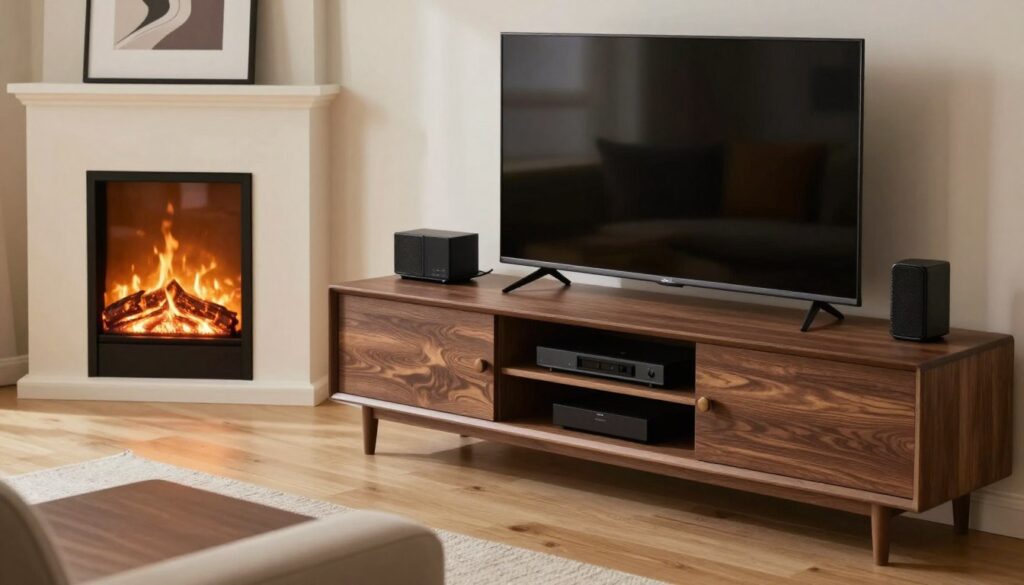
The heat from an electric fireplace goes outward into the room, not up to your TV. Vents on the front send warm air to you. Inside, sensors watch temperature zones. If it gets too hot, the fireplace turns off.
Good ventilation in these stands helps keep electronics cool. It makes sure heat doesn’t reach your devices.
Real-World Testing Data from UL and ETL Certifications
I prefer lab results over marketing promises. Brands like Dimplex, ClassicFlame, and Touchstone test their units. UL and ETL safety tests show their units are safe.
| Certification | Testing Organization | Key Safety Requirement | Surface Temp Limit |
|---|---|---|---|
| UL Listed | Underwriters Laboratories | Enclosure heat dissipation | Below 90°F on top surface |
| ETL Certified | Intertek | Electrical and fire safety | Below 90°F on top surface |
| CSA Approved | CSA Group | Component durability under heat | Below 95°F on top surface |
Why Your TV Stays Cool Despite the Flames Below
Your TV is safe because heat goes up and away from it. Vents in the back and front help. Brands like MagikFlame use barriers to keep things cool.
The glass stays cool enough to touch. Smart design in these stands means your electronics are always protected.
Built-in Safety Features That Protect Your Devices
Modern electric fireplace TV stands have smart safety tech. These features are specifically engineered to prevent overheating. Let’s explore the layers of protection for your gadgets.
Automatic Overheat Protection Sensors
Internal sensors watch the heat levels inside the unit. If it gets too hot, the heater turns off by itself. This stops overheating and keeps your TV safe.
Cool-Touch Glass and Exterior Surfaces
The glass panel stays cool even when the heater is on. This is good for two reasons. It keeps pets and kids safe, and it makes it easier to keep a safe distance from the TV.
Tip-Over Switches and Circuit Protection
Got a curious toddler or a rambunctious dog? Tip-over switches turn off power if the unit falls. Circuit breakers also protect against electrical surges. Here’s a quick summary:
- Tip-over switch kills power in under one second
- Circuit protection guards against overloaded outlets
- Child lock settings on remotes block accidental activation
Thermostat Controls and Timer Functions
Programmable timers let me set heating intervals, usually in two-hour blocks. When the timer ends or the room reaches the target temperature, the heater turns off automatically. The flame effect keeps going, adding ambiance without extra heat. Adjustable heat settings let me control the warmth, keeping the TV safe.
Critical Distance Requirements Between Heat Source and Electronics
Spacing is everything for electric fireplace entertainment center safety. Think of your fireplace TV stand like a campfire. You want to be close but not so close you melt your marshmallow.
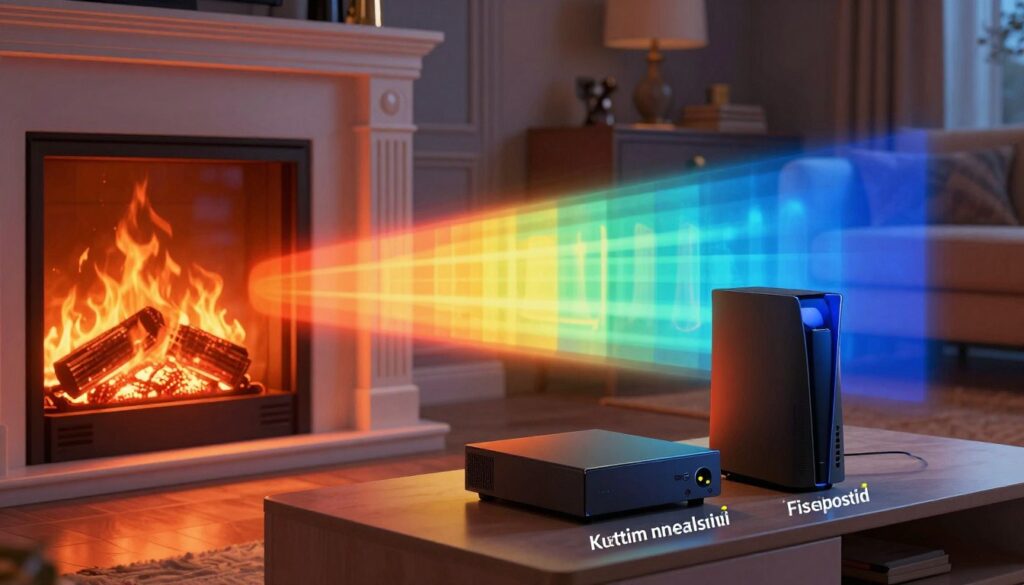
Keep at least 3 feet of distance between heating vents and flammable items. Don’t drape throws over the side of your entertainment center. Books, candles, and décor items should never sit directly above the heat source.
“The leading cause of home heating fires is equipment placed too close to combustibles.” — National Fire Protection Association (NFPA)
Proper heat dissipation in entertainment centers depends on unobstructed airflow. Here’s a quick-reference guide for clearance requirements:
| Location | Minimum Clearance | Why It Matters |
|---|---|---|
| Sides of unit | 2–3 inches | Allows lateral airflow |
| Above unit to TV | Per manufacturer specs (typically 6+ inches) | Prevents screen damage |
| Rear of unit to wall | 1–2 inches | Enables exhaust ventilation |
| Heating vent to flammables | 36 inches (3 feet) | Fire prevention |
If your unit sits on thick carpet, use a non-flammable hearth pad underneath. Thick carpet can block air intake vents, which harms the system’s cooling.
Here are a few more spacing musts for electric fireplace entertainment center safety:
- Route power cords away from heating elements using built-in cord channels or rear cable holes
- Wall-mounted units need secure attachment to wall studs with proper spacing from ceilings and adjacent walls
- Never push furniture flush against the unit’s ventilation openings
Getting these distances right is the simplest way to protect your electronics — and your peace of mind.
Common Mistakes That Lead to Overheating Issues
I’ve seen many people make rookie mistakes with their fireplace TV stands. These mistakes can lead to overheating. It’s not just about the unit’s safety features. It’s about what you do too.
Overloading Electrical Circuits with Multiple Devices
A 1,500-watt fireplace uses a lot of power. Plugging too many devices into one outlet can cause problems. It’s best to use separate outlets and a heavy-duty surge protector.
Blocking Ventilation with Decorative Items
Putting blankets over vents or pushing the unit against a wall blocks airflow. Good airflow is key for temperature control. Make sure there’s enough space around the unit.
Using Extension Cords Instead of Direct Wall Outlets
Extension cords aren’t made for long-term use with 1,500-watt devices. They can overheat and become dangerous. Always plug your fireplace stand directly into a wall outlet.
Ignoring Manufacturer Weight and Size Specifications
Going over the weight limit can cause the stand to tip or break. Here’s a guide I follow:
| TV Size | Approximate TV Weight | Minimum Stand Rating Needed |
|---|---|---|
| 55 inches | 35–45 lbs | 75 lbs |
| 65 inches | 50–65 lbs | 100 lbs |
| 75 inches | 70–85 lbs | 120+ lbs |
Putting a big unit in a small space can also cause overheating. It’s important to give your stand enough room to breathe.
Material Quality: How Construction Affects Heat Management
The materials in your fireplace TV stand are more important than you might think. Cheap stands can warp, crack, and even release harmful fumes when it gets hot. To keep your electronics safe, the stand’s material is key.
Fire-Retardant Materials vs. Standard Particleboard
Particleboard is like fast food for furniture — it’s cheap but doesn’t last. It breaks down quickly when it gets hot. Fire-retardant materials, though, stay strong and don’t release bad chemicals when it’s hot. Always check if the stand is made with fire-retardant materials before you buy.
E1-Standard MDF and Tempered Glass Benefits
E1-standard MDF is a special material from Europe that has very low formaldehyde emissions. It handles heat much better than cheap options. Tempered glass, used in oven doors, also stands up to sudden temperature changes without breaking.
These materials help keep your fireplace media console well-ventilated. They stay strong over time, unlike cheaper materials.
| Material | Heat Resistance | Formaldehyde Emissions | Durability |
|---|---|---|---|
| Standard Particleboard | Low | High | 1–3 years |
| E1-Standard MDF | Moderate–High | Very Low | 5–10 years |
| Tempered Glass | High | None | 10+ years |
Metal Framing for Superior Heat Dissipation
Metal is better at moving heat away from sensitive areas than wood. Brands like Belleze use metal framing for a strong and stable stand. This design helps keep your electronics cool by moving heat away from them.
Maintenance Practices to Prevent Heat Buildup
Your fireplace TV stand isn’t self-cleaning. Dust bunnies can clog vents and make heaters work too hard. A simple monthly routine keeps everything cool and safe.
Use a vacuum with a brush attachment to clean vents once a month. Pet hair, lint, and dust build up fast, even with pets. Clean the outside with a dry microfiber cloth to stop debris from getting inside. Never put objects in the vents to avoid damage and warranty loss.
Check your power cord at least once a year for fraying or damage. Cracks or flickering flames mean it’s time for a new unit. Keeping a safe distance from the electric fireplace is important, but the unit must also be in good condition.
Regularly test your safety features. Make sure the auto-shutoff works, the timer is correct, and the thermostat is accurate. If you notice strange smells, sounds, or performance issues, get a professional to check it out.
| Maintenance Task | Frequency | Tools Needed |
|---|---|---|
| Vacuum all vents | Monthly | Vacuum with brush attachment |
| Wipe exterior surfaces | Bi-weekly | Dry microfiber cloth |
| Inspect power cord | Annually | Visual inspection |
| Test auto-shutoff and timer | Every 3 months | Manual activation |
| Replace or clean filters | Per manufacturer schedule | Replacement filter or compressed air |
| Professional inspection | When abnormalities occur | Certified technician |
Keeping your unit clean makes maintenance easier. Choose the right model from the start to avoid extra work.
Choosing the Right Model for Maximum Electronic Safety
Finding the perfect fireplace TV stand is like finding a partner. You need to check for red flags before you commit. Wondering if fireplace TV stands overheat electronics? It often depends on the model you pick. Let’s explore what makes some stands safe and others not.
Essential Certifications to Look For
Always check for UL or ETL certification marks before buying. These marks mean the product has passed tough U.S. safety tests. Brands like ClassicFlame and MagikFlame have these certifications. A remote control with a child-lock feature is also a good feature for families.
Weight Capacity and Structural Stability
The stand should support at least 1.5 times your TV’s weight. A wobbly stand can cause heat damage or even make your TV fall. Larger units should have anti-tip straps for wall anchoring.
Cable Management Systems Away from Heat Sources
Built-in cord channels and rear cable holes keep wiring away from heat. Melted wires are not only a fire hazard but also ruin the mood. Always route cables through dedicated paths.
Warranty Coverage as a Safety Indicator
A warranty shows a manufacturer’s confidence. Here’s what I look for:
| Brand | Warranty Length | UL/ETL Certified | Anti-Tip Straps Included |
|---|---|---|---|
| ClassicFlame | 1–2 Years | Yes | Yes |
| MagikFlame | Limited Lifetime | Yes | Yes |
| Dimplex | 2 Years | Yes | Select Models |
A 2+ year warranty means the brand trusts its heat management design. That peace of mind is worth every penny.
Conclusion
I’ll be honest — when I first started researching electric fireplace entertainment center safety, I expected to find horror stories. But the reality is much less scary. Modern units from brands like Dimplex, Touchstone, and Belleze have cool-touch surfaces and automatic shut-off sensors.
They also use fire-retardant materials to keep your electronics safe. No carbon monoxide, no smoke, no drama.
The secret to preventing overheating is simple. Just plug into a wall outlet, not an extension cord. Keep at least 3 inches of clearance around vents. And anchor the unit to the wall with anti-tip straps.
Clean those vents monthly and inspect your cords once a year. These small habits make a big difference in keeping everything running safely.
Stick to the manufacturer’s guidelines for weight limits, spacing, and electrical specs. Your setup will deliver cozy warmth and stunning ambiance without risking your devices. I’d say that’s a pretty sweet deal for something that looks this good in your living room.
Do fireplace TV stands overheat electronics placed on top of them?
How much heat does an electric fireplace TV stand actually produce?
Can I safely place my TV directly above an electric fireplace insert?
What safety features should I look for to prevent fireplace TV stand overheating?
Is it safe to put an electric fireplace TV stand on carpet?
Can I plug my electric fireplace stand into a power strip or extension cord?
How do I maintain proper ventilation in fireplace media consoles?
Does the material quality of the TV stand affect heat safety?
How often should I clean my electric fireplace TV stand to prevent overheating?
What certifications indicate an electric fireplace TV stand is safe for my electronics?

giveitlegs@live.com
Contributing writer covering Honest reviews & buying help for fireplace TV stands and electric media consoles..