How Do Fireplace TV Stands Work: The Full Guide
Affiliate links — we may earn a commission
I remember my first winter in a tiny apartment. The radiator sounded like a ghost in the pipes. My TV was on a shaky IKEA shelf, ready to fall at any moment. I needed warmth, storage, and to stop feeling like a college student at 32.
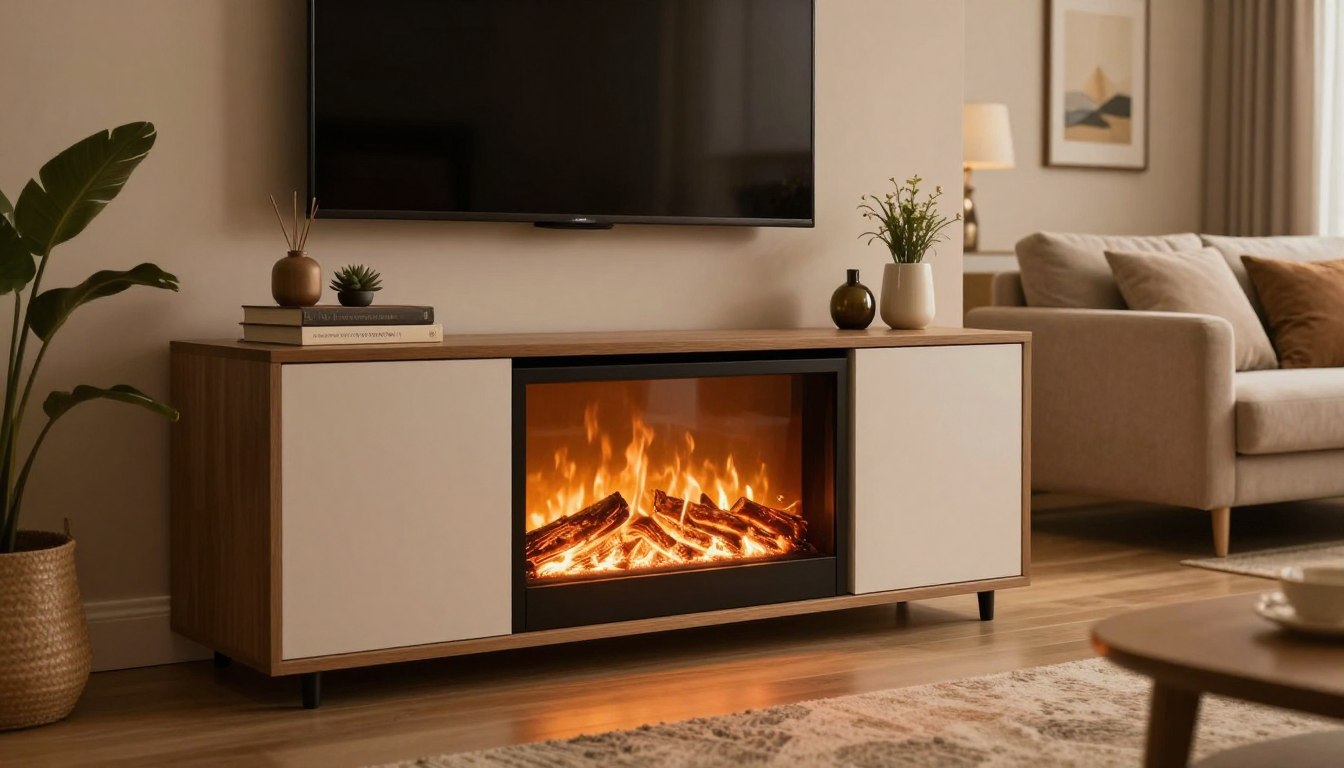
Then, I found an electric fireplace TV stand. It heats my room, holds my TV, and makes me seem put together. No chimney or gas line needed. Just plug it into a wall outlet and set it up in about ten minutes. It seemed too good to be true.
So, how do fireplace TV stands work? They use LED lights to mimic flames and have heating elements to warm your space. They run on electricity. You control them with a remote or a touch panel from your couch. No firewood or soot needed.
These stands do more than just look good and warm the air. The Tresanti Mayson Media Mantel, for example, can heat up to 1,000 square feet. They support TVs from 48 to 75 inches. They’re like the ultimate living room furniture.
I wrote this guide because I spent too much time researching before buying mine. You shouldn’t have to go through the same. I’ll cover all the details so you can make a smart choice easily.
Key Takeaways
- Electric fireplace TV stands combine media storage, ambient flame effects, and supplemental heating in a single furniture piece.
- They plug into a standard electrical outlet with no need for venting, chimneys, or gas lines.
- LED technology creates the flame visuals while separate heating elements provide real warmth.
- Units like the Tresanti Mayson Media Mantel deliver up to 5,200 BTU, heating rooms as large as 1,000 square feet.
- Most models accommodate TVs between 48 and 75 inches wide.
- Remote controls and touch panels let you adjust heat and flame effects independantly from each other.
- Setup takes minimal time and requires no professional installation.
What Is a Fireplace TV Stand and Its Basic Components
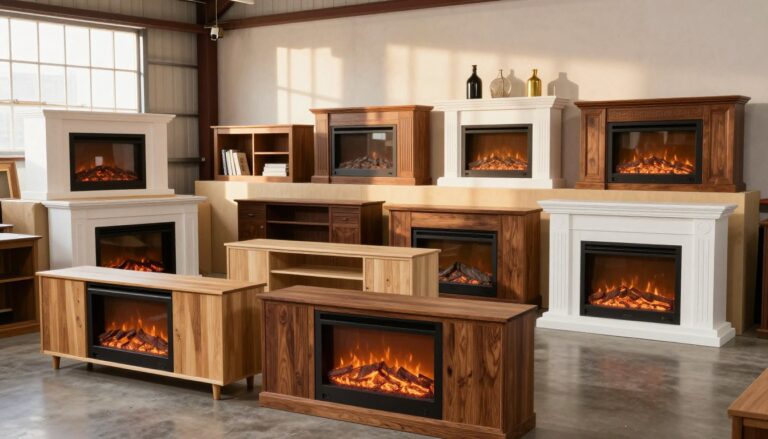
A fireplace TV stand is a furniture piece that combines a media console, an electric fireplace, and storage. It’s like a Swiss Army knife for your living room. It holds your TV, warms your space, and hides cables.
Understanding the parts of an electric fireplace TV stand is key. Each part has a role in how it works. Let’s take a closer look.
The Electric Fireplace Insert Technology
The insert is the heart of the setup. Many use ClassicFlame’s Spectrafire 3D technology for realistic flames. You can adjust brightness and color to your liking.
Whether you want a calm glow or a roaring fire, it’s easy. The flames work independently from the heater. So, you can enjoy them all year.
TV Stand Structure and Support System
These stands are built to last. They support TVs up to 80 inches and 88 pounds. Adjustable feet ensure stability, even on uneven floors.
Storage and Media Organization
Storage is a standout feature. You get:
- Open shelving above the firebox
- Full-height glass-front cupboards with three shelves each
- Removable shelf backs for cable management
- Rear ventilation for airflow
| Component | Purpose | Key Feature |
|---|---|---|
| Electric Insert | Flame effects and heating | 5 brightness and color settings |
| TV Stand Frame | Structural support | Holds up to 88 lbs |
| Glass-Front Cabinets | Media and decor storage | Three adjustable shelves per side |
| Open Shelving | Quick-access storage | Full-width design |
| Cable Management System | Wire organization | Removable shelf backs |
Now you know what makes up these units. Next, we’ll look at how they work, from power to control systems.
How Do Fireplace TV Stands Work
Many people ask how electric fireplace inserts work. The answer is simple. They use three main systems: power delivery, smart controls, and independent flame and heat features. Let’s dive into each part to understand their clever design.
The Power Path From Wall to Fireplace
The journey begins at your wall outlet. Power flows through a dedicated cord to a switch on the firebox. This setup is clean and simple, needing no gas lines or chimneys.
It’s key to use the right power source. Avoid extension cords. If you must use one, make sure it’s a 15-amp rated surge protector. Cutting corners can lead to problems.
Control Systems and Remote Operation
The remote control is essential. It controls everything with a single device:
- On/off and cooling fan toggle
- Flame speed, intensity, and color effects
- Heater output ranging from 62°F to 82°F
- Timer settings from 30 minutes up to 9 hours
Lost the remote? No worries. A small door on the unit has a manual control panel as a backup.
Independent Flame and Heat Functions
The best part is the flame and heat functions work completely separate. You can enjoy a warm glow without overheating your room.
| Function | Wattage | Hourly Cost |
|---|---|---|
| Flame effects only | 5–30 watts | Less than $0.01 |
| Heater running | 1,200–1,500 watts | $0.15–$0.20 |
The heater uses about the same power as a standard space heater. The flame-only mode uses very little electricity. This makes it cost-effective for year-round ambiance.
The Heating Technology Behind Electric Fireplace TV Stands
Not all warmth is created equal. I’ve tested many units and found that electric fireplace tv stands heat differently. The big question is: how does it actually heat your room? Two main systems dominate the market, each with its own perks and quirks.
Infrared Quartz Heating Systems
Infrared heating technology tv stands use quartz elements inside the top of the electric insert. These elements produce a warm, orange glow when running. Instead of heating the air, infrared waves warm objects and people directly. This method feels more natural, like sunlight on your skin during a lazy afternoon.
Conventional Fan-Forced Heaters with Blowers
Fan-forced units take a different approach. A blower pulls cool air through the back of the unit, pushes it across a heating coil, and distributes warm air into your space. Many models feature oscillating louvers that sweep side-to-side for even coverage. You’ll get low, medium, and high fan speed options. One heads-up: the fan creates a noticeable hum during quiet TV scenes, but it vanishes once dialogue or music kicks in.
BTU Output and Room Coverage Capabilities
Here’s what I’ve gathered on typical performance specs:
| Feature | Infrared Quartz | Fan-Forced |
|---|---|---|
| BTU Range | 4,600–5,200 BTU | 4,600–5,100 BTU |
| Room Coverage | Up to 1,000 sq ft (supplemental) | 400–500 sq ft |
| Temperature at Source | 70–90°F | 70–90°F |
| Noise Level | Near silent | Medium fan hum |
| Heat Distribution | Direct radiant warmth | Circulated air with louvers |
Both systems in infrared heating technology tv stands and fan-forced models deliver supplemental heat — not a furnace replacement. Proper furniture layout helps distribute warmth evenly across your living space. Understanding the electric fireplace tv stand functionality at this level makes choosing the right unit much easier before you dig into flame effects and safety features.
Understanding the Flame Effect Mechanisms
Ever wondered how fireplace TV stands create those amazing flames? It’s not real fire, but a clever trick. The engineering behind it is truly impressive. Let’s explore the three main technologies that make it happen.
LED Light Technology and Rotating Elements
It all starts with LED lights and spinning rods. These rods reflect light through textured panels, making smooth, flickering flames. LEDs can last up to 50,000 hours, so they last a long time. The motion is smooth, without any jerky movements.
Adjustable Brightness and Color Settings
Controlling the ambiance is easy with fireplace media consoles. You can choose from five brightness levels and five colors. Want a cozy amber glow for a movie? Or a bold blue flame for a party? It’s all adjustable with the remote or control panel.
Spectrafire and Other Advanced Flame Technologies
Brands like Twin Star International introduced the Spectrafire 3D system. ClassicFlame uses layered LEDs for depth. The flame’s movement changes with your settings, from calm to lively.
But, some users notice the flame patterns repeat. You won’t get the real dance of a wood fire or crackling sounds without extra audio.
| Flame Technology | Brand | Color Options | 3D Effect | LED Lifespan |
|---|---|---|---|---|
| Spectrafire Plus | Twin Star International | 5 colors | Yes | 50,000 hours |
| ClassicFlame 3D | ClassicFlame | 5 colors | Yes | 50,000 hours |
| Standard LED | Various | 2–3 colors | No | 40,000 hours |
Safety Features and Overheat Protection Systems
I always check if a heating appliance will burn my house down before buying. Luckily, fireplace TV stands have advanced safety features. They use smart technology to keep you and your home safe.
Overheat sensors are key in electric fireplace entertainment centers. They watch the temperature inside. If it gets too hot, the unit turns off by itself. Thermal fuses also protect you by permanently cutting off power if it gets too hot.
Brands like ClassicFlame and Duraflame use Safer Plug technology. This system checks the plug’s temperature at the outlet. It cuts power if it sees overheating before a fire starts.
Here’s what you should look for in a fireplace TV stand:
- Auto-shutoff timers that power down after a set number of hours
- Tip restraint ties for securing the unit to a wall
- Cool-touch exterior surfaces on the glass front
- UL or ETL certification marks confirming third-party safety testing
Always maintain a three-foot clearance zone around your fireplace TV stand, keeping curtains, bedding, and soft furniture at a safe distance.
Never run power cords under rugs. Heat can build up without anyone noticing, posing a fire risk. Plug directly into a wall outlet and avoid extension cords.
These safety features work together to protect you. Each one supports the others, so you can relax without worry. With the right safety features, you can enjoy your fireplace TV stand without concern.
Power Requirements and Electrical Specifications
Understanding electric fireplace inserts starts with knowing their electrical needs. Many people plug them in without checking the power. This can lead to tripped breakers and frustration. Let’s look at the numbers that ensure your fireplace works safely and efficiently.
Wattage Draw and Circuit Requirements
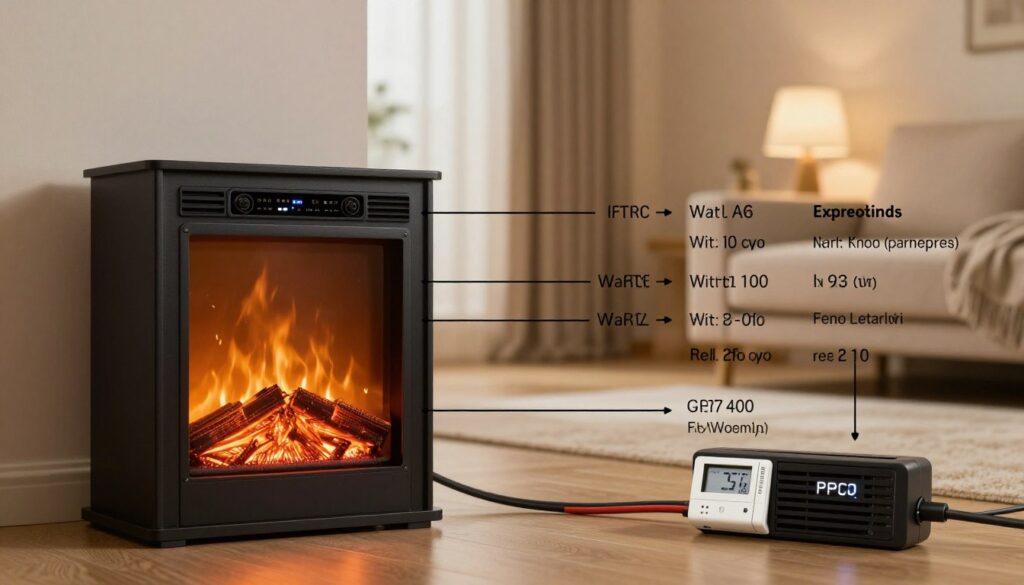
Electric fireplace inserts usually need 750 to 1,500 watts from a 120-volt outlet. A 15-amp circuit can handle up to 1,440 watts of continuous load. But, running at full power can be a tight squeeze. It’s best to use a dedicated circuit, away from other high-power appliances.
Operating Costs and Energy Consumption
The fireplace tv console is efficient, costing about $0.15 to $0.20 per hour to run. The LED flame display uses just 5 to 30 watts, which is very little.
| Mode | Wattage | Hourly Cost (avg.) | Monthly Cost (4 hrs/day) |
|---|---|---|---|
| Heat — Low | 750W | $0.10 | $12 |
| Heat — High | 1,500W | $0.20 | $25 |
| Flame Only (LED) | 5–30W | $0.004 | $0.50 |
Proper Outlet Usage and Extension Cord Warnings
My top tip: never use an extension cord. Brands like Dimplex and Twin Star advise against it. Extension cords can increase fire risk and lower power delivery. If your lights dim when the heater turns on, it’s a sign of a maxed circuit. Always plug directly into a wall outlet and keep the circuit free from other appliances.
Installation Process and Initial Setup
Setting up these units is almost embarrassingly easy. You start by sliding the unit out of the box. Many models from brands like Tresanti and Twin Star come pre-assembled. This means no confusing manuals, no leftover screws, and no worries.
But, these boxes are heavy. We’re talking 80 to 150 pounds. So, grab a friend or two to help. It makes the process safer and easier.
Here’s your quick-start checklist for electric fireplace tv stand functionality:
- Remove all packaging materials, foam inserts, and protective film from screens
- Install batteries in the remote control (usually AAA or AA)
- Locate the main power switch on the side of the fireplace insert — reach it through the back of the TV stand
- Plug the unit into a standard 120-volt wall outlet
- Flip that main switch to “on” before attempting remote operation
The adjustable feet can be tricky. If your unit sits on thick carpet, adjust the feet until it’s stable. For plush carpet, place a thin board underneath to avoid floor damage.
Skip the main power switch step, and your remote won’t do a thing — I learned that one the hard way.
The whole setup took me about 15 minutes. Just position, plug in, power on, and you’re good to go. You’ll be ready to explore all the features of your new electric fireplace tv stand functionality.
Operating Controls and Temperature Management
Learning how fireplace TV stands work means getting to know the controls. These units are like smartphones for home heating, full of features. Let’s explore the main controls that let you control your comfort.
Thermostat Functions and Temperature Settings
The built-in thermostat is your best friend on cold nights. Most models let you adjust the temperature between 62°F and 82°F in 2-degree increments. Once your room hits the set temperature, the heater cycles off on its own. The flame effect keeps dancing, though — giving you ambiance without extra heat.
I love this trick: set the thermostat below the current room temperature. You get beautiful flames with zero heat output. It’s perfect for those mild autumn evenings when you want the look without the warmth.
Timer Features and Auto-Shutoff Mechanisms
Timer settings are a lifesaver for anyone who falls asleep on the couch (guilty as charged). Most infrared heating technology tv stands offer timer ranges from 30 minutes up to 9 hours. The unit shuts down automatically when the timer expires.
| Timer Setting | Best Use Case | Energy Saved vs. All-Night Run |
|---|---|---|
| 30 minutes | Quick warm-up before bed | Up to 90% |
| 2 hours | Movie night heating | Up to 75% |
| 4 hours | Evening relaxation | Up to 50% |
| 9 hours | Overnight comfort | Minimal |
Fan Speed Controls and Heat Distribution
Fan speeds typically come in three options: low, medium, and high. Here’s a fun detail about infrared heating technology TV stands — you can run the fan without heat. The display switches to a cool blue glow instead of the traditional orange flames.
- Fan speed adjustments are locked during active heating cycles
- Oscillation features use moving louvers to spread warm air across wider areas
- Cool-fan mode circulates air during warmer months
These distribution features make a real difference in room coverage, pushing warmth into corners that would stay chilly with a static heater. Once you’ve mastered these controls, troubleshooting any performance issues becomes much easier.
Common Performance Issues and Troubleshooting
Even the best electric fireplace entertainment center components can have problems. I’ve seen many quirks that are easy to fix without a repair tech. Let’s look at the most common issues and how to solve them quickly.
Power Connection Problems and Solutions
Start by checking the obvious. Test the wall outlet with a lamp first. If the lamp works, the outlet is good. Then, check your 15-amp surge protector — it might have tripped.
Look at the power cord for cuts, fraying, or any signs of melting. A damaged cord needs to be replaced right away.
- Confirm the unit’s on/off switch is toggled correctly
- Reset any tripped circuit breakers at the panel
- Clear blocked ventilation openings on the unit
- Avoid daisy-chaining extension cords
Heating Element Failures and Warning Signs
If your unit shuts off after a few minutes, it’s overheat protection. This is a safety feature doing its job. Clean dust from vents and intake areas. Compressed air is great for this.
Heating elements usually last 10–15 years. So, if your unit is old, it might need a new one.
Flame Display Malfunctions and LED Issues
Jerky flame movement or missing sections usually mean a worn motor or failed LED strips. These are visual issues only — not safety hazards. A quick motor replacement can fix the problem.
If you ever notice smoke or a burning smell coming from your unit, unplug it immediately and contact the manufacturer.
| Symptom | Likely Cause | Fix |
|---|---|---|
| Unit won’t turn on | Tripped breaker or faulty outlet | Test outlet, reset breaker |
| Shuts off after minutes | Overheat protection triggered | Clear vents, remove dust |
| Flickering or jerky flames | Worn flame motor | Replace motor assembly |
| Dark spots in flame display | Failed LED strip sections | Replace LED strip |
Knowing your electric fireplace entertainment center components makes troubleshooting easy. Most safety features are designed to protect the unit. So, trust the system and fix the problem.
Maintenance Requirements for Optimal Performance
Keeping your electric fireplace TV stand in top shape is easier than watering a houseplant. A bit of regular care can make your electric fireplace last for many years.
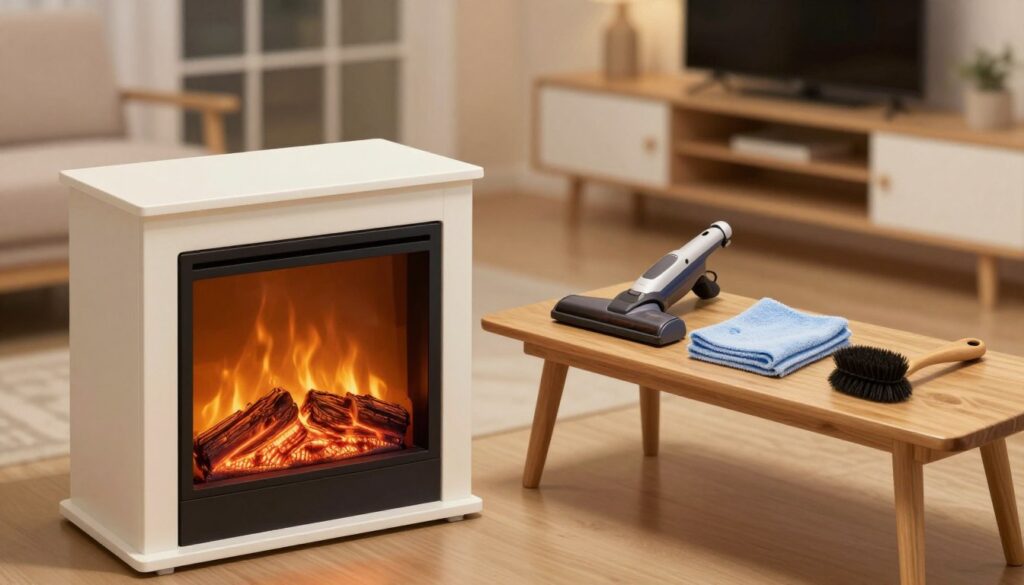
During the heating season, I suggest a monthly cleaning routine. First, unplug the unit for safety. Then, use a vacuum with a brush to clean the intake and exhaust grilles. Dust can cause overheating and shutdowns. Knowing how electric fireplace inserts work helps you understand the importance of airflow for safe heat.
Before the cold weather arrives, do a preseason checkup. Here’s what I do:
- Tighten all screws and mounting brackets that may have loosened over time
- Confirm the firebox sits squarely with no visible gaps
- Replace remote control batteries to avoid confusing dead batteries with receiver malfunctions
- Run flames and heater on high for 10–15 minutes, listening for unusual noises or odd smells
- Test each mode — heater, flame display, and fan — to verify full electric fireplace tv stand functionality
A well-maintained electric fireplace insert can last 10 to 20 years with proper care, according to the National Fire Protection Association.
| Maintenance Task | Frequency | Time Required |
|---|---|---|
| Vacuum intake and exhaust grilles | Monthly (heating season) | 5–10 minutes |
| Tighten screws and brackets | Annually | 10 minutes |
| Replace remote batteries | Annually | 2 minutes |
| Inspect firebox seating | Annually | 5 minutes |
| Preseason full-function test | Annually (before winter) | 15 minutes |
Understanding how electric fireplace inserts work helps you spot small problems early. By doing these simple tasks, your unit will provide cozy, trouble-free warmth all season.
Conclusion
Fireplace TV stands are clever pieces of furniture. They combine your entertainment setup with heating. This is done using LED flame effects and infrared or fan-forced heaters.
Most units can heat up to 400 to 500 square feet. This is thanks to their 4,600 to 5,200 BTUs output. It’s amazing how a piece of furniture can look so good and work so well.
These stands use standard household power. This makes them great for apartments and smaller homes. Running the heater costs about $0.15 to $0.20 per hour.
The flame effect also works on its own. It uses very little electricity to give you a cozy glow all year. You can even enjoy it in July if you like.
Remember, a little upkeep is important. Clean the vents monthly and check the hardware yearly. Also, watch out for any warning signs like shutdowns or strange smells.
These units have solid safety features. But, you need to take care of them too.
In the end, a fireplace TV stand offers zone heating, media storage, and ambiance. It’s a smart choice for anyone wanting warmth without the hassle of gas lines or chimney sweeps.
FAQ
How do fireplace TV stands work without a chimney or venting system?
What size TV can a fireplace TV stand actually support?
How does the electric fireplace insert heating mechanism actually produce warmth?
Can I run the flame effects without turning on the heater?
How realistic are the flame effects in these electric fireplaces?
What fireplace TV stand safety features should I know about?
Can I use an extension cord with my electric fireplace TV stand?
How much does it cost to run an electric fireplace TV stand?
FAQ
How do fireplace TV stands work without a chimney or venting system?
Fireplace TV stands are super easy to use. They plug into a wall outlet and use LED lights for flames. They also have heating elements that warm up your space.
These units don’t need any venting or chimney. They’re powered by electricity and controlled by a remote or touch panel. The LED flames use very little power, making them energy-efficient.
What size TV can a fireplace TV stand actually support?
Fireplace TV stands can hold TVs from 48 to 80 inches. Some models, like the Tresanti Mayson Media Mantel, can even support TVs up to 88 pounds.
Before buying, check the weight and size of the TV stand. These units are very sturdy, supporting up to 250 pounds for a 75-inch model.
How does the electric fireplace insert heating mechanism actually produce warmth?
Fireplace TV stands use infrared or fan-forced heating. Infrared heaters warm objects directly, while fan-forced heaters warm the air.
Both types use 1,200–1,500 watts to produce heat. Fan-forced models have adjustable speed settings for better heat distribution.
Can I run the flame effects without turning on the heater?
Yes, you can enjoy the flame effects without heat. They use very little power, about what a dim bulb uses.
These effects can be enjoyed year-round, even in summer. The LEDs last up to 50,000 hours, providing long-lasting ambiance.
How realistic are the flame effects in these electric fireplaces?
The flame effects in electric fireplaces are very realistic. They use LED lights and rotating elements to mimic real flames.
You can adjust the brightness and color of the flames to suit your mood. While they may not perfectly replicate real fire, they’re very convincing.
What fireplace TV stand safety features should I know about?
Fireplace TV stands have many safety features. They have overheat sensors and thermal fuses to prevent overheating.
They also have auto-shutoff and tip restraint ties for added safety. Look for UL or ETL certification marks to ensure they’ve been tested for safety.
Can I use an extension cord with my electric fireplace TV stand?
No, you shouldn’t use an extension cord with your electric fireplace TV stand. They draw a lot of power and can be a fire hazard.
If you can’t reach a wall outlet, use a 15-amp surge protector. But it’s best to plug it directly into the wall.
How much does it cost to run an electric fireplace TV stand?
Running an electric fireplace TV stand is very affordable. It costs about
FAQ
How do fireplace TV stands work without a chimney or venting system?
Fireplace TV stands are super easy to use. They plug into a wall outlet and use LED lights for flames. They also have heating elements that warm up your space.
These units don’t need any venting or chimney. They’re powered by electricity and controlled by a remote or touch panel. The LED flames use very little power, making them energy-efficient.
What size TV can a fireplace TV stand actually support?
Fireplace TV stands can hold TVs from 48 to 80 inches. Some models, like the Tresanti Mayson Media Mantel, can even support TVs up to 88 pounds.
Before buying, check the weight and size of the TV stand. These units are very sturdy, supporting up to 250 pounds for a 75-inch model.
How does the electric fireplace insert heating mechanism actually produce warmth?
Fireplace TV stands use infrared or fan-forced heating. Infrared heaters warm objects directly, while fan-forced heaters warm the air.
Both types use 1,200–1,500 watts to produce heat. Fan-forced models have adjustable speed settings for better heat distribution.
Can I run the flame effects without turning on the heater?
Yes, you can enjoy the flame effects without heat. They use very little power, about what a dim bulb uses.
These effects can be enjoyed year-round, even in summer. The LEDs last up to 50,000 hours, providing long-lasting ambiance.
How realistic are the flame effects in these electric fireplaces?
The flame effects in electric fireplaces are very realistic. They use LED lights and rotating elements to mimic real flames.
You can adjust the brightness and color of the flames to suit your mood. While they may not perfectly replicate real fire, they’re very convincing.
What fireplace TV stand safety features should I know about?
Fireplace TV stands have many safety features. They have overheat sensors and thermal fuses to prevent overheating.
They also have auto-shutoff and tip restraint ties for added safety. Look for UL or ETL certification marks to ensure they’ve been tested for safety.
Can I use an extension cord with my electric fireplace TV stand?
No, you shouldn’t use an extension cord with your electric fireplace TV stand. They draw a lot of power and can be a fire hazard.
If you can’t reach a wall outlet, use a 15-amp surge protector. But it’s best to plug it directly into the wall.
How much does it cost to run an electric fireplace TV stand?
Running an electric fireplace TV stand is very affordable. It costs about $0.15–$0.20 per hour to use the heater.
Running the flame effects alone is almost free, using just 5–30 watts. This makes it a cost-effective option for heating a single room.
How difficult is the setup and installation process?
Setting up an electric fireplace TV stand is very easy. Many models come fully assembled, so you just need to plug it in.
Some models may require a bit of assembly, but it’s usually straightforward. Make sure you have two people to lift the heavy box.
How does infrared heating technology in TV stands differ from fan-forced heating?
Infrared heating technology warms objects directly, like sunlight. Fan-forced heating warms the air and then circulates it.
Infrared heating feels more like sitting by a real fire, while fan-forced heating warms the room more evenly. Both types produce similar heat output.
What maintenance do electric fireplace TV stands require?
Electric fireplace TV stands require very little maintenance. You should vacuum the intake and exhaust grilles monthly during heating season.
Before the cold weather starts, check that all parts are secure and the firebox fits properly. Replace remote batteries annually. This is a low-effort way to enjoy your fireplace.
What are the main electric fireplace entertainment center components I should understand?
Electric fireplace entertainment centers have three main parts. The electric fireplace insert contains the heating elements and LED flames.
The TV stand is the furniture part that holds your TV. It has adjustable feet and a top surface for your TV. The storage system includes shelves and cupboards for your media and decorations.
What should I do if my electric fireplace keeps shutting off after a few minutes?
If your electric fireplace shuts off after a few minutes, it’s probably the overheat protection. This is a safety feature that shuts off the unit when it gets too hot.
First, unplug the unit and vacuum the vents. Make sure there’s enough space around the unit for airflow. If the problem persists, check for blockages in the air path and power connections.
FAQ
How do fireplace TV stands work without a chimney or venting system?
Fireplace TV stands are super easy to use. They plug into a wall outlet and use LED lights for flames. They also have heating elements that warm up your space.
These units don’t need any venting or chimney. They’re powered by electricity and controlled by a remote or touch panel. The LED flames use very little power, making them energy-efficient.
What size TV can a fireplace TV stand actually support?
Fireplace TV stands can hold TVs from 48 to 80 inches. Some models, like the Tresanti Mayson Media Mantel, can even support TVs up to 88 pounds.
Before buying, check the weight and size of the TV stand. These units are very sturdy, supporting up to 250 pounds for a 75-inch model.
How does the electric fireplace insert heating mechanism actually produce warmth?
Fireplace TV stands use infrared or fan-forced heating. Infrared heaters warm objects directly, while fan-forced heaters warm the air.
Both types use 1,200–1,500 watts to produce heat. Fan-forced models have adjustable speed settings for better heat distribution.
Can I run the flame effects without turning on the heater?
Yes, you can enjoy the flame effects without heat. They use very little power, about what a dim bulb uses.
These effects can be enjoyed year-round, even in summer. The LEDs last up to 50,000 hours, providing long-lasting ambiance.
How realistic are the flame effects in these electric fireplaces?
The flame effects in electric fireplaces are very realistic. They use LED lights and rotating elements to mimic real flames.
You can adjust the brightness and color of the flames to suit your mood. While they may not perfectly replicate real fire, they’re very convincing.
What fireplace TV stand safety features should I know about?
Fireplace TV stands have many safety features. They have overheat sensors and thermal fuses to prevent overheating.
They also have auto-shutoff and tip restraint ties for added safety. Look for UL or ETL certification marks to ensure they’ve been tested for safety.
Can I use an extension cord with my electric fireplace TV stand?
No, you shouldn’t use an extension cord with your electric fireplace TV stand. They draw a lot of power and can be a fire hazard.
If you can’t reach a wall outlet, use a 15-amp surge protector. But it’s best to plug it directly into the wall.
How much does it cost to run an electric fireplace TV stand?
Running an electric fireplace TV stand is very affordable. It costs about
FAQ
How do fireplace TV stands work without a chimney or venting system?
Fireplace TV stands are super easy to use. They plug into a wall outlet and use LED lights for flames. They also have heating elements that warm up your space.
These units don’t need any venting or chimney. They’re powered by electricity and controlled by a remote or touch panel. The LED flames use very little power, making them energy-efficient.
What size TV can a fireplace TV stand actually support?
Fireplace TV stands can hold TVs from 48 to 80 inches. Some models, like the Tresanti Mayson Media Mantel, can even support TVs up to 88 pounds.
Before buying, check the weight and size of the TV stand. These units are very sturdy, supporting up to 250 pounds for a 75-inch model.
How does the electric fireplace insert heating mechanism actually produce warmth?
Fireplace TV stands use infrared or fan-forced heating. Infrared heaters warm objects directly, while fan-forced heaters warm the air.
Both types use 1,200–1,500 watts to produce heat. Fan-forced models have adjustable speed settings for better heat distribution.
Can I run the flame effects without turning on the heater?
Yes, you can enjoy the flame effects without heat. They use very little power, about what a dim bulb uses.
These effects can be enjoyed year-round, even in summer. The LEDs last up to 50,000 hours, providing long-lasting ambiance.
How realistic are the flame effects in these electric fireplaces?
The flame effects in electric fireplaces are very realistic. They use LED lights and rotating elements to mimic real flames.
You can adjust the brightness and color of the flames to suit your mood. While they may not perfectly replicate real fire, they’re very convincing.
What fireplace TV stand safety features should I know about?
Fireplace TV stands have many safety features. They have overheat sensors and thermal fuses to prevent overheating.
They also have auto-shutoff and tip restraint ties for added safety. Look for UL or ETL certification marks to ensure they’ve been tested for safety.
Can I use an extension cord with my electric fireplace TV stand?
No, you shouldn’t use an extension cord with your electric fireplace TV stand. They draw a lot of power and can be a fire hazard.
If you can’t reach a wall outlet, use a 15-amp surge protector. But it’s best to plug it directly into the wall.
How much does it cost to run an electric fireplace TV stand?
Running an electric fireplace TV stand is very affordable. It costs about $0.15–$0.20 per hour to use the heater.
Running the flame effects alone is almost free, using just 5–30 watts. This makes it a cost-effective option for heating a single room.
How difficult is the setup and installation process?
Setting up an electric fireplace TV stand is very easy. Many models come fully assembled, so you just need to plug it in.
Some models may require a bit of assembly, but it’s usually straightforward. Make sure you have two people to lift the heavy box.
How does infrared heating technology in TV stands differ from fan-forced heating?
Infrared heating technology warms objects directly, like sunlight. Fan-forced heating warms the air and then circulates it.
Infrared heating feels more like sitting by a real fire, while fan-forced heating warms the room more evenly. Both types produce similar heat output.
What maintenance do electric fireplace TV stands require?
Electric fireplace TV stands require very little maintenance. You should vacuum the intake and exhaust grilles monthly during heating season.
Before the cold weather starts, check that all parts are secure and the firebox fits properly. Replace remote batteries annually. This is a low-effort way to enjoy your fireplace.
What are the main electric fireplace entertainment center components I should understand?
Electric fireplace entertainment centers have three main parts. The electric fireplace insert contains the heating elements and LED flames.
The TV stand is the furniture part that holds your TV. It has adjustable feet and a top surface for your TV. The storage system includes shelves and cupboards for your media and decorations.
What should I do if my electric fireplace keeps shutting off after a few minutes?
If your electric fireplace shuts off after a few minutes, it’s probably the overheat protection. This is a safety feature that shuts off the unit when it gets too hot.
First, unplug the unit and vacuum the vents. Make sure there’s enough space around the unit for airflow. If the problem persists, check for blockages in the air path and power connections.
.15–
FAQ
How do fireplace TV stands work without a chimney or venting system?
Fireplace TV stands are super easy to use. They plug into a wall outlet and use LED lights for flames. They also have heating elements that warm up your space.
These units don’t need any venting or chimney. They’re powered by electricity and controlled by a remote or touch panel. The LED flames use very little power, making them energy-efficient.
What size TV can a fireplace TV stand actually support?
Fireplace TV stands can hold TVs from 48 to 80 inches. Some models, like the Tresanti Mayson Media Mantel, can even support TVs up to 88 pounds.
Before buying, check the weight and size of the TV stand. These units are very sturdy, supporting up to 250 pounds for a 75-inch model.
How does the electric fireplace insert heating mechanism actually produce warmth?
Fireplace TV stands use infrared or fan-forced heating. Infrared heaters warm objects directly, while fan-forced heaters warm the air.
Both types use 1,200–1,500 watts to produce heat. Fan-forced models have adjustable speed settings for better heat distribution.
Can I run the flame effects without turning on the heater?
Yes, you can enjoy the flame effects without heat. They use very little power, about what a dim bulb uses.
These effects can be enjoyed year-round, even in summer. The LEDs last up to 50,000 hours, providing long-lasting ambiance.
How realistic are the flame effects in these electric fireplaces?
The flame effects in electric fireplaces are very realistic. They use LED lights and rotating elements to mimic real flames.
You can adjust the brightness and color of the flames to suit your mood. While they may not perfectly replicate real fire, they’re very convincing.
What fireplace TV stand safety features should I know about?
Fireplace TV stands have many safety features. They have overheat sensors and thermal fuses to prevent overheating.
They also have auto-shutoff and tip restraint ties for added safety. Look for UL or ETL certification marks to ensure they’ve been tested for safety.
Can I use an extension cord with my electric fireplace TV stand?
No, you shouldn’t use an extension cord with your electric fireplace TV stand. They draw a lot of power and can be a fire hazard.
If you can’t reach a wall outlet, use a 15-amp surge protector. But it’s best to plug it directly into the wall.
How much does it cost to run an electric fireplace TV stand?
Running an electric fireplace TV stand is very affordable. It costs about $0.15–$0.20 per hour to use the heater.
Running the flame effects alone is almost free, using just 5–30 watts. This makes it a cost-effective option for heating a single room.
How difficult is the setup and installation process?
Setting up an electric fireplace TV stand is very easy. Many models come fully assembled, so you just need to plug it in.
Some models may require a bit of assembly, but it’s usually straightforward. Make sure you have two people to lift the heavy box.
How does infrared heating technology in TV stands differ from fan-forced heating?
Infrared heating technology warms objects directly, like sunlight. Fan-forced heating warms the air and then circulates it.
Infrared heating feels more like sitting by a real fire, while fan-forced heating warms the room more evenly. Both types produce similar heat output.
What maintenance do electric fireplace TV stands require?
Electric fireplace TV stands require very little maintenance. You should vacuum the intake and exhaust grilles monthly during heating season.
Before the cold weather starts, check that all parts are secure and the firebox fits properly. Replace remote batteries annually. This is a low-effort way to enjoy your fireplace.
What are the main electric fireplace entertainment center components I should understand?
Electric fireplace entertainment centers have three main parts. The electric fireplace insert contains the heating elements and LED flames.
The TV stand is the furniture part that holds your TV. It has adjustable feet and a top surface for your TV. The storage system includes shelves and cupboards for your media and decorations.
What should I do if my electric fireplace keeps shutting off after a few minutes?
If your electric fireplace shuts off after a few minutes, it’s probably the overheat protection. This is a safety feature that shuts off the unit when it gets too hot.
First, unplug the unit and vacuum the vents. Make sure there’s enough space around the unit for airflow. If the problem persists, check for blockages in the air path and power connections.
.20 per hour to use the heater.
Running the flame effects alone is almost free, using just 5–30 watts. This makes it a cost-effective option for heating a single room.
How difficult is the setup and installation process?
Setting up an electric fireplace TV stand is very easy. Many models come fully assembled, so you just need to plug it in.
Some models may require a bit of assembly, but it’s usually straightforward. Make sure you have two people to lift the heavy box.
How does infrared heating technology in TV stands differ from fan-forced heating?
Infrared heating technology warms objects directly, like sunlight. Fan-forced heating warms the air and then circulates it.
Infrared heating feels more like sitting by a real fire, while fan-forced heating warms the room more evenly. Both types produce similar heat output.
What maintenance do electric fireplace TV stands require?
Electric fireplace TV stands require very little maintenance. You should vacuum the intake and exhaust grilles monthly during heating season.
Before the cold weather starts, check that all parts are secure and the firebox fits properly. Replace remote batteries annually. This is a low-effort way to enjoy your fireplace.
What are the main electric fireplace entertainment center components I should understand?
Electric fireplace entertainment centers have three main parts. The electric fireplace insert contains the heating elements and LED flames.
The TV stand is the furniture part that holds your TV. It has adjustable feet and a top surface for your TV. The storage system includes shelves and cupboards for your media and decorations.
What should I do if my electric fireplace keeps shutting off after a few minutes?
If your electric fireplace shuts off after a few minutes, it’s probably the overheat protection. This is a safety feature that shuts off the unit when it gets too hot.
First, unplug the unit and vacuum the vents. Make sure there’s enough space around the unit for airflow. If the problem persists, check for blockages in the air path and power connections.

giveitlegs@live.com
Contributing writer covering Honest reviews & buying help for fireplace TV stands and electric media consoles..
Similar Posts
Where to Buy Fully Assembled TV Stands with Fireplace
Looking for where to buy fully assembled TV stands with fireplace? Discover top stores with stylish, hassle-free options perfect for cozy living rooms.
Do Fireplace TV Stands Give Off Heat Yes or No Explained
Curious if do fireplace tv stands give off heat? I’ve got the scoop on how much warmth they produce and if they’ll toast your toes or just look cool.
The Best Art Deco Fireplace TV Stands
Here’s my honest shortlist for best art deco fireplace tv stands. Every pick below is a real, currently-sold model on Amazon, and I’ve focused on the heate
Are TV Stands with Fireplaces Safe What You Need to Know
Wondering are tv stands with fireplaces safe? I break down the facts so you can cozy up without worry. Stay warm and informed!
The Best Fireplace TV Stands With Soundbar Space
Here’s my honest shortlist for best fireplace tv stands with soundbar space. Every pick below is a real, currently-sold model on Amazon, and I’ve focused o
The Best Fireplace TV Stands With a Crystal Ember Bed
Here’s my honest shortlist for best fireplace tv stands with a crystal ember bed. Every pick below is a real, currently-sold model on Amazon, and I’ve focu