Do TV Stand Fireplaces Actually Work? My Honest Take
Affiliate links — we may earn a commission
Last January, I was freezing in my living room. The central heat wasn’t working, and my toes were cold. I wondered if TV stand fireplaces were just a fancy piece of furniture or if they actually worked.
I thought they were a gimmick. Just a fancy piece of wood with lights. But, desperate for warmth, I bought one for $400.
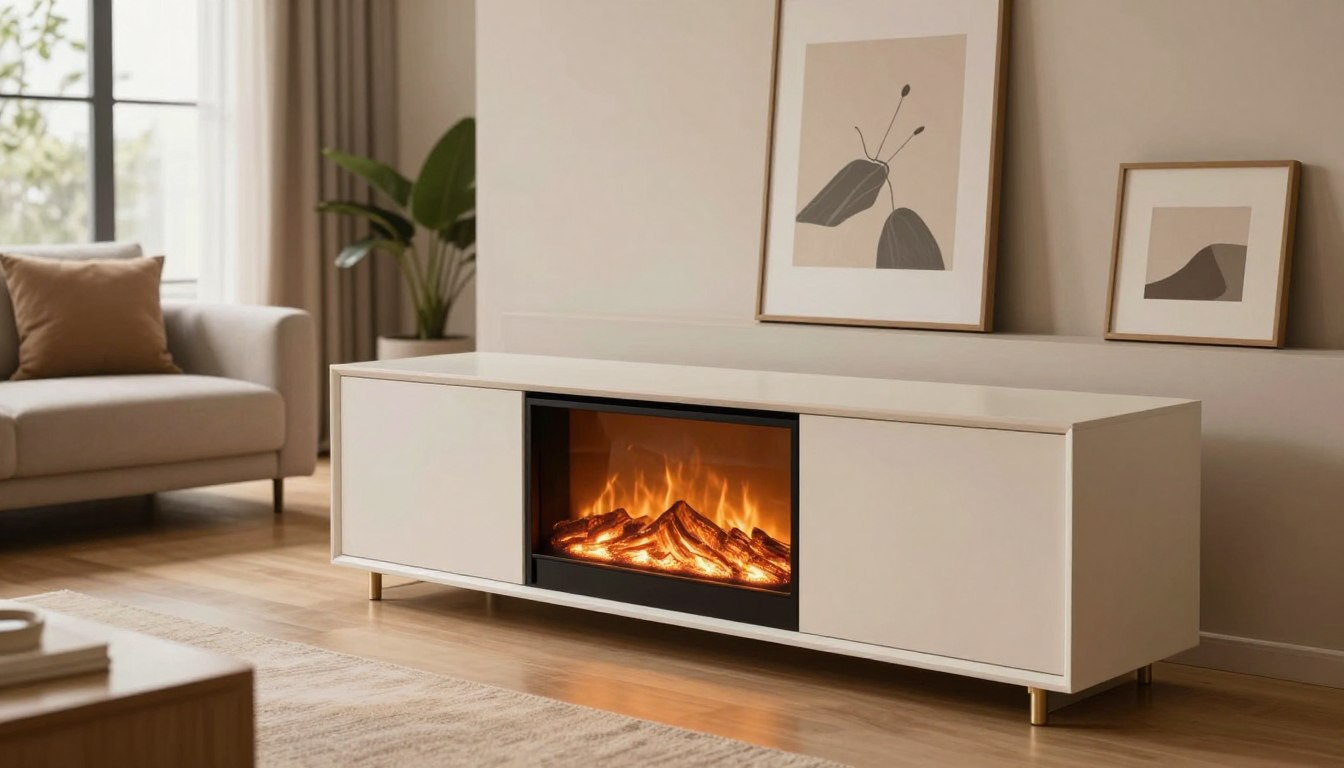
Modern fireplaces from brands like Dimplex and Walker Edison are different. They use LED lights to create real-looking flames. It’s not perfect, but it’s very close.
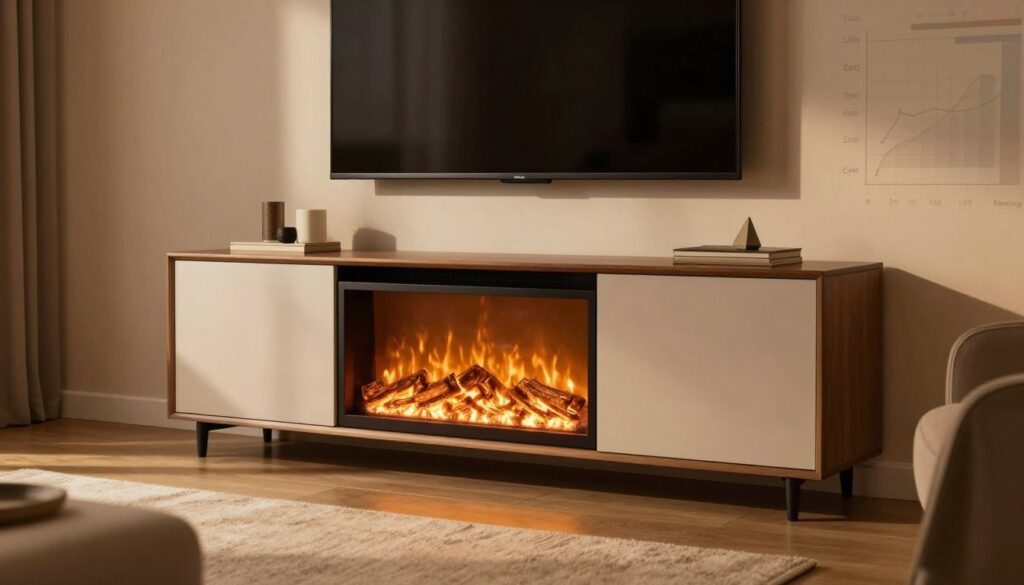
The design sold me. It’s a TV stand, an electric fireplace, and a heat source all in one. My TV is at a comfortable height, and the fireplace keeps me warm on cold nights. It looks like I planned it, not just survived.
For weeks, I wondered if TV stand fireplaces were worth it. After three months, I have strong opinions. Some are good, some are painful. But they’re all earned the hard way.
Key Takeaways
- Modern TV stand fireplaces use advanced LED projection — not cheap plastic — to create realistic flame effects with genuine depth.
- These units serve triple duty as a media console, supplemental heat source, and room focal point in one piece of furniture.
- TV placement sits at an ergonomic 24–32 inches, solving the “neck crank” problem of TVs mounted above traditional fireplaces.
- Electric fireplace tv stand heat output can meaningfully warm a room, but results depend on your space and expectations.
- The question “do tv stand fireplaces actually work” has a nuanced answer — they’re not a furnace replacement, but they’re far from useless.
- Tv stand fireplace effectiveness comes down to room size, outlet placement, and whether you treat it as a supplement or a primary heat source.
My Journey from Skeptic to Convert (And Why I Nearly Returned Mine)
I used to think fireplace TV consoles were silly. They looked like something from a bad 90s screensaver. The fancy mantels seemed out of place in today’s homes. I thought they were just a waste of money.
The Winter That Changed Everything
January was very cold. My living room was drafty and ugly. I had no fireplace and no money to fix it. I started looking for tv stands with fireplaces, wondering if they really worked.
It turns out, they do. The LED flames are very realistic. Designers have moved away from old-fashioned looks to something more modern.
First Impressions vs. Three Months Later
At first, I liked the look of the tv stand. It didn’t look fake. But some models with shiny finishes looked cheap. After three months, it became the centerpiece of my room.
What Nobody Tells You About the Break-In Period
The first few days, it smelled like plastic. No one warned me about this. I almost sent it back. But by the second week, the smell was gone.
I wondered if it really made my room warmer. The answer was yes, and I’ll explain why in the next section.
| Expectation | Week 1 Reality | Month 3 Reality |
|---|---|---|
| Flame realism | Surprisingly convincing | Guests asked if it was gas |
| Build quality | Solid but plasticky hardware | Held up with zero issues |
| Smell | Warm plastic odor | Completely gone |
| Room aesthetics | Instant upgrade | True focal point |
Do TV Stand Fireplaces Actually Work for Heating Your Space?
People often ask if electric fireplace TV stands really work. They want facts, not just sales talk. I tested mine for weeks, logging temperatures and using it fully. The answer? They do work, but with some important caveats.
Real Numbers: BTU Output and Room Coverage
Most electric fireplace TV stands produce 4,600 to 5,200 BTUs. They claim to heat up to 1,000 square feet. But, this is a bit too optimistic.
Think of these units as a way to warm up a cold basement or drafty room. They can’t replace your main heating system.
“Supplemental heating can reduce overall HVAC costs by allowing homeowners to lower their thermostat while warming occupied rooms.” — U.S. Department of Energy
The 400-Square-Foot Sweet Spot
In my tests, a 1,500-watt unit warmed a 400- to 500-square-foot room in 30 to 45 minutes. This is the best spot for these units. Beyond 500 square feet, the heat drops off quickly.
You’ll feel warm near the unit, but the other side of the room will only be slightly warmer.
Why Your Circuit Breaker Matters More Than You Think
A 1,500-watt heater uses about 12.5 amps on a standard 120-volt circuit. Most homes have 15-amp circuits. This leaves you with just 2.5 amps for other things.
- Soundbar: ~0.5 amps
- Wi-Fi router: ~0.5 amps
- Gaming console: ~1.5–2.5 amps
- Table lamp: ~0.5 amps
Adding all these to the same circuit can cause your breaker to trip. I learned this the hard way during a playoff game. For the best performance, use a dedicated or lightly loaded 15-amp circuit. Your sanity will thank you.
The Fake Flame Technology That Fooled Me
I’ll be blunt: some electric flame effects look like a screensaver from a 2014 budget smartphone. I almost gave up on the whole concept after seeing a few cheap models flickering away like a dying flashlight. That was before I discovered multi-layered LED projection.

Modern units from brands like Dimplex and Twin Star use stacked LED panels that create genuine depth. You see glowing embers beneath dancing flames, and the effect mimics a real wood-burning fire. This is where tv stand fireplace effectiveness truly shines — the visual experience can make or break the product. My one piece of advice? Never judge flames from stills. Find video reviews on YouTube. Stills lie.
Brightness control is the feature that separates a fireplace tv stand worth it from an expensive regret. Here’s what I mean:
- Cheap units offer one setting — a blazing neon bonfire that lights up your living room like a casino sign
- Quality units let you dial from a roaring fire down to a soft ember glow perfect for reading
- The best models offer five or more brightness levels with adjustable flame color
The game-changer? Heat and flame controls are independent. I run my flame-only mode about nine months out of the year. The LED effect draws minimal power and sets the mood on summer evenings without turning my living room into a sauna. I fire up the heater for maybe eight chilly evenings total.
The moment I realized my guests were asking what kind of wood I was burning, I knew the technology had crossed a threshold.
That independent control is a massive factor in tv stand fireplace effectiveness. You get year-round ambiance for pennies, and a fireplace tv stand worth it becomes a four-season piece of furniture, not just a winter-only appliance.
Heat Distribution: Where the Warmth Actually Goes
Do fireplace tv consoles produce heat that reaches you? Yes, but where that heat goes is key. I learned this the hard way, sitting in a cold spot just six feet from my unit, wondering if it was broken.
Forward vs. Downward Venting Explained
Good units vent heat downward and forward through vents at the front. This design works with physics, not against it. Hot air naturally rises, so venting it down first helps it spread across the room before rising.
The surface where your TV sits stays cool. Cheap models that vent upward can damage your electronics. Choose brands like Dimplex or ClassicFlame for forward-facing exhaust.
| Vent Direction | Room Coverage | TV Safety | Best For |
|---|---|---|---|
| Forward | Even floor-level spread | Safe — heat directed away | Floor-mounted consoles |
| Downward | Good — uses natural convection | Safe — minimal upward drift | Wall-mounted floating units |
| Upward | Poor — heat rises too fast | Risky — direct heat to TV | Avoid entirely |
The Dead Zone Problem Nobody Mentions
Fan-forced heaters create a warm cone about 8–10 feet wide. Beyond that, it’s a dead zone. I placed my couch 12 feet away and felt nothing.
Infrared quartz models handle this better and won’t dry out the air as much. The electric fireplace tv stand heat output sweet spot is within that 10-foot radius.
Why TV Placement Above Makes or Breaks Performance
Most manufacturers say keep 4–8 inches of clearance between the heater outlet and your TV’s bottom edge. I measured mine obsessively. Keep these guidelines in mind:
- Never block the top vent with a TV pressed flat against the console surface
- Use a built-in TV shelf or mount that maintains proper spacing
- Check your TV’s underside temperature weekly during the first month
“The best heater in the world is useless if it’s warming your ceiling instead of your couch.”
Understanding electric fireplace tv stand heat output patterns saved me from repositioning my entire living room — twice.
Power Draw Reality Check: What It Costs to Run
Let’s talk about the number your wallet cares about most. Understanding how well do electric fireplace tv stands work means facing the electricity bill head-on. I tracked my usage for three months, and the results were eye-opening.
The 1,500-Watt Truth About Your Electric Bill
Most units ship with two heat settings: 750 watts and 1,500 watts. The top setting pulls about 12.5 amps on a standard 120-volt circuit. This leaves just 2.5 amps for everything else on that circuit.
My living room outlet was sharing duty with a soundbar, a router, a gaming console, and two lamps. I learned about breaker trips the hard way — mid-movie, total darkness, popcorn everywhere.
At the national average of $0.16 per kWh, running the heater on high costs about $0.24 per hour. That’s roughly $1.92 for an eight-hour evening. Over a full winter month of daily use, expect an extra $55 to $60 on your electric bill.
Comparing Costs to Space Heaters and Central Heat
Electric fireplace media console performance in energy costs sits right alongside portable space heaters — because the technology is nearly identical. The real question is how it stacks up against your furnace.
| Heating Source | Wattage / BTU | Cost per Hour | Monthly Cost (8 hrs/day) |
|---|---|---|---|
| Electric Fireplace TV Stand (High) | 1,500W / 5,100 BTU | $0.24 | $57.60 |
| Electric Fireplace TV Stand (Low) | 750W / 2,550 BTU | $0.12 | $28.80 |
| Ceramic Space Heater | 1,500W / 5,100 BTU | $0.24 | $57.60 |
| Natural Gas Furnace (avg home) | 80,000 BTU | $1.20 | $288.00 |
The takeaway? These units deliver supplemental warmth, not a furnace replacement. Don’t expect your gas bill to drop much. Use the low setting to zone-heat a single room, and you’ll keep costs reasonable while enjoying that cozy glow. Smart usage makes all the difference in how well do electric fireplace tv stands work for your budget.
Storage Trade-Offs That Hit Me Hard
I learned a hard lesson: that fireplace insert eats your storage alive. In every tv stand with fireplace review I read, this wasn’t made clear. The fireplace unit takes the entire center cavity. This means you lose 30–40 percent of storage space compared to a regular TV console.
I wanted to control clutter. My old setup was a mess, with a router, a PlayStation 5, and lots of cables. I needed a solution, not just looks.
But, side cabinets on most fireplace stands are surprisingly good. I fit my Eero mesh Wi-Fi system, all three controllers, and a streaming stick in one side. Zero visible wires. The cable management cutouts in the back actually work, which was a miracle.
Is a fireplace tv stand worth it if storage matters to you? It depends on how much gear you’re hiding. Here’s a quick breakdown based on my experience:
| Feature | Standard TV Stand (60″) | Fireplace TV Stand (60″) |
|---|---|---|
| Total Interior Cubic Feet | 8.5 cu ft | 5.2 cu ft |
| Number of Shelved Compartments | 3–4 | 2 (side only) |
| Cable Management Cutouts | 1–2 | 2–3 |
| Fits Full-Size Gaming Console | Yes, center or side | Side only |
| Dust Accumulation Underneath | High (open bottom) | Low (enclosed design) |
The enclosed design is more practical than my old open credenza. It collects less dust. I lost volume but gained actual organization — a trade I’d make again.
Installation Nightmares and Safety Concerns I Discovered
I thought choosing the right model was the hard part. But I was wrong. The real challenge is installing one without making your living room unsafe. Let me share the mistakes I almost made.
Wall-Mounted vs. Floor Models: The Heat Difference
Floating units can weigh between 60 and 120 pounds, before adding a TV. That’s a lot of weight. You need at least three solid stud anchors for anything over 100 pounds. A 3/8-inch lag bolt into a wood stud can handle about 400 pounds of shear strength and 300 pounds of pull-out strength.
Drywall anchors alone won’t do. Your TV must be wall-mounted separately into structural studs, never resting on the floating unit itself.
The electric fireplace tv stand heat output on floor models vents forward, warming your legs. Floating units push heat downward, changing the room’s dynamic.
Why UL Certification Isn’t Just Legal Jargon
Any unit you buy needs UL or ETL certification for indoor use. This confirms the heating element, wiring, and thermal cutoff have been tested. Brands like POVISON list wattage, certification, and recommended circuit type on their spec sheets. Skipping this step is like gambling with a heat-producing appliance on your wall.
The Outlet Placement Disaster I Almost Made
I nearly left a power cord dangling behind my unit like a fire-starter ribbon. The fix? I hired an electrician to install a recessed outlet directly behind the stand. A horizontal cord cover works as a budget alternative. Either way, cords should never hang loose near a device pulling 1,500 watts.
My electrician told me: “People treat these like furniture. They’re appliances. Respect the wattage.”
When They’re Worth It (And When to Run Away)
After months of testing, I’ve made a clear decision. Whether a fireplace tv stand is worth it depends on your living situation. Here’s how to avoid wasting money or time.
Perfect Scenarios for TV Stand Fireplaces
These units are best in certain situations. If you fit into any of these, you’re in luck:
- You live in a small condo or apartment and want a designed look without a contractor.
- Your living room is under 400 square feet with clear sight lines.
- You’re staying put for at least two to three years (wall-mounted installs aren’t worth it for short stays).
- You want ambient warmth and electric flame ambiance — not a furnace replacement.
Do fireplace tv consoles produce heat? Yes, but they’re best as supplemental warmth. They add gorgeous visuals to modern, minimal rooms.
Deal-Breakers I Learned the Hard Way
Some red flags should send you running. I mean, full sprint, no looking back.
| Red Flag | Why It Matters |
|---|---|
| No heater wattage listed on the spec sheet | You can’t evaluate energy cost or heat output |
| Missing UL or ETL certification | No third-party safety testing was done |
| No minimum TV clearance specified | Risk of overheating your TV or voiding its warranty |
| Vent direction not disclosed | You’ll have no idea where heat actually goes |
If a brand doesn’t share wattage, amperage, or certification, it’s a gamble. Skip it. Renters who move often should choose floor-standing models. They avoid stud-finding and anchor holes.
A fireplace tv stand worth it is one that tells you exactly what it does before you open your wallet.
Conclusion
So, do tv stand fireplaces actually work? After three winters, I can say yes, but with some conditions. I went from doubting it to believing it fully. These units are not just for those who can’t afford a real chimney. They’re a great choice for anyone wanting a cozy, organized space without major renovations.
The effectiveness of a tv stand fireplace depends on a few important numbers. You need to know the heater’s wattage, the UL or ETL certification mark, and the minimum clearance from your TV. If you get these right, you’ll have a unit made for your space. But if you don’t, it might overheat your electronics or trip your breaker.
Now, my living room has a TV at a perfect height, and a heater that warms 400 square feet in February. You can adjust the flame settings for ambiance in July without the heat. Plus, independent controls let you set the exact warmth you need in January. It’s a furniture piece that works all year. If you’re unsure, just check those specs, choose a quality brand, and try it. Your February self will thank you.
Do TV stand fireplaces actually work for heating a room?
How well do electric fireplace TV stands work compared to regular space heaters?
Do fireplace TV consoles produce enough heat to replace central heating?
Can I run the flame effect without the heater turned on?
Is a fireplace TV stand worth it if I live in an apartment or rental?
Will the heat from the fireplace damage my TV sitting on top?
How realistic do the flames actually look in a TV stand fireplace review?
Can a TV stand fireplace trip my circuit breaker?
What electric fireplace media console performance specs should I look for before buying?
How much storage do I lose compared to a regular TV stand?
What’s the ideal TV stand fireplace height for comfortable viewing?
Are floating fireplace TV stands safe to wall-mount?

giveitlegs@live.com
Contributing writer covering Honest reviews & buying help for fireplace TV stands and electric media consoles..