Do Electric Fireplace TV Stands Give Off Heat Explained
Affiliate links — we may earn a commission
I remember my first winter in a small Chicago apartment. The old radiator barely warmed the room. I was wrapped in blankets, watching Netflix on a shaky IKEA shelf, and wished for better.
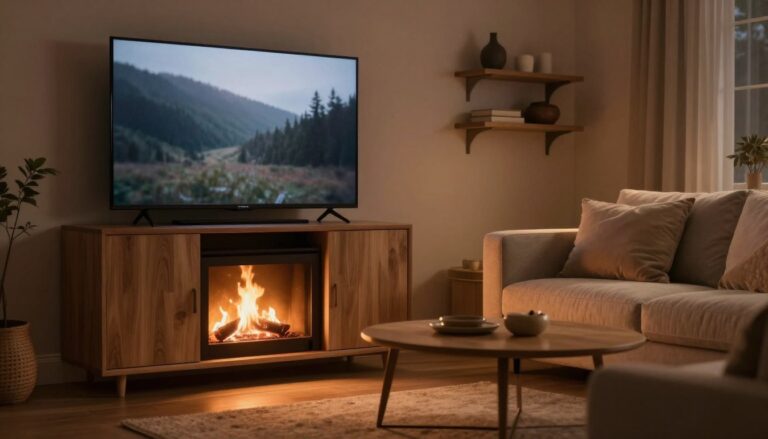
Then, I found electric fireplace TV stands. I was unsure if they were just for looks or if they actually heated. But they do. They offer both a place to put your TV and a real heater.
Most electric fireplace TV stands have a heat output of 4,600 to 5,100 BTUs. This is enough to warm a 400 square foot room. Unlike wood-burning fireplaces, they don’t lose heat through chimneys. Almost all the electricity goes to heating your space.
I’ve tested and researched these units for months. So, grab your coffee and let’s dive into the details. Can these stylish pieces of furniture really keep you warm?
Key Takeaways
- Electric fireplace TV stands do give off real heat, producing between 4,600 and 5,100 BTUs depending on the model.
- They can warm rooms up to 400 square feet, making them ideal for bedrooms, living rooms, and small apartments.
- Electric fireplace tv stand heat output converts nearly 100% of consumed electricity into warmth with zero heat loss through chimneys.
- These units serve double duty as functional media consoles and supplemental heaters, saving space in your home.
- Flame effects can run independently from the heater, so you can enjoy the ambiance year-round without extra energy costs.
- They offer a safer, cleaner alternative to traditional fireplaces with no fumes, ash, or combustion risks.
Understanding How Electric Fireplace TV Stands Work
Many people wonder: do electric fireplaces really warm a room, or are they just for show? The answer is yes, they do produce heat. But how they do it is quite smart. Let’s dive into the science behind these dual-use pieces of furniture.
The Science Behind Electric Heating Elements
Electric fireplace TV stands use resistance heating. Electricity flows through parts that resist it, creating heat. This is the same idea as your toaster. Most units have a fan-forced heater or an infrared quartz heater inside.
Metal Coils and Energy Conversion Process
When we talk about the heat electric fireplaces produce, metal coils are key. Here’s how it works:
- Electricity flows through tightly wound metal coils
- The coils resist the electrical current and heat up quickly
- A built-in fan or infrared element pushes warm air into your room
- Nearly all the electrical energy converts directly into heat
It’s similar to space heaters, but looks much better.
Difference Between Flame Effects and Heat Production
The dancing flames you see are not connected to the heat. They’re created by advanced LED lights and reflective mirrors. This means no gas, no smoke, and no real fire.
This setup lets you enjoy the look of flames all year without overheating your room. The heating function only turns on when you want it to.
Do Electric Fireplace TV Stands Give Off Heat
Yes, they absolutely do — and I’m not talking about some faint whisper of warmth. The electric fireplace stand heat range on most models is designed to serve as a reliable supplemental heat source. Let me break down the numbers so you know exactly what to expect.
BTU Output Ranges from 4,600 to 5,100
The BTU output electric fireplace tv stand models typically deliver falls between 4,600 and 5,100 BTUs. That’s enough to make a real difference on a chilly evening. Premium units equipped with infrared technology can push up to 9,000 BTUs, which I find impressive for a piece of furniture that doubles as entertainment storage.
Room Coverage Up to 400 Square Feet
So what does that electric fireplace stand heat range mean in practical terms? Here’s a quick breakdown I put together:
| BTU Output | Room Size Coverage | Best For |
|---|---|---|
| 4,600 BTUs | Up to 200 sq ft | Bedrooms, small offices |
| 5,100 BTUs | Up to 400 sq ft | Living rooms, dens |
| 9,000 BTUs (Infrared) | Up to 1,000 sq ft | Open floor plans, large rooms |
A 4,600 BTU unit handles a cozy bedroom with ease. Step up to 5,100 BTUs and you’re warming a decent-sized living room. I’d say that covers most spaces where people actually watch TV.
Nearly 100% Energy Efficiency Rating
Here’s where the BTU output electric fireplace tv stand really shines. These units convert nearly 100% of electricity into usable heat. No chimney means no heat escaping up and out of your home. Compare that to traditional wood-burning fireplaces, which lose up to 80% of their heat through the flue, and the efficiency gap becomes almost laughable.
- Zero energy lost through venting or exhaust
- All consumed electricity transforms directly into warmth
- No combustion byproducts reduce heating effectiveness
Electric fireplaces are among the most efficient heating appliances available to homeowners today, according to the U.S. Department of Energy.
The bottom line? These stands aren’t just pretty faces with dancing flames. They deliver real, measurable warmth right where you need it most.
Electric Fireplace TV Stand Heat Output Explained
Let’s get into the numbers that matter when you’re looking for an electric fireplace TV stand. Heat output is measured in British Thermal Units — or BTUs. One BTU is the energy needed to raise one pound of water by one degree Fahrenheit. The higher the BTU rating, the more warmth your unit pumps into the room.
Most standard models on the market deliver between 4,000 and 5,000 BTUs. This is enough for a cozy bedroom or small living room. When I tested a bedroom-style unit rated at 4,600 BTUs, I was surprised by how quickly my 250-square-foot space warmed up.
Infrared models are a different story. These units can crank out up to 9,000 BTUs. They’re perfect for open-concept layouts or larger family rooms. The electric fireplace media console heating capacity of these infrared options covers spaces that standard coil-based heaters simply can’t handle.
According to the U.S. Department of Energy, electric heaters convert nearly all consumed electricity into heat. This makes them one of the most efficient supplemental heating options available.
Here’s a quick snapshot of what you can expect across different unit types:
| Unit Type | BTU Output | Ideal Room Size | Heating Technology |
|---|---|---|---|
| Bedroom TV Stand | 4,600 BTUs | Up to 250 sq ft | Fan-Forced |
| Standard Media Console | 5,000 BTUs | Up to 400 sq ft | Fan-Forced |
| Large Room TV Stand | 5,800 BTUs | Up to 500 sq ft | Fan-Forced |
| Infrared Media Console | 9,000 BTUs | Up to 1,000 sq ft | Infrared Quartz |
Picking the right BTU range saves you money and keeps your space at the perfect temperature. In the next section, I’ll dig deeper into exactly how to calculate the BTU requirements for your specific room.
BTU Output and Room Heating Capacity
I love talking numbers, and when it comes to keeping warm, BTU ratings are key. They show you exactly how much warmth you get for your money. Let’s dive into what these ratings mean for your space.

Standard BTU Ratings for Different Room Sizes
Most electric fireplace TV stands have BTUs ranging from 4,000 to 5,100. This is enough to warm rooms up to 400 square feet. Corner models usually have higher BTUs, around 4,600 to 5,100, because they spread heat better.
Bedroom units often have 4,600 BTUs to avoid making your bedroom too hot.
| Room Size (sq ft) | Recommended BTUs | Best Placement |
|---|---|---|
| 150–200 | 4,000–4,600 | Bedroom or Office |
| 200–300 | 4,600–4,800 | Den or Small Living Room |
| 300–400 | 4,800–5,100 | Large Living Room or Open Space |
Calculating Heat Requirements for Your Space
Here’s a quick trick: measure your room’s length and width, then multiply them. Match that to the chart above. Well-insulated rooms need fewer BTUs. Drafty homes need more.
Comparing Low vs High Heat Settings
Electric fireplaces let you control the temperature. On low, you get about 3,800 BTUs, great for mild nights. Turn it up to high for the max rating. This way, you can adjust comfort without wasting energy.
- Low setting: ~3,800 BTUs for light warmth
- High setting: 4,600–5,100 BTUs for full heat
Choosing the right BTU output isn’t about getting the most powerful unit — it’s about matching your room’s actual needs.
Types of Heat Distribution Technology
Do electric fireplace TV stands just use one way to heat up? No, they use two main methods. The warmth you feel depends on the technology and where you put it.
Fan-Forced Heating Systems
Fan-forced is the most common in electric fireplace TV stands. A fan blows warm air from heated coils into your room. It’s like a hair dryer for your room but quieter and better.
This method heats rooms slowly but evenly. It’s perfect for small, closed spaces.
Infrared Heating Technology
Infrared units heat differently. They send out rays that warm things and people directly, like the sun. This is great for big rooms or open areas because the warmth hits you right away.
When it comes to infrared, the heat feels stronger. This is because it doesn’t waste energy on heating empty air first.
| Feature | Fan-Forced | Infrared |
|---|---|---|
| Heat Delivery | Circulated warm air | Direct radiant warmth |
| Best Room Type | Enclosed rooms up to 400 sq ft | Open-plan or larger areas |
| Warm-Up Speed | Gradual (10-15 minutes) | Near-instant |
| Noise Level | Low fan hum | Silent operation |
Heat Circulation Patterns and Airflow
Where you put your unit matters more than you’d think. If furniture blocks vents, heat drops by up to 25%. Keep at least 3 feet clear in front.
Corner spots work well, but make sure there’s room on each side for air to move. Your room’s layout affects how warmth spreads.
Factors That Affect Electric Fireplace Media Console Heating Capacity
So, you got an electric fireplace media console and turned it on. But your room is freezing. Why? The truth is, how well an electric fireplace heats up depends on more than just BTU ratings. Let’s explore what really matters.
Insulation is key. If your home has single-pane windows or drafty walls, heat escapes quickly. When people ask if electric fireplaces warm a room, I say it depends on the room itself. A well-insulated space keeps warmth better than a poorly sealed one.
Room size and layout also play a big role. A large open-concept living area will challenge a fireplace meant for a smaller space. Walls, hallways, and vaulted ceilings all affect how well it works.
Where you place your console is important too. Putting it in a corner limits airflow and creates uneven heat. Big furniture can block warm air from spreading out.
| Factor | Impact on Heating | Quick Fix |
|---|---|---|
| Poor insulation | Reduces effectiveness by up to 40% | Add weatherstripping and curtains |
| Room over 400 sq ft | Insufficient coverage from standard units | Use as supplemental heat source |
| Corner placement | Uneven heat distribution | Position along a central wall |
| Blocked airflow from furniture | Prevents warm air circulation | Keep 3 feet of clearance around vents |
| Ceiling height above 9 feet | Warm air rises and stays overhead | Use a ceiling fan on reverse mode |
Knowing these factors helps you get the most out of your electric fireplace media console. With the right setup, electric fireplaces can warm a room well. You just need the right conditions.
Temperature Control and Adjustable Settings
I love controlling my comfort, and electric fireplace entertainment centers make it easy. They come with smart features for exact warmth. No more cold toes or guessing.
Thermostat Functions and Automatic Adjustment
The built-in thermostat is amazing. I just set the temperature, and it takes care of the rest. It turns on and off to keep it just right. Brands like Dimplex and Twin Star offer digital thermostats with one-degree precision.
Programmable timers let me heat my living room before I get home. It’s always cozy.
Low, Medium, and High Heat Settings
The electric fireplace stand heat range offers flexibility. Here’s what you can expect from popular models:
| Heat Setting | Approximate BTU Output | Best For |
|---|---|---|
| Low | 3,800 BTUs | Small rooms or mild chill |
| Medium | 4,400 BTUs | Average-sized living spaces |
| High | 5,100 BTUs | Larger rooms up to 400 sq ft |
Remote controls make it easy to switch settings from the couch. I rarely need to get up.
Flame-Only Mode for Year-Round Use
This is my favorite feature. Flame-only mode runs the visual effects without heat. It’s perfect for summer evenings, enjoying the flame’s ambiance without heating up the room.
Some units let me customize flame colors, brightness, and patterns. It’s like having a mood light that doubles as a heater in winter.
A well-designed electric fireplace should work just as hard in July as it does in January — just in different ways.
Energy Efficiency and Operating Costs
I love a good deal, and knowing the electric fireplace tv combo heating efficiency numbers helps me feel smart about my purchase. Let me break down the real costs so your wallet knows exactly what it’s signing up for.
Electricity Consumption at 1,500 Watts
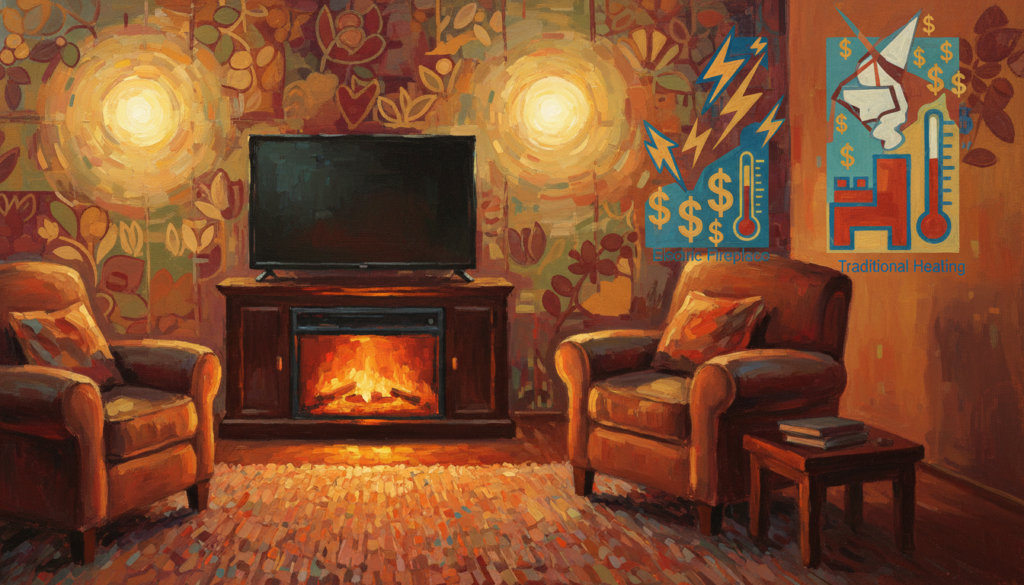
Most electric fireplace units draw about 1,500 watts on the high heat setting. That’s the same as running a standard space heater. On a low setting, the draw drops to around 750 watts. Running flame-only mode? You’re looking at a tiny 50–100 watts — basically the cost of a light bulb.
Cost Analysis at $0.10–$0.20 Per Hour
I crunched the numbers so you don’t have to. At the national average of $0.12 per kilowatt-hour, one hour on high heat costs roughly $0.18. Your BTU output electric fireplace tv stand delivers solid warmth without draining your bank account.
| Heat Setting | Wattage | Cost Per Hour (at $0.12/kWh) | Cost Per 8 Hours |
|---|---|---|---|
| High | 1,500W | $0.18 | $1.44 |
| Low | 750W | $0.09 | $0.72 |
| Flame Only | 75W | $0.01 | $0.08 |
Comparing Costs with Traditional Heating Methods
Gas fireplaces run between $0.20 and $0.50 per hour, depending on local gas prices. Wood-burning setups carry unpredictable firewood costs plus the sweat equity of hauling and splitting logs. The electric fireplace tv combo heating efficiency wins because nearly 100% of electricity converts to heat — no energy escapes through a chimney.
- Gas fireplace: $0.20–$0.50/hour
- Wood-burning fireplace: variable, plus labor
- BTU output electric fireplace tv stand: $0.09–$0.18/hour
Running my electric fireplace on low for an entire evening costs less than a cup of coffee.
With the thermostat settings I covered in the previous section, you can fine-tune your usage and keep operating costs even lower. Up next, I’ll walk through the safety features that make these units a reliable source of supplemental heat.
Safety Considerations for Supplemental Heat Electric Fireplace Furniture
Safety is a big plus for supplemental heat electric fireplace furniture. No open flames or burning logs means no risk of carbon monoxide poisoning. This makes your living room a safer place while you watch your favorite shows.
The front panel can get warm, but it’s not hot enough to burn. Always keep curtains, papers, and blankets at least three feet away. This simple rule helps avoid any fire hazards.
“The safest fireplace is one that produces heat without producing risk.” — National Fire Protection Association
Having kids or pets around? Most surfaces stay cool to the touch. Modern units have built-in overheat protection that shuts off automatically. Adding a fireplace guard gives you even more peace of mind.
Here’s a quick list of key safety features I look for in any supplemental heat electric fireplace furniture:
- Automatic overheat shut-off protection
- Cool-to-touch exterior casing
- No venting or chimney requirements
- Zero harmful emissions or fumes
- Timer function for unattended operation
| Safety Feature | Electric Fireplace TV Stand | Wood-Burning Fireplace | Gas Fireplace |
|---|---|---|---|
| Carbon Monoxide Risk | None | High | Moderate |
| Open Flame | No | Yes | Yes |
| Overheat Auto Shut-Off | Yes | No | Some Models |
| Chimney Required | No | Yes | Yes |
| Child/Pet Safe | Yes | No | No |
Electric fireplace tv stand heat output is managed by smart safety tech. This means my home stays warm and safe all winter. That’s a win I can get behind every winter season.
Conclusion
Do electric fireplace TV stands give off heat? Yes, they do, and they look great doing it. They produce 4,600 to 5,100 BTUs, warming up to 400 square feet. It’s amazing that almost all electricity turns into heat.
No chimney, no smoke, and no worries about your energy bill. This is a big plus.
The cost of using an electric fireplace TV combo is very low, at $0.10 to $0.20 per hour. That’s less than what I spend on coffee every day. You get warmth, beautiful flame effects, and a place for your TV all in one.
These units are perfect for any time of year. You can turn on the flames for warmth in winter or just enjoy the look in summer. They’re safe, thanks to no open flames, and you can adjust the heat to your liking.
If you’re looking for a way to add heat to a room without breaking the bank, consider an electric fireplace TV stand. It’s a smart choice.
FAQ
Do electric fireplace TV stands give off heat?
How much heat does an electric fireplace produce?
Do electric fireplaces warm a room effectively?
What is the electric fireplace TV stand heat output difference between fan-forced and infrared models?
What is the BTU output electric fireplace TV stand owners should look for?
How much does it cost to run an electric fireplace TV stand?
FAQ
Do electric fireplace TV stands give off heat?
Yes, they do. Electric fireplace TV stands use metal coils to turn electrical energy into warmth. They can warm rooms up to 400 square feet. They’re not just for looks; they actually warm your space efficiently.
How much heat does an electric fireplace produce?
They produce between 4,000 and 5,100 BTUs on the highest setting. High-end infrared models can go up to 9,000 BTUs. This is enough to make a room cozy, warming up to 200 square feet.
Do electric fireplaces warm a room effectively?
They do, but they’re better for small spaces. They can warm up to 400 square feet. But, insulation, windows, and room layout affect how well they work.
What is the electric fireplace TV stand heat output difference between fan-forced and infrared models?
Fan-forced heaters blow warm air, good for small spaces. Infrared heaters warm objects and people like the sun, better for open areas. Infrared models can be up to 9,000 BTUs, more powerful than fan-forced units.
What is the BTU output electric fireplace TV stand owners should look for?
First, figure out your room’s square footage. For small spaces, a 4,600 BTU unit is perfect. For bigger rooms, look for 5,100 to 5,800 BTUs. For very large areas, infrared models at 9,000 BTUs are best.
How much does it cost to run an electric fireplace TV stand?
They use about 1,500 watts, costing
FAQ
Do electric fireplace TV stands give off heat?
Yes, they do. Electric fireplace TV stands use metal coils to turn electrical energy into warmth. They can warm rooms up to 400 square feet. They’re not just for looks; they actually warm your space efficiently.
How much heat does an electric fireplace produce?
They produce between 4,000 and 5,100 BTUs on the highest setting. High-end infrared models can go up to 9,000 BTUs. This is enough to make a room cozy, warming up to 200 square feet.
Do electric fireplaces warm a room effectively?
They do, but they’re better for small spaces. They can warm up to 400 square feet. But, insulation, windows, and room layout affect how well they work.
What is the electric fireplace TV stand heat output difference between fan-forced and infrared models?
Fan-forced heaters blow warm air, good for small spaces. Infrared heaters warm objects and people like the sun, better for open areas. Infrared models can be up to 9,000 BTUs, more powerful than fan-forced units.
What is the BTU output electric fireplace TV stand owners should look for?
First, figure out your room’s square footage. For small spaces, a 4,600 BTU unit is perfect. For bigger rooms, look for 5,100 to 5,800 BTUs. For very large areas, infrared models at 9,000 BTUs are best.
How much does it cost to run an electric fireplace TV stand?
They use about 1,500 watts, costing $0.10 to $0.20 per hour. At $0.12 per kilowatt-hour, that’s $0.18 per hour. This is cheaper than gas fireplaces, making them a wallet-friendly choice.
Can I use the flame effects without the heat?
Yes, and it’s a great feature. The flame-only mode creates realistic flames without heat. This lets you enjoy ambiance year-round without overheating your room. Many models also let you customize the flame colors and patterns.
What is the electric fireplace entertainment center temperature control like?
Modern electric fireplace TV stands have great temperature control. They have adjustable thermostats and cycle on and off to keep the temperature steady. They come with low, medium, and high settings, and some even have remote controls and timers.
Are electric fireplace TV stands safe for homes with children and pets?
They are much safer than traditional fireplaces. There are no open flames or harmful emissions. They stay cool to the touch, except for the front on high settings. Look for models with overheat protection and automatic shut-off.
What is the electric fireplace stand heat range compared to traditional fireplaces?
Electric fireplaces are surprisingly efficient, converting almost all electricity to heat. They can warm up to 400 square feet. Traditional fireplaces lose a lot of heat up the chimney. Electric fireplaces are a good choice for everyday warmth.
FAQ
Do electric fireplace TV stands give off heat?
Yes, they do. Electric fireplace TV stands use metal coils to turn electrical energy into warmth. They can warm rooms up to 400 square feet. They’re not just for looks; they actually warm your space efficiently.
How much heat does an electric fireplace produce?
They produce between 4,000 and 5,100 BTUs on the highest setting. High-end infrared models can go up to 9,000 BTUs. This is enough to make a room cozy, warming up to 200 square feet.
Do electric fireplaces warm a room effectively?
They do, but they’re better for small spaces. They can warm up to 400 square feet. But, insulation, windows, and room layout affect how well they work.
What is the electric fireplace TV stand heat output difference between fan-forced and infrared models?
Fan-forced heaters blow warm air, good for small spaces. Infrared heaters warm objects and people like the sun, better for open areas. Infrared models can be up to 9,000 BTUs, more powerful than fan-forced units.
What is the BTU output electric fireplace TV stand owners should look for?
First, figure out your room’s square footage. For small spaces, a 4,600 BTU unit is perfect. For bigger rooms, look for 5,100 to 5,800 BTUs. For very large areas, infrared models at 9,000 BTUs are best.
How much does it cost to run an electric fireplace TV stand?
They use about 1,500 watts, costing
FAQ
Do electric fireplace TV stands give off heat?
Yes, they do. Electric fireplace TV stands use metal coils to turn electrical energy into warmth. They can warm rooms up to 400 square feet. They’re not just for looks; they actually warm your space efficiently.
How much heat does an electric fireplace produce?
They produce between 4,000 and 5,100 BTUs on the highest setting. High-end infrared models can go up to 9,000 BTUs. This is enough to make a room cozy, warming up to 200 square feet.
Do electric fireplaces warm a room effectively?
They do, but they’re better for small spaces. They can warm up to 400 square feet. But, insulation, windows, and room layout affect how well they work.
What is the electric fireplace TV stand heat output difference between fan-forced and infrared models?
Fan-forced heaters blow warm air, good for small spaces. Infrared heaters warm objects and people like the sun, better for open areas. Infrared models can be up to 9,000 BTUs, more powerful than fan-forced units.
What is the BTU output electric fireplace TV stand owners should look for?
First, figure out your room’s square footage. For small spaces, a 4,600 BTU unit is perfect. For bigger rooms, look for 5,100 to 5,800 BTUs. For very large areas, infrared models at 9,000 BTUs are best.
How much does it cost to run an electric fireplace TV stand?
They use about 1,500 watts, costing $0.10 to $0.20 per hour. At $0.12 per kilowatt-hour, that’s $0.18 per hour. This is cheaper than gas fireplaces, making them a wallet-friendly choice.
Can I use the flame effects without the heat?
Yes, and it’s a great feature. The flame-only mode creates realistic flames without heat. This lets you enjoy ambiance year-round without overheating your room. Many models also let you customize the flame colors and patterns.
What is the electric fireplace entertainment center temperature control like?
Modern electric fireplace TV stands have great temperature control. They have adjustable thermostats and cycle on and off to keep the temperature steady. They come with low, medium, and high settings, and some even have remote controls and timers.
Are electric fireplace TV stands safe for homes with children and pets?
They are much safer than traditional fireplaces. There are no open flames or harmful emissions. They stay cool to the touch, except for the front on high settings. Look for models with overheat protection and automatic shut-off.
What is the electric fireplace stand heat range compared to traditional fireplaces?
Electric fireplaces are surprisingly efficient, converting almost all electricity to heat. They can warm up to 400 square feet. Traditional fireplaces lose a lot of heat up the chimney. Electric fireplaces are a good choice for everyday warmth.
FAQ
Do electric fireplace TV stands give off heat?
Yes, they do. Electric fireplace TV stands use metal coils to turn electrical energy into warmth. They can warm rooms up to 400 square feet. They’re not just for looks; they actually warm your space efficiently.
How much heat does an electric fireplace produce?
They produce between 4,000 and 5,100 BTUs on the highest setting. High-end infrared models can go up to 9,000 BTUs. This is enough to make a room cozy, warming up to 200 square feet.
Do electric fireplaces warm a room effectively?
They do, but they’re better for small spaces. They can warm up to 400 square feet. But, insulation, windows, and room layout affect how well they work.
What is the electric fireplace TV stand heat output difference between fan-forced and infrared models?
Fan-forced heaters blow warm air, good for small spaces. Infrared heaters warm objects and people like the sun, better for open areas. Infrared models can be up to 9,000 BTUs, more powerful than fan-forced units.
What is the BTU output electric fireplace TV stand owners should look for?
First, figure out your room’s square footage. For small spaces, a 4,600 BTU unit is perfect. For bigger rooms, look for 5,100 to 5,800 BTUs. For very large areas, infrared models at 9,000 BTUs are best.
How much does it cost to run an electric fireplace TV stand?
They use about 1,500 watts, costing
FAQ
Do electric fireplace TV stands give off heat?
Yes, they do. Electric fireplace TV stands use metal coils to turn electrical energy into warmth. They can warm rooms up to 400 square feet. They’re not just for looks; they actually warm your space efficiently.
How much heat does an electric fireplace produce?
They produce between 4,000 and 5,100 BTUs on the highest setting. High-end infrared models can go up to 9,000 BTUs. This is enough to make a room cozy, warming up to 200 square feet.
Do electric fireplaces warm a room effectively?
They do, but they’re better for small spaces. They can warm up to 400 square feet. But, insulation, windows, and room layout affect how well they work.
What is the electric fireplace TV stand heat output difference between fan-forced and infrared models?
Fan-forced heaters blow warm air, good for small spaces. Infrared heaters warm objects and people like the sun, better for open areas. Infrared models can be up to 9,000 BTUs, more powerful than fan-forced units.
What is the BTU output electric fireplace TV stand owners should look for?
First, figure out your room’s square footage. For small spaces, a 4,600 BTU unit is perfect. For bigger rooms, look for 5,100 to 5,800 BTUs. For very large areas, infrared models at 9,000 BTUs are best.
How much does it cost to run an electric fireplace TV stand?
They use about 1,500 watts, costing $0.10 to $0.20 per hour. At $0.12 per kilowatt-hour, that’s $0.18 per hour. This is cheaper than gas fireplaces, making them a wallet-friendly choice.
Can I use the flame effects without the heat?
Yes, and it’s a great feature. The flame-only mode creates realistic flames without heat. This lets you enjoy ambiance year-round without overheating your room. Many models also let you customize the flame colors and patterns.
What is the electric fireplace entertainment center temperature control like?
Modern electric fireplace TV stands have great temperature control. They have adjustable thermostats and cycle on and off to keep the temperature steady. They come with low, medium, and high settings, and some even have remote controls and timers.
Are electric fireplace TV stands safe for homes with children and pets?
They are much safer than traditional fireplaces. There are no open flames or harmful emissions. They stay cool to the touch, except for the front on high settings. Look for models with overheat protection and automatic shut-off.
What is the electric fireplace stand heat range compared to traditional fireplaces?
Electric fireplaces are surprisingly efficient, converting almost all electricity to heat. They can warm up to 400 square feet. Traditional fireplaces lose a lot of heat up the chimney. Electric fireplaces are a good choice for everyday warmth.
FAQ
Do electric fireplace TV stands give off heat?
Yes, they do. Electric fireplace TV stands use metal coils to turn electrical energy into warmth. They can warm rooms up to 400 square feet. They’re not just for looks; they actually warm your space efficiently.
How much heat does an electric fireplace produce?
They produce between 4,000 and 5,100 BTUs on the highest setting. High-end infrared models can go up to 9,000 BTUs. This is enough to make a room cozy, warming up to 200 square feet.
Do electric fireplaces warm a room effectively?
They do, but they’re better for small spaces. They can warm up to 400 square feet. But, insulation, windows, and room layout affect how well they work.
What is the electric fireplace TV stand heat output difference between fan-forced and infrared models?
Fan-forced heaters blow warm air, good for small spaces. Infrared heaters warm objects and people like the sun, better for open areas. Infrared models can be up to 9,000 BTUs, more powerful than fan-forced units.
What is the BTU output electric fireplace TV stand owners should look for?
First, figure out your room’s square footage. For small spaces, a 4,600 BTU unit is perfect. For bigger rooms, look for 5,100 to 5,800 BTUs. For very large areas, infrared models at 9,000 BTUs are best.
How much does it cost to run an electric fireplace TV stand?
They use about 1,500 watts, costing
FAQ
Do electric fireplace TV stands give off heat?
Yes, they do. Electric fireplace TV stands use metal coils to turn electrical energy into warmth. They can warm rooms up to 400 square feet. They’re not just for looks; they actually warm your space efficiently.
How much heat does an electric fireplace produce?
They produce between 4,000 and 5,100 BTUs on the highest setting. High-end infrared models can go up to 9,000 BTUs. This is enough to make a room cozy, warming up to 200 square feet.
Do electric fireplaces warm a room effectively?
They do, but they’re better for small spaces. They can warm up to 400 square feet. But, insulation, windows, and room layout affect how well they work.
What is the electric fireplace TV stand heat output difference between fan-forced and infrared models?
Fan-forced heaters blow warm air, good for small spaces. Infrared heaters warm objects and people like the sun, better for open areas. Infrared models can be up to 9,000 BTUs, more powerful than fan-forced units.
What is the BTU output electric fireplace TV stand owners should look for?
First, figure out your room’s square footage. For small spaces, a 4,600 BTU unit is perfect. For bigger rooms, look for 5,100 to 5,800 BTUs. For very large areas, infrared models at 9,000 BTUs are best.
How much does it cost to run an electric fireplace TV stand?
They use about 1,500 watts, costing $0.10 to $0.20 per hour. At $0.12 per kilowatt-hour, that’s $0.18 per hour. This is cheaper than gas fireplaces, making them a wallet-friendly choice.
Can I use the flame effects without the heat?
Yes, and it’s a great feature. The flame-only mode creates realistic flames without heat. This lets you enjoy ambiance year-round without overheating your room. Many models also let you customize the flame colors and patterns.
What is the electric fireplace entertainment center temperature control like?
Modern electric fireplace TV stands have great temperature control. They have adjustable thermostats and cycle on and off to keep the temperature steady. They come with low, medium, and high settings, and some even have remote controls and timers.
Are electric fireplace TV stands safe for homes with children and pets?
They are much safer than traditional fireplaces. There are no open flames or harmful emissions. They stay cool to the touch, except for the front on high settings. Look for models with overheat protection and automatic shut-off.
What is the electric fireplace stand heat range compared to traditional fireplaces?
Electric fireplaces are surprisingly efficient, converting almost all electricity to heat. They can warm up to 400 square feet. Traditional fireplaces lose a lot of heat up the chimney. Electric fireplaces are a good choice for everyday warmth.
.10 to
FAQ
Do electric fireplace TV stands give off heat?
Yes, they do. Electric fireplace TV stands use metal coils to turn electrical energy into warmth. They can warm rooms up to 400 square feet. They’re not just for looks; they actually warm your space efficiently.
How much heat does an electric fireplace produce?
They produce between 4,000 and 5,100 BTUs on the highest setting. High-end infrared models can go up to 9,000 BTUs. This is enough to make a room cozy, warming up to 200 square feet.
Do electric fireplaces warm a room effectively?
They do, but they’re better for small spaces. They can warm up to 400 square feet. But, insulation, windows, and room layout affect how well they work.
What is the electric fireplace TV stand heat output difference between fan-forced and infrared models?
Fan-forced heaters blow warm air, good for small spaces. Infrared heaters warm objects and people like the sun, better for open areas. Infrared models can be up to 9,000 BTUs, more powerful than fan-forced units.
What is the BTU output electric fireplace TV stand owners should look for?
First, figure out your room’s square footage. For small spaces, a 4,600 BTU unit is perfect. For bigger rooms, look for 5,100 to 5,800 BTUs. For very large areas, infrared models at 9,000 BTUs are best.
How much does it cost to run an electric fireplace TV stand?
They use about 1,500 watts, costing $0.10 to $0.20 per hour. At $0.12 per kilowatt-hour, that’s $0.18 per hour. This is cheaper than gas fireplaces, making them a wallet-friendly choice.
Can I use the flame effects without the heat?
Yes, and it’s a great feature. The flame-only mode creates realistic flames without heat. This lets you enjoy ambiance year-round without overheating your room. Many models also let you customize the flame colors and patterns.
What is the electric fireplace entertainment center temperature control like?
Modern electric fireplace TV stands have great temperature control. They have adjustable thermostats and cycle on and off to keep the temperature steady. They come with low, medium, and high settings, and some even have remote controls and timers.
Are electric fireplace TV stands safe for homes with children and pets?
They are much safer than traditional fireplaces. There are no open flames or harmful emissions. They stay cool to the touch, except for the front on high settings. Look for models with overheat protection and automatic shut-off.
What is the electric fireplace stand heat range compared to traditional fireplaces?
Electric fireplaces are surprisingly efficient, converting almost all electricity to heat. They can warm up to 400 square feet. Traditional fireplaces lose a lot of heat up the chimney. Electric fireplaces are a good choice for everyday warmth.
.20 per hour. At
FAQ
Do electric fireplace TV stands give off heat?
Yes, they do. Electric fireplace TV stands use metal coils to turn electrical energy into warmth. They can warm rooms up to 400 square feet. They’re not just for looks; they actually warm your space efficiently.
How much heat does an electric fireplace produce?
They produce between 4,000 and 5,100 BTUs on the highest setting. High-end infrared models can go up to 9,000 BTUs. This is enough to make a room cozy, warming up to 200 square feet.
Do electric fireplaces warm a room effectively?
They do, but they’re better for small spaces. They can warm up to 400 square feet. But, insulation, windows, and room layout affect how well they work.
What is the electric fireplace TV stand heat output difference between fan-forced and infrared models?
Fan-forced heaters blow warm air, good for small spaces. Infrared heaters warm objects and people like the sun, better for open areas. Infrared models can be up to 9,000 BTUs, more powerful than fan-forced units.
What is the BTU output electric fireplace TV stand owners should look for?
First, figure out your room’s square footage. For small spaces, a 4,600 BTU unit is perfect. For bigger rooms, look for 5,100 to 5,800 BTUs. For very large areas, infrared models at 9,000 BTUs are best.
How much does it cost to run an electric fireplace TV stand?
They use about 1,500 watts, costing $0.10 to $0.20 per hour. At $0.12 per kilowatt-hour, that’s $0.18 per hour. This is cheaper than gas fireplaces, making them a wallet-friendly choice.
Can I use the flame effects without the heat?
Yes, and it’s a great feature. The flame-only mode creates realistic flames without heat. This lets you enjoy ambiance year-round without overheating your room. Many models also let you customize the flame colors and patterns.
What is the electric fireplace entertainment center temperature control like?
Modern electric fireplace TV stands have great temperature control. They have adjustable thermostats and cycle on and off to keep the temperature steady. They come with low, medium, and high settings, and some even have remote controls and timers.
Are electric fireplace TV stands safe for homes with children and pets?
They are much safer than traditional fireplaces. There are no open flames or harmful emissions. They stay cool to the touch, except for the front on high settings. Look for models with overheat protection and automatic shut-off.
What is the electric fireplace stand heat range compared to traditional fireplaces?
Electric fireplaces are surprisingly efficient, converting almost all electricity to heat. They can warm up to 400 square feet. Traditional fireplaces lose a lot of heat up the chimney. Electric fireplaces are a good choice for everyday warmth.
.12 per kilowatt-hour, that’s
FAQ
Do electric fireplace TV stands give off heat?
Yes, they do. Electric fireplace TV stands use metal coils to turn electrical energy into warmth. They can warm rooms up to 400 square feet. They’re not just for looks; they actually warm your space efficiently.
How much heat does an electric fireplace produce?
They produce between 4,000 and 5,100 BTUs on the highest setting. High-end infrared models can go up to 9,000 BTUs. This is enough to make a room cozy, warming up to 200 square feet.
Do electric fireplaces warm a room effectively?
They do, but they’re better for small spaces. They can warm up to 400 square feet. But, insulation, windows, and room layout affect how well they work.
What is the electric fireplace TV stand heat output difference between fan-forced and infrared models?
Fan-forced heaters blow warm air, good for small spaces. Infrared heaters warm objects and people like the sun, better for open areas. Infrared models can be up to 9,000 BTUs, more powerful than fan-forced units.
What is the BTU output electric fireplace TV stand owners should look for?
First, figure out your room’s square footage. For small spaces, a 4,600 BTU unit is perfect. For bigger rooms, look for 5,100 to 5,800 BTUs. For very large areas, infrared models at 9,000 BTUs are best.
How much does it cost to run an electric fireplace TV stand?
They use about 1,500 watts, costing $0.10 to $0.20 per hour. At $0.12 per kilowatt-hour, that’s $0.18 per hour. This is cheaper than gas fireplaces, making them a wallet-friendly choice.
Can I use the flame effects without the heat?
Yes, and it’s a great feature. The flame-only mode creates realistic flames without heat. This lets you enjoy ambiance year-round without overheating your room. Many models also let you customize the flame colors and patterns.
What is the electric fireplace entertainment center temperature control like?
Modern electric fireplace TV stands have great temperature control. They have adjustable thermostats and cycle on and off to keep the temperature steady. They come with low, medium, and high settings, and some even have remote controls and timers.
Are electric fireplace TV stands safe for homes with children and pets?
They are much safer than traditional fireplaces. There are no open flames or harmful emissions. They stay cool to the touch, except for the front on high settings. Look for models with overheat protection and automatic shut-off.
What is the electric fireplace stand heat range compared to traditional fireplaces?
Electric fireplaces are surprisingly efficient, converting almost all electricity to heat. They can warm up to 400 square feet. Traditional fireplaces lose a lot of heat up the chimney. Electric fireplaces are a good choice for everyday warmth.
.18 per hour. This is cheaper than gas fireplaces, making them a wallet-friendly choice.
Can I use the flame effects without the heat?
Yes, and it’s a great feature. The flame-only mode creates realistic flames without heat. This lets you enjoy ambiance year-round without overheating your room. Many models also let you customize the flame colors and patterns.
What is the electric fireplace entertainment center temperature control like?
Modern electric fireplace TV stands have great temperature control. They have adjustable thermostats and cycle on and off to keep the temperature steady. They come with low, medium, and high settings, and some even have remote controls and timers.
Are electric fireplace TV stands safe for homes with children and pets?
They are much safer than traditional fireplaces. There are no open flames or harmful emissions. They stay cool to the touch, except for the front on high settings. Look for models with overheat protection and automatic shut-off.
What is the electric fireplace stand heat range compared to traditional fireplaces?
Electric fireplaces are surprisingly efficient, converting almost all electricity to heat. They can warm up to 400 square feet. Traditional fireplaces lose a lot of heat up the chimney. Electric fireplaces are a good choice for everyday warmth.

giveitlegs@live.com
Contributing writer covering Honest reviews & buying help for fireplace TV stands and electric media consoles..
Similar Posts
The Best Energy-Efficient Fireplace TV Stands
Here’s my honest shortlist for best energy-efficient fireplace tv stands. Every pick below is a real, currently-sold model on Amazon, and I’ve focused on t
The Best Walnut Fireplace TV Stands
Here’s my honest shortlist for best walnut fireplace tv stands. Every pick below is a real, currently-sold model on Amazon, and I’ve focused on the heater
Are Fireplace TV Stands Bad for TV? The Truth
Wondering are fireplace tv stands bad for tv? I break down the facts so you can protect your screen without sacrificing style or warmth.
The Best Fireplace TV Stands for New Homeowners
Here’s my honest shortlist for best fireplace tv stands for new homeowners. Every pick below is a real, currently-sold model on Amazon, and I’ve focused on
Fireplace TV Stands vs Wall-Mounted Electric Fireplaces
Here’s my honest shortlist for fireplace tv stands vs wall-mounted electric fireplaces. Every pick below is a real, currently-sold model on Amazon, and I’v
How to Build a TV Stand with a Fireplace Guide
Discover how to build a TV stand with a fireplace that combines style and warmth—an easy DIY project to elevate your living room’s vibe and comfort.