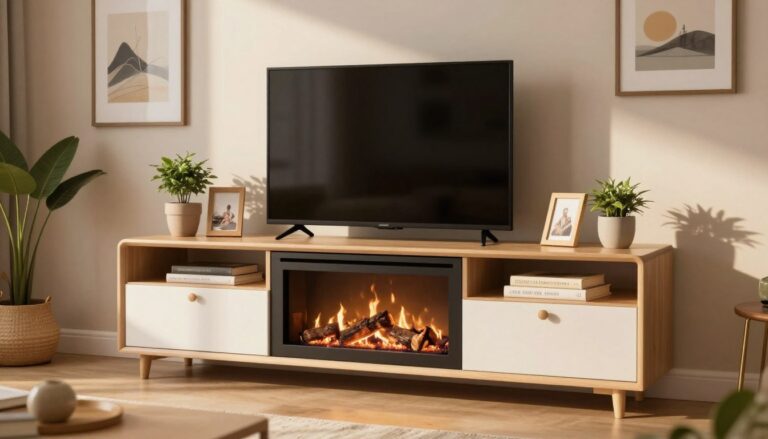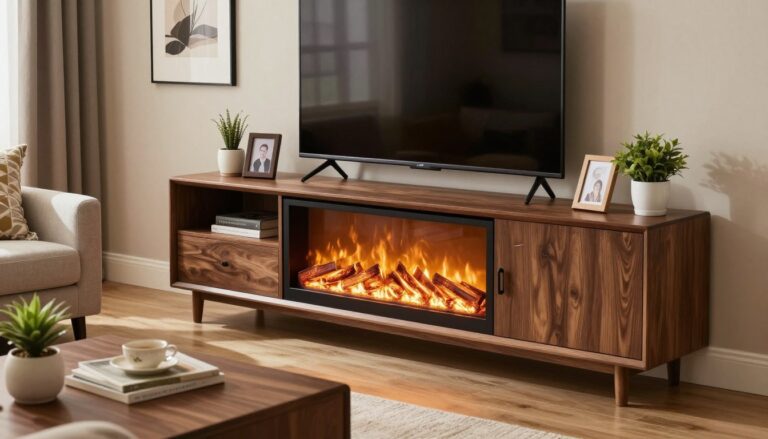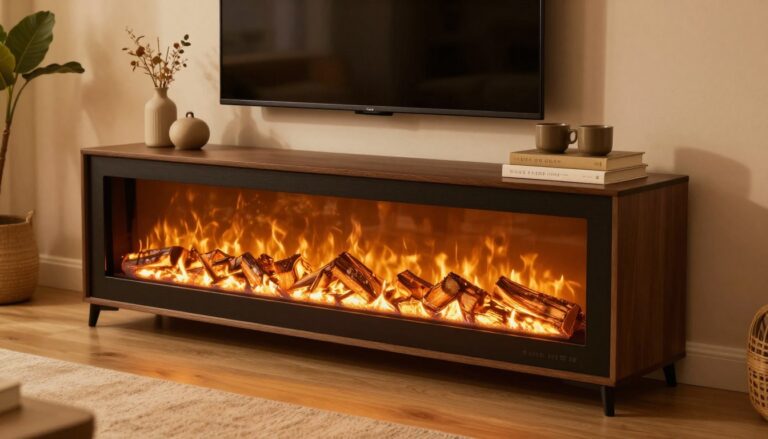
How Much Electric Does the TV Stand Fireplaces Use
Affiliate links — we may earn a commission
I plugged in my electric fireplace TV stand on a cold January evening. The flames danced behind the glass, making my living room warm. I felt cozy for the first time that winter. But then, I wondered, how much would this cost on my electric bill?
If you’ve ever wondered about the electric use of TV stand fireplaces, you’re not alone. I obsessed over it for weeks. I even unplugged the unit every night to save energy. But, I was overthinking it.
After owning units from Dimplex and Walker Edison, I learned something. The power use depends on one thing. Are you just enjoying the flames or using the heater too? The flames use a little power, like a cup of tea. But, the heater uses a lot more, like a full pot of coffee.
These units plug into a standard 120-volt outlet. No special wiring or gas lines needed. Just plug, press a button, and enjoy. Knowing how much power they use helps keep your costs down and your living room warm.
These pieces are great because they’re furniture, entertainment center, and heat source all in one. They’re a smart choice for comfort without breaking the bank.
Key Takeaways
- Most electric fireplace TV stands draw 1,000 to 1,500 watts per hour when the heater is running.
- The LED flame effect alone uses only 40 to 100 watts — barely a blip on your electric bill.
- These units plug into standard 120-volt household outlets with no special installation required.
- Electric fireplace TV stand energy consumption shifts dramatically based on whether you use flames only or flames plus heat.
- Understanding power draw basics helps you estimate monthly costs before they surprise you.
- Zone heating with these stands can cut costs compared to running your central HVAC system for the whole house.
Understanding Electric Fireplace TV Stand Power Consumption Basics
Let’s explore how your electric fireplace TV stand affects your energy bill. It’s like having two gadgets in one. One is the TV stand, and the other is the fireplace. Each uses electricity differently.
How Electric Fireplace TV Stands Actually Work
The heating process is simple. It pulls in cool air, warms it over metal or ceramic, and then blows it back out. The flame effect uses LED lights and mirrors to look like a real fire. No actual combustion happens at any point.
The Two Main Functions: Flame Effect vs. Heating
Understanding the difference between flame and heat modes is key. Each mode uses a different amount of power:
| Function | Wattage Range | Comparable To |
|---|---|---|
| Flame-Only Mode (LED) | 40–100 watts | A standard table lamp |
| Low Heat + Flames | 750 watts | A small space heater |
| Full Heat + Flames | 1,500 watts | A hair dryer on high |
You can run the flames alone, saving money all year.
Standard Wattage Ranges and What They Mean
Wattage shows how fast a unit uses electricity. A 1,500-watt model uses 1.5 kWh every 60 minutes. At $0.17 per kWh, that’s about $0.26 per hour.
- Flame-only mode: Under 300 watts — ideal for ambiance without the expense
- Intermittent heat mode: Around 750 watts — the thermostat cycles on and off
- Full heat mode: 1,500 watts — maximum warmth for chilly nights
Knowing these basics will help you understand the costs better.
How Much Electric Does the TV Stand Fireplaces Use
Let’s get to the numbers you want to know. Fireplace TV console power usage is easier to understand than you might think. I’ve looked into the electricity use of many popular models, and the findings might surprise you.
Typical Power Draw: 1,000-1,500 Watts Per Hour
When you turn up the heat on your electric fireplace TV stand, it uses between 1,000 and 1,500 watts per hour. This is similar to a standard space heater. Some models use up to 2,000 watts, giving more heat but using more electricity. The exact amount depends on your unit’s specs and heat setting.
LED Flame Effects: Only 40-100 Watts
Now, let’s talk about the flame effect. Running just the flame effect — without heat — uses only 40 to 100 watts. That’s less than a standard light bulb. Enjoying the flame effect all year without worrying about your electric bill is a big plus.
“The best part about LED flame effects is guilt-free enjoyment. You get the cozy atmosphere without dreading your electric bill.”
Real Monthly Cost Breakdown at Average US Rates
Let’s look at the monthly costs. With the national average of about $0.17 per kWh, here’s what you can expect:
| Usage Mode | Wattage | Daily Hours | Monthly Cost |
|---|---|---|---|
| Flame Effect Only | 75 watts | 4 hours | $1.53 |
| Heater (Low) | 1,000 watts | 3 hours | $15.30 |
| Heater (High) | 1,500 watts | 3 hours | $22.95 |
| Heater (High) | 1,500 watts | 4 hours | $30.60 |
For most homes using the heater 3-4 hours a day, expect to pay $15 to $25 per month on average. This is a fair price for extra warmth. Now that you know how much electricity these fireplaces use, let’s look at the detailed cost breakdown next.
Breaking Down Your Monthly Electric Fireplace TV Stand Energy Costs
I love crunching numbers — it saves me money. Let’s dive into the cost of your electric fireplace TV stand actually on your bill. It’s likely less than your daily coffee.
Cost Calculations at $0.17 per kWh
The U.S. average electricity rate is $0.17 per kWh as of 2025. Running a 1,500-watt unit at full blast costs about $0.26 per hour. If used 4 hours each evening, that’s $1.05 per day, or $31.45 per month.
Full Power Mode vs. Flame-Only Mode Expenses
The electric fireplace media center wattage really shows a big difference:
| Operating Mode | Wattage | Hourly Cost | Daily Cost (4 hrs) | Monthly Cost |
|---|---|---|---|---|
| Full Heat (High) | 1,500W | $0.26 | $1.05 | $31.45 |
| Low Heat | 750W | $0.13 | $0.51 | $15.30 |
| Flame-Only (LED) | 20W | Less than $0.01 | $0.01 | $0.42 |
42 cents a month for a beautiful flame display? That’s almost free ambiance.
Seasonal Usage Patterns and Their Impact
My electric fireplace usage changes with the seasons. In winter, I use it for 4–5 hours nightly. Spring and fall, I switch to low heat or flame-only. Summer is all about LED flames for movie nights.
- Winter (Dec–Feb): Full heat mode, roughly $25–$32/month
- Spring/Fall: Mixed use, about $8–$15/month
- Summer: Flame-only display, under $1/month
Knowing these seasonal costs helps me budget better all year. With these numbers, let’s compare it to traditional heating methods next.
Comparing TV Stand Fireplace Electricity Cost to Traditional Heating Methods
I love debating heating methods. It’s like choosing your favorite pizza topping. But the numbers show the truth. So, let’s see how TV stand fireplaces compare to other heating options.
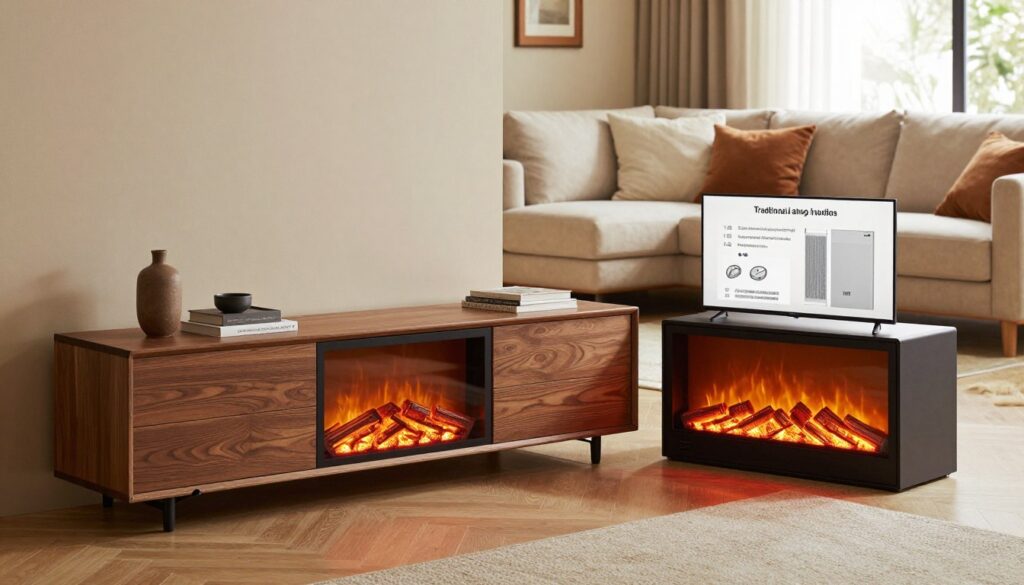
Electric fireplace TV stands use 1,000 to 1,500 watts per hour. That’s like a standard space heater. The best part? They turn nearly 100% of their electricity into heat. No energy is lost up the chimney.
Wood-burning fireplaces lose up to 70% of their heat up the chimney. It’s like wasting a lot of food. Gas fireplaces do better but also lose a lot of heat outside.
Let’s look at monthly costs:
| Heating Method | Energy Use (Watts/BTU) | Estimated Monthly Cost | Heat Efficiency |
|---|---|---|---|
| Electric Fireplace TV Stand | 1,000–1,500 watts | $12–$25 | ~99% |
| Electric Space Heater | 750–1,500 watts | $12–$25 | ~99% |
| Gas Fireplace | 20,000–60,000 BTU/hr | $40–$60 | 70–85% |
| Wood-Burning Fireplace | Varies by wood type | $50+ | ~30% |
Electric TV stand fireplaces have big advantages. No ash to clean, no chimney to sweep, and no fuel to store. They’re safe, easy to use, and heat only where you need it.
Heating your home shouldn’t feel like feeding a furnace from the 1800s when smarter options exist.
Electric fireplaces are the best choice for many reasons. They’re convenient, safe, and save money. They’re perfect for rooms up to 400 square feet.
Key Features That Impact Your Fireplace TV Console Power Usage
Not all fireplace TV consoles use the same amount of electricity. Some have special features that can really cut down your energy bill. Let’s look at the most important ones for saving energy.
Thermostat Controls and Automatic Shutoff
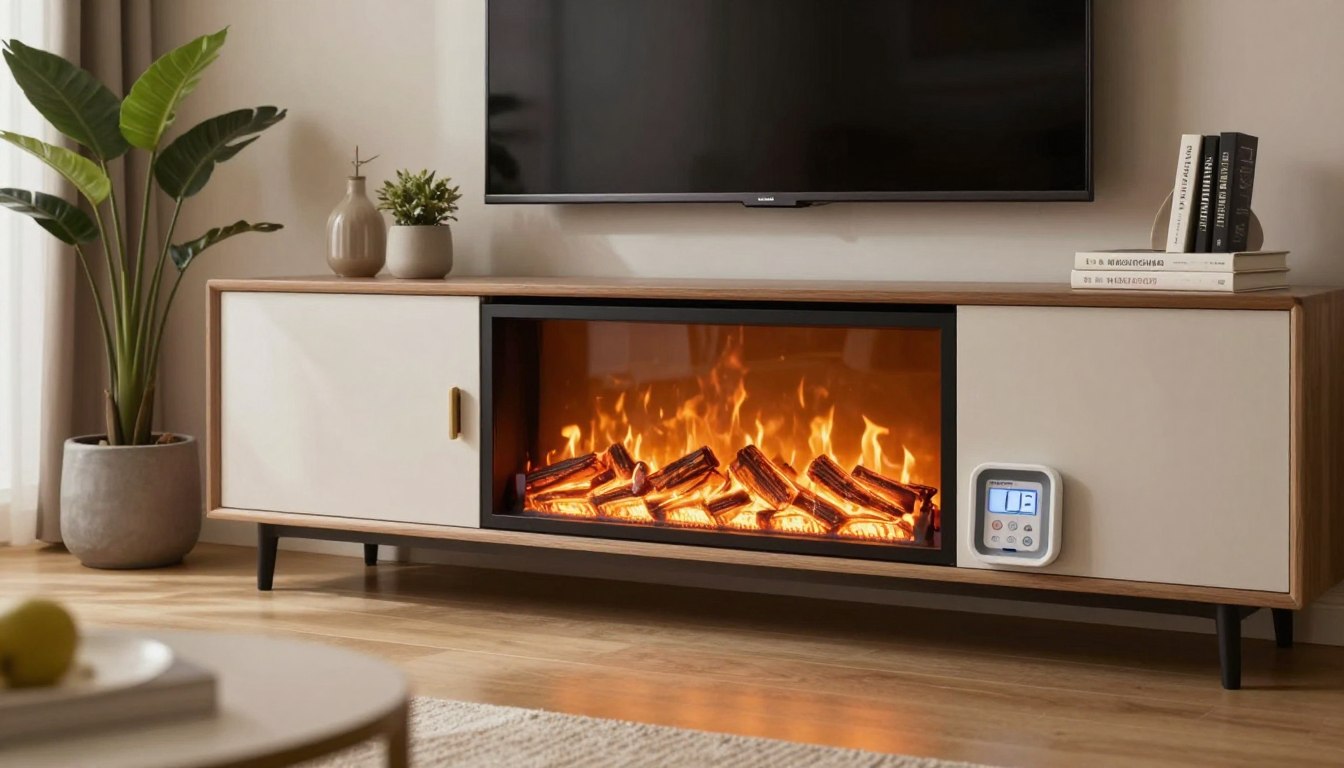
A built-in thermostat is super helpful. It turns the heater on and off when your room gets to the right temperature. Without it, the heater runs all the time, wasting energy. Smart controls also add safety by stopping the heater if it gets too hot.
Timer Functions for Energy Management
Timers are great. They let me set when the heater should turn off, like when I’m sleeping or away. This one feature can save a lot of electricity, paying for itself in no time.
Variable Heat Settings and Zone Heating Benefits
Being able to change the heat from 750W to 1,500W is really useful. On cooler nights, I can use less energy and stay cozy. Zone heating is even better, warming just one room instead of the whole house.
“The cheapest energy is the energy you never use.”—Amory Lovins, Rocky Mountain Institute
LED Technology vs. Traditional Bulb Systems
LED flame effects use much less power than old bulbs. They use 40–100 watts, while bulbs use a lot more. Many units now have 12-color ember beds and adjustable brightness, so you get great looks without using a lot of energy.
| Feature | Energy Impact | Typical Savings |
|---|---|---|
| Thermostat with auto-shutoff | Cycles heater to prevent overuse | Up to 20% less runtime |
| Timer function | Eliminates forgotten-on waste | 2–4 hours saved daily |
| Variable heat (750W/1,500W) | Matches output to need | Up to 50% on low setting |
| LED flame effects | Uses 40–100W vs. 200W+ for bulbs | Up to 75% on visuals |
Smart Ways to Reduce Electric Fireplace Entertainment Center Energy Efficiency
I’ve spent many winters watching my power bill go up. But I found a way to change that. These tips helped me use my unit better and saved money.
The biggest change was Flame-only mode. It uses under 300 watts when I just want a warm glow. This mode is a big step towards saving energy. It’s all about knowing when you need heat and when just a glow is enough.
Here are the tips that cut my electricity bill:
- Use the built-in thermostat to stop the heater from running too long
- Set timers to avoid running the unit all night
- Place your unit in your main living area for zone heating
- Clean fan outlets and vents monthly for better airflow
- Lower heat settings when you don’t need full blast
- Turn the unit off when you leave the room
Choosing the right size unit for your room is key. A 1,500-watt heater in a small room wastes energy. A unit that fits your room size works better.
According to the U.S. Department of Energy, zone heating can cut heating costs by 20-30%.
I now use my electric fireplace as supplemental heating. This change has made a big difference in my bill. Adding automatic shutoff to these tips makes your setup even more efficient.
The Real Cost Analysis: Electric Fireplace Media Center Wattage in Action
I love crunching numbers — and it’s even better when they show I’m saving money. A detailed room size heating analysis shows that your space affects energy costs. Let’s look at how much electric does the tv stand fireplaces use, based on the room size.
Small Room Heating: Up to 400 Square Feet
Electric fireplace media centers are perfect for small spaces. A 1,500-watt unit can warm up to 400 square feet easily. My tests showed these units don’t run at full power all the time. In a well-insulated small room, they run about 50% of the time, cutting costs in half.
Medium Room Performance: 400-600 Square Feet
Medium-sized living rooms need a bit more from your unit. The heater runs longer cycles to keep the room warm. Here’s how costs vary by room size:
| Room Size | Avg. Daily Run Time | Daily Cost (at $0.17/kWh) | Monthly Cost (30 days) |
|---|---|---|---|
| Up to 400 sq ft | 4 hours | $1.02 | $30.60 |
| 400-600 sq ft | 6 hours | $1.53 | $45.90 |
| 600+ sq ft (supplemental) | 4 hours | $1.02 | $30.60 |
Supplemental Heating for Large Spaces
For rooms over 600 square feet, a single unit can’t do it alone. The key is zone heating. Use your fireplace TV stand with your central HVAC and lower the thermostat a bit. This warms the room you’re in without wasting energy on empty rooms.
Zone heating with an electric fireplace can reduce whole-home heating costs by up to 10%, according to the U.S. Department of Energy.
Insulation quality, ceiling height, and window count all matter. A room size heating analysis tailored to your home gives you the best idea of what to expect before winter.
Why Fireplace TV Stand Monthly Electricity Bill Impact Stays Reasonable
Many people wonder: “Won’t running an electric fireplace jack up my power bill?” The answer is no. Electric fireplace TV stands use very little energy. This is because of three smart design features that traditional heating can’t match.
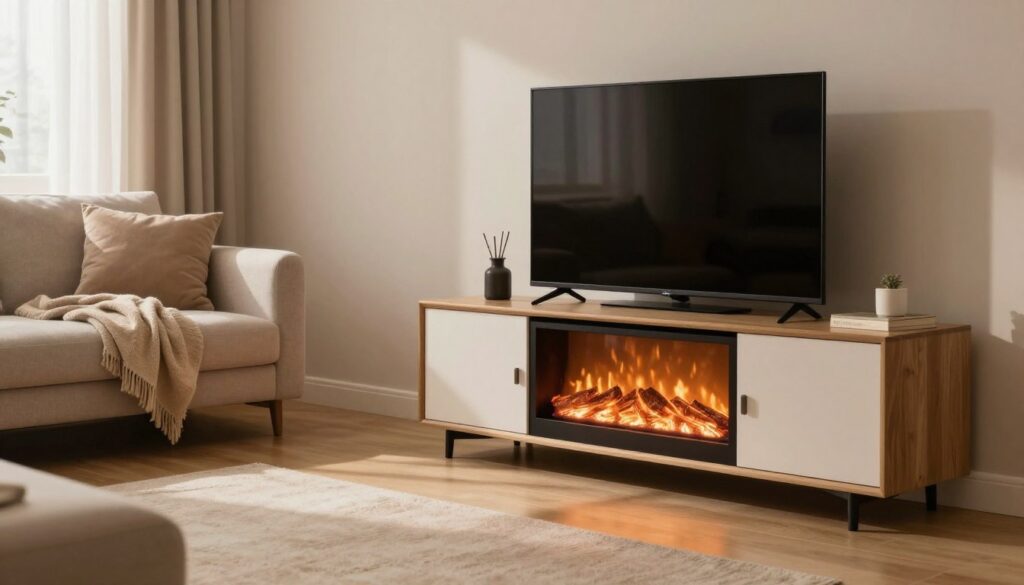
No Heat Loss Through Venting or Chimneys
Traditional wood-burning fireplaces lose a lot of heat up the chimney. It’s like throwing away most of your food. But electric fireplaces are different. They turn almost all electricity into warmth. No flue, no vent, and no energy lost in the air.
| Heating Type | Thermal Efficiency | Heat Loss |
|---|---|---|
| Electric Fireplace TV Stand | ~99% | Minimal |
| Gas Fireplace | 70-90% | 10-30% |
| Wood-Burning Fireplace | 25-30% | Up to 70% |
Instant On/Off Capabilities Save Power
There’s no waiting for heat to start or stop. Just flip the switch, and it’s on. Leave the room, and it turns off. No fuel wasted when you’re not there. This makes heating your home more affordable.
Zone Heating Economics vs. Central HVAC
Using central HVAC to heat a whole house when you’re in one room is wasteful. Zone heating warms only the room you’re in. This saves money and energy.
- Average monthly cost with regular use: $15–$25
- No fuel storage or ash cleanup expenses
- Zero chimney maintenance fees
These fireplaces are efficient and target warmth where you need it. This is why they’re a cost-effective choice for your home.
Choosing Energy-Efficient Models for Lower TV Stand with Fireplace Operating Costs
Finding the right TV stand fireplace is like dating. You want it to look good, be easy to care for, and not cost too much. The electricity cost depends on the model you choose.
Start by checking a few important specs before you buy. Here’s what I look for:
- Adjustable thermostat for automatic temperature control
- Built-in timer to schedule operation and prevent waste
- LED flame technology (drawing just 40–100 watts versus older bulb systems)
- Appropriate wattage matched to your room size — no need for a 1,500-watt beast in a tiny bedroom
Some brands are known for being stylish and saving money. Here are a few to consider:
| Brand | Notable Model | Key Efficiency Feature |
|---|---|---|
| Povison | 78.74″ Modern Fireplace TV Stand with Bold Geometry | LED flame effect with spacious storage; polished stone finishes |
| RealCozy | Durable LED Flame Console | Low-wattage flame-only mode; sturdy construction |
| Homrest | Stylish Performance Media Stand | Variable heat settings with automatic shutoff |
If you don’t need the heater, get a flame-only model. These use low-energy LED lights for ambiance. They’re cheap to run and look great. Plus, many come ready to use right out of the box.
It’s smart to match the heater’s wattage to your room size. A big heater in a small space wastes energy. This simple step can save you money all season long.
Conclusion
After looking into the numbers, electric fireplace TV stands don’t use as much power as you might think. They use 1,000-1,500 watts per hour when fully heated. This costs about $15-25 a month. It’s less than what I spend on coffee daily, and I get both a TV stand and a heater.
Things get even better when you use the flame-only mode. It uses only 40-100 watts, costing under $2 a month for a beautiful glow. No need for a chimney or hauling firewood. All the energy goes directly into your room as heat or light.
I think electric fireplaces are smart because they have features like thermostats, timers, and zone heating. They only heat the room you’re in, not the whole house. Plus, they turn on and off instantly. This makes them a great choice for modern homes, combining comfort and cost savings.
FAQ
How much electric does the TV stand fireplaces use on full power?
FAQ
How much electric does the TV stand fireplaces use on full power?
Most electric fireplace TV stands use 1,000 to 1,500 watts per hour at full power. This is similar to a standard space heater. At the U.S. average electricity rate, this costs about
FAQ
How much electric does the TV stand fireplaces use on full power?
Most electric fireplace TV stands use 1,000 to 1,500 watts per hour at full power. This is similar to a standard space heater. At the U.S. average electricity rate, this costs about $0.26 per hour. This adds up to around $31.45 monthly if used four hours daily.
What is the electric fireplace TV stand energy consumption when using only the flame effect?
Using only the flame effect is very cheap. The LED flame effect uses only 40-100 watts per hour. This is like leaving a standard lamp on. It costs less than $0.01 per hour, or about $0.42 monthly for four hours daily.
How does the TV stand fireplace electricity cost compare to gas or wood-burning fireplaces?
Electric fireplace TV stands are the cheapest option. They cost about $15-25 monthly for regular use. Gas fireplaces cost $40-60 monthly, using 20,000-60,000 BTUs per hour. Wood-burning fireplaces cost $50+ monthly for wood and maintenance, losing up to 70% of their heat.
What’s the fireplace TV console power usage in flame-only mode versus heating mode?
The difference is huge. Flame-only mode uses under 300 watts, perfect for ambiance without warmth. Turning on the heater uses 750-1,500 watts. I always recommend using flame-only mode in warmer months for less power usage.
How does electric fireplace entertainment center energy efficiency vary by room size?
Room size affects how much energy your unit uses. For small rooms up to 400 square feet, a 1,000-1,500 watt unit is efficient. Medium rooms use similar energy to zoned central heating. Large rooms should use the fireplace as supplemental heat, combining it with other heating methods.
What features should I look for to minimize TV stand with fireplace operating costs?
Look for adjustable thermostats, timer functions, and variable heat settings. Brands like Povison and RealCozy offer energy-saving designs. LED flame technology is a must for low power usage.
Why does the fireplace TV stand monthly electricity bill stay so reasonable?
Zone heating economics are the reason. Heating only the room you’re in saves energy. Plus, electric fireplaces convert energy almost perfectly, with no heat loss. Instant on/off capabilities also save energy.
How can I reduce my electric fireplace TV stand’s electricity consumption without sacrificing comfort?
Run flame-only mode for ambiance without heat to save energy. Use the thermostat for consistent temperatures and set timers. Place the unit in your main living area for best zone heating. Regular cleaning of fan outlets also helps.
Is an electric fireplace TV stand cheaper to run than a space heater?
They cost about the same. Electric space heaters use 750-1,500 watts, costing $12-25 monthly. Electric fireplace TV stands offer more features for the same cost.
Do seasonal changes significantly affect how much electric the TV stand fireplaces use?
Yes, they do. In winter, I use the heating function at 1,500 watts, costing $25-31 monthly. In spring and fall, I use intermittent heating at 750 watts, cutting costs in half. In summer, I use flame-only mode at 40-100 watts, costing under $2 monthly.
FAQ
How much electric does the TV stand fireplaces use on full power?
Most electric fireplace TV stands use 1,000 to 1,500 watts per hour at full power. This is similar to a standard space heater. At the U.S. average electricity rate, this costs about
FAQ
How much electric does the TV stand fireplaces use on full power?
Most electric fireplace TV stands use 1,000 to 1,500 watts per hour at full power. This is similar to a standard space heater. At the U.S. average electricity rate, this costs about $0.26 per hour. This adds up to around $31.45 monthly if used four hours daily.
What is the electric fireplace TV stand energy consumption when using only the flame effect?
Using only the flame effect is very cheap. The LED flame effect uses only 40-100 watts per hour. This is like leaving a standard lamp on. It costs less than $0.01 per hour, or about $0.42 monthly for four hours daily.
How does the TV stand fireplace electricity cost compare to gas or wood-burning fireplaces?
Electric fireplace TV stands are the cheapest option. They cost about $15-25 monthly for regular use. Gas fireplaces cost $40-60 monthly, using 20,000-60,000 BTUs per hour. Wood-burning fireplaces cost $50+ monthly for wood and maintenance, losing up to 70% of their heat.
What’s the fireplace TV console power usage in flame-only mode versus heating mode?
The difference is huge. Flame-only mode uses under 300 watts, perfect for ambiance without warmth. Turning on the heater uses 750-1,500 watts. I always recommend using flame-only mode in warmer months for less power usage.
How does electric fireplace entertainment center energy efficiency vary by room size?
Room size affects how much energy your unit uses. For small rooms up to 400 square feet, a 1,000-1,500 watt unit is efficient. Medium rooms use similar energy to zoned central heating. Large rooms should use the fireplace as supplemental heat, combining it with other heating methods.
What features should I look for to minimize TV stand with fireplace operating costs?
Look for adjustable thermostats, timer functions, and variable heat settings. Brands like Povison and RealCozy offer energy-saving designs. LED flame technology is a must for low power usage.
Why does the fireplace TV stand monthly electricity bill stay so reasonable?
Zone heating economics are the reason. Heating only the room you’re in saves energy. Plus, electric fireplaces convert energy almost perfectly, with no heat loss. Instant on/off capabilities also save energy.
How can I reduce my electric fireplace TV stand’s electricity consumption without sacrificing comfort?
Run flame-only mode for ambiance without heat to save energy. Use the thermostat for consistent temperatures and set timers. Place the unit in your main living area for best zone heating. Regular cleaning of fan outlets also helps.
Is an electric fireplace TV stand cheaper to run than a space heater?
They cost about the same. Electric space heaters use 750-1,500 watts, costing $12-25 monthly. Electric fireplace TV stands offer more features for the same cost.
Do seasonal changes significantly affect how much electric the TV stand fireplaces use?
Yes, they do. In winter, I use the heating function at 1,500 watts, costing $25-31 monthly. In spring and fall, I use intermittent heating at 750 watts, cutting costs in half. In summer, I use flame-only mode at 40-100 watts, costing under $2 monthly.
FAQ
How much electric does the TV stand fireplaces use on full power?
Most electric fireplace TV stands use 1,000 to 1,500 watts per hour at full power. This is similar to a standard space heater. At the U.S. average electricity rate, this costs about
FAQ
How much electric does the TV stand fireplaces use on full power?
Most electric fireplace TV stands use 1,000 to 1,500 watts per hour at full power. This is similar to a standard space heater. At the U.S. average electricity rate, this costs about $0.26 per hour. This adds up to around $31.45 monthly if used four hours daily.
What is the electric fireplace TV stand energy consumption when using only the flame effect?
Using only the flame effect is very cheap. The LED flame effect uses only 40-100 watts per hour. This is like leaving a standard lamp on. It costs less than $0.01 per hour, or about $0.42 monthly for four hours daily.
How does the TV stand fireplace electricity cost compare to gas or wood-burning fireplaces?
Electric fireplace TV stands are the cheapest option. They cost about $15-25 monthly for regular use. Gas fireplaces cost $40-60 monthly, using 20,000-60,000 BTUs per hour. Wood-burning fireplaces cost $50+ monthly for wood and maintenance, losing up to 70% of their heat.
What’s the fireplace TV console power usage in flame-only mode versus heating mode?
The difference is huge. Flame-only mode uses under 300 watts, perfect for ambiance without warmth. Turning on the heater uses 750-1,500 watts. I always recommend using flame-only mode in warmer months for less power usage.
How does electric fireplace entertainment center energy efficiency vary by room size?
Room size affects how much energy your unit uses. For small rooms up to 400 square feet, a 1,000-1,500 watt unit is efficient. Medium rooms use similar energy to zoned central heating. Large rooms should use the fireplace as supplemental heat, combining it with other heating methods.
What features should I look for to minimize TV stand with fireplace operating costs?
Look for adjustable thermostats, timer functions, and variable heat settings. Brands like Povison and RealCozy offer energy-saving designs. LED flame technology is a must for low power usage.
Why does the fireplace TV stand monthly electricity bill stay so reasonable?
Zone heating economics are the reason. Heating only the room you’re in saves energy. Plus, electric fireplaces convert energy almost perfectly, with no heat loss. Instant on/off capabilities also save energy.
How can I reduce my electric fireplace TV stand’s electricity consumption without sacrificing comfort?
Run flame-only mode for ambiance without heat to save energy. Use the thermostat for consistent temperatures and set timers. Place the unit in your main living area for best zone heating. Regular cleaning of fan outlets also helps.
Is an electric fireplace TV stand cheaper to run than a space heater?
They cost about the same. Electric space heaters use 750-1,500 watts, costing $12-25 monthly. Electric fireplace TV stands offer more features for the same cost.
Do seasonal changes significantly affect how much electric the TV stand fireplaces use?
Yes, they do. In winter, I use the heating function at 1,500 watts, costing $25-31 monthly. In spring and fall, I use intermittent heating at 750 watts, cutting costs in half. In summer, I use flame-only mode at 40-100 watts, costing under $2 monthly.
.26 per hour. This adds up to around .45 monthly if used four hours daily.
What is the electric fireplace TV stand energy consumption when using only the flame effect?
Using only the flame effect is very cheap. The LED flame effect uses only 40-100 watts per hour. This is like leaving a standard lamp on. It costs less than
FAQ
How much electric does the TV stand fireplaces use on full power?
Most electric fireplace TV stands use 1,000 to 1,500 watts per hour at full power. This is similar to a standard space heater. At the U.S. average electricity rate, this costs about $0.26 per hour. This adds up to around $31.45 monthly if used four hours daily.
What is the electric fireplace TV stand energy consumption when using only the flame effect?
Using only the flame effect is very cheap. The LED flame effect uses only 40-100 watts per hour. This is like leaving a standard lamp on. It costs less than $0.01 per hour, or about $0.42 monthly for four hours daily.
How does the TV stand fireplace electricity cost compare to gas or wood-burning fireplaces?
Electric fireplace TV stands are the cheapest option. They cost about $15-25 monthly for regular use. Gas fireplaces cost $40-60 monthly, using 20,000-60,000 BTUs per hour. Wood-burning fireplaces cost $50+ monthly for wood and maintenance, losing up to 70% of their heat.
What’s the fireplace TV console power usage in flame-only mode versus heating mode?
The difference is huge. Flame-only mode uses under 300 watts, perfect for ambiance without warmth. Turning on the heater uses 750-1,500 watts. I always recommend using flame-only mode in warmer months for less power usage.
How does electric fireplace entertainment center energy efficiency vary by room size?
Room size affects how much energy your unit uses. For small rooms up to 400 square feet, a 1,000-1,500 watt unit is efficient. Medium rooms use similar energy to zoned central heating. Large rooms should use the fireplace as supplemental heat, combining it with other heating methods.
What features should I look for to minimize TV stand with fireplace operating costs?
Look for adjustable thermostats, timer functions, and variable heat settings. Brands like Povison and RealCozy offer energy-saving designs. LED flame technology is a must for low power usage.
Why does the fireplace TV stand monthly electricity bill stay so reasonable?
Zone heating economics are the reason. Heating only the room you’re in saves energy. Plus, electric fireplaces convert energy almost perfectly, with no heat loss. Instant on/off capabilities also save energy.
How can I reduce my electric fireplace TV stand’s electricity consumption without sacrificing comfort?
Run flame-only mode for ambiance without heat to save energy. Use the thermostat for consistent temperatures and set timers. Place the unit in your main living area for best zone heating. Regular cleaning of fan outlets also helps.
Is an electric fireplace TV stand cheaper to run than a space heater?
They cost about the same. Electric space heaters use 750-1,500 watts, costing $12-25 monthly. Electric fireplace TV stands offer more features for the same cost.
Do seasonal changes significantly affect how much electric the TV stand fireplaces use?
Yes, they do. In winter, I use the heating function at 1,500 watts, costing $25-31 monthly. In spring and fall, I use intermittent heating at 750 watts, cutting costs in half. In summer, I use flame-only mode at 40-100 watts, costing under $2 monthly.
.01 per hour, or about
FAQ
How much electric does the TV stand fireplaces use on full power?
Most electric fireplace TV stands use 1,000 to 1,500 watts per hour at full power. This is similar to a standard space heater. At the U.S. average electricity rate, this costs about $0.26 per hour. This adds up to around $31.45 monthly if used four hours daily.
What is the electric fireplace TV stand energy consumption when using only the flame effect?
Using only the flame effect is very cheap. The LED flame effect uses only 40-100 watts per hour. This is like leaving a standard lamp on. It costs less than $0.01 per hour, or about $0.42 monthly for four hours daily.
How does the TV stand fireplace electricity cost compare to gas or wood-burning fireplaces?
Electric fireplace TV stands are the cheapest option. They cost about $15-25 monthly for regular use. Gas fireplaces cost $40-60 monthly, using 20,000-60,000 BTUs per hour. Wood-burning fireplaces cost $50+ monthly for wood and maintenance, losing up to 70% of their heat.
What’s the fireplace TV console power usage in flame-only mode versus heating mode?
The difference is huge. Flame-only mode uses under 300 watts, perfect for ambiance without warmth. Turning on the heater uses 750-1,500 watts. I always recommend using flame-only mode in warmer months for less power usage.
How does electric fireplace entertainment center energy efficiency vary by room size?
Room size affects how much energy your unit uses. For small rooms up to 400 square feet, a 1,000-1,500 watt unit is efficient. Medium rooms use similar energy to zoned central heating. Large rooms should use the fireplace as supplemental heat, combining it with other heating methods.
What features should I look for to minimize TV stand with fireplace operating costs?
Look for adjustable thermostats, timer functions, and variable heat settings. Brands like Povison and RealCozy offer energy-saving designs. LED flame technology is a must for low power usage.
Why does the fireplace TV stand monthly electricity bill stay so reasonable?
Zone heating economics are the reason. Heating only the room you’re in saves energy. Plus, electric fireplaces convert energy almost perfectly, with no heat loss. Instant on/off capabilities also save energy.
How can I reduce my electric fireplace TV stand’s electricity consumption without sacrificing comfort?
Run flame-only mode for ambiance without heat to save energy. Use the thermostat for consistent temperatures and set timers. Place the unit in your main living area for best zone heating. Regular cleaning of fan outlets also helps.
Is an electric fireplace TV stand cheaper to run than a space heater?
They cost about the same. Electric space heaters use 750-1,500 watts, costing $12-25 monthly. Electric fireplace TV stands offer more features for the same cost.
Do seasonal changes significantly affect how much electric the TV stand fireplaces use?
Yes, they do. In winter, I use the heating function at 1,500 watts, costing $25-31 monthly. In spring and fall, I use intermittent heating at 750 watts, cutting costs in half. In summer, I use flame-only mode at 40-100 watts, costing under $2 monthly.
.42 monthly for four hours daily.
How does the TV stand fireplace electricity cost compare to gas or wood-burning fireplaces?
Electric fireplace TV stands are the cheapest option. They cost about -25 monthly for regular use. Gas fireplaces cost -60 monthly, using 20,000-60,000 BTUs per hour. Wood-burning fireplaces cost + monthly for wood and maintenance, losing up to 70% of their heat.
What’s the fireplace TV console power usage in flame-only mode versus heating mode?
The difference is huge. Flame-only mode uses under 300 watts, perfect for ambiance without warmth. Turning on the heater uses 750-1,500 watts. I always recommend using flame-only mode in warmer months for less power usage.
How does electric fireplace entertainment center energy efficiency vary by room size?
Room size affects how much energy your unit uses. For small rooms up to 400 square feet, a 1,000-1,500 watt unit is efficient. Medium rooms use similar energy to zoned central heating. Large rooms should use the fireplace as supplemental heat, combining it with other heating methods.
What features should I look for to minimize TV stand with fireplace operating costs?
Look for adjustable thermostats, timer functions, and variable heat settings. Brands like Povison and RealCozy offer energy-saving designs. LED flame technology is a must for low power usage.
Why does the fireplace TV stand monthly electricity bill stay so reasonable?
Zone heating economics are the reason. Heating only the room you’re in saves energy. Plus, electric fireplaces convert energy almost perfectly, with no heat loss. Instant on/off capabilities also save energy.
How can I reduce my electric fireplace TV stand’s electricity consumption without sacrificing comfort?
Run flame-only mode for ambiance without heat to save energy. Use the thermostat for consistent temperatures and set timers. Place the unit in your main living area for best zone heating. Regular cleaning of fan outlets also helps.
Is an electric fireplace TV stand cheaper to run than a space heater?
They cost about the same. Electric space heaters use 750-1,500 watts, costing -25 monthly. Electric fireplace TV stands offer more features for the same cost.
Do seasonal changes significantly affect how much electric the TV stand fireplaces use?
Yes, they do. In winter, I use the heating function at 1,500 watts, costing -31 monthly. In spring and fall, I use intermittent heating at 750 watts, cutting costs in half. In summer, I use flame-only mode at 40-100 watts, costing under monthly.

giveitlegs@live.com
Contributing writer covering Honest reviews & buying help for fireplace TV stands and electric media consoles..
Similar Posts
Do Fireplace TV Stands Overheat Electronics? Truth
Wondering do fireplace TV stands overheat electronics? I dug into the facts to calm your worries and keep your gear safe and cool.
How to Decorate TV Stand Fireplace: My Guide
Discover my top tips on how to decorate TV stand fireplace to create a cozy, stylish focal point in your living room that impresses every guest.
Are TV Stand Fireplaces Safe What You Need to Know
Wondering are tv stand fireplaces safe? I’ve got the scoop on their safety, stylish charm, and how to keep your space cozy without the risks.
Can You Put an Electric Fireplace in a TV Stand Safely
Wondering can you put an electric fireplace in a TV stand? Discover safe tips and tricks to cozy up your space without risking your electronics or style.
Do Electric Fireplaces in TV Stands Give Off Heat Explained
Curious about do electric fireplaces in tv stands give off heat? I’ve got the scoop on how much warmth these stylish setups actually deliver to your space.
What Is a Fireplace TV Stand: Your Cozy Guide
Curious about what is a fireplace tv stand? Discover how this stylish combo adds warmth and function to your living space with cozy vibes and smart design.