How to Fix Fireplace TV Stand Step by Step Guide
Affiliate links — we may earn a commission
I remember the exact moment my heart sank. It was a freezing January evening. I had just settled into my couch with a warm blanket and a cup of hot cocoa. My trusty Walker Edison fireplace TV stand — the centerpiece of my living room — decided it was done working. No heat. No flames. Just a cold, dark box staring back at me like it had given up on life.
If you’ve ever been in that spot, you know the frustration. You paid good money for something that’s supposed to keep you cozy, and now it’s basically a fancy shelf. The thought of calling a repair technician and spending hundreds of dollars makes your stomach turn. I get it. That’s exactly why I learned how to fix fireplace TV stand issues on my own.
Here’s the thing — most fireplace TV stand repair jobs aren’t as scary as they seem. From power supply glitches to flame effects acting weird, these units share common problems with simple solutions. Before I figured this out, I was ready to toss mine to the curb. Now I troubleshoot electric fireplace stand problems like a weekend warrior who actually knows what they’re doing.
Sometimes the fix is as easy as unplugging the unit for five minutes and plugging it back in. A simple reset can work wonders. Other times, you need to dig a little deeper into heating elements, control panels, or loose wiring. Either way, this guide walks you through every step so you can bring your fireplace TV stand back to life without breaking the bank.
I wrote this guide because nobody should have to freeze in their own living room — or pay a fortune for a repair they can handle themselves. Let’s roll up our sleeves and get your unit running again.
Key Takeaways
- Most fireplace TV stand repair tasks can be done at home with basic tools and no professional help.
- A simple power reset — unplugging the unit for several minutes — solves many common issues right away.
- Before you troubleshoot electric fireplace stand problems, always check the outlet and power cord first.
- Heating malfunctions, flame effect errors, and control panel glitches are the most frequent issues you’ll face.
- Knowing how to fix fireplace TV stand problems early prevents small issues from becoming expensive disasters.
- Regular maintenance and quick attention to warning signs keeps your unit running for years.
Essential Tools and Safety Precautions Before Starting
Before starting, I always say, be prepared. If your fireplace console isn’t working, you don’t want to stop because you forgot a screwdriver. Here’s what you need to know about tools and safety.
Gathering Your Repair Arsenal
I have a special toolkit for fixing electric fireplaces. Here’s what you should have:
- Screwdrivers — both flathead and Phillips
- A small hammer and wood glue for structural fixes
- Sandpaper (120 and 220 grit) plus matching paint or wood finish
- Replacement screws, bolts, and electrical tape
- A level for checking alignment
- Safety goggles and work gloves
- Replacement electrical components specific to your model
Critical Safety Measures for Electric Components
Unplug the unit before touching a single wire. This is very important. When fixing media console fireplace parts, you’re working with real electricity. Always wear safety goggles and gloves. Use direct connections instead of extension cords.
Always treat an electric fireplace like a live appliance, even when it appears off.
Creating Your Safe Workspace
I work in a well-ventilated area. Sanding and refinishing can create dust and fumes. Keep away from flammable materials like paint thinner and aerosol cans. Good airflow and a clean floor are essential for safety.
With your tools ready and safety in mind, you’re set to find out what’s wrong with your unit.
Diagnosing Common Fireplace TV Stand Problems
Before I start fixing things, I have to figure out what’s wrong. Most problems fall into three main areas: power, structure, and electronics. Knowing this helps me avoid wasting time on the wrong fix.
Identifying Power Supply Issues
If my unit won’t turn on, I don’t get worried right away. I first check if the outlet works by plugging another device in. If that device turns on, the problem is with my stand. I also check for tripped circuit breakers, as frequent tripping means the unit is using too much power.
A quick look at the wiring can show me if there are loose connections or damage.
Spotting Structural Damage Signs
Structural damage can sneak up on you. To fix problems with my fireplace TV cabinet, I look for these signs:
- Scratches and dents on the surface
- Cracks in the material around joints
- Loose or stripped screws
- Broken shelving or warped panels
Even small cracks can become big problems if ignored. I learned that the hard way.
Recognizing Electronic Malfunction Symptoms
Electronics often show problems through odd behavior. Here’s a quick guide to spotting trouble:
| Symptom | Likely Cause | Severity |
|---|---|---|
| No flame display | Burned-out LED or motor failure | Moderate |
| Flickering flames | Loose bulb or faulty connection | Low |
| Incorrect flame colors | LED strip degradation | Low |
| Unresponsive control panel | Circuit board issue | High |
| Error codes on display | Internal sensor malfunction | High |
| Dim or faded display | Aging LEDs or power supply drop | Moderate |
This approach helps me pinpoint the exact problem before I start fixing it. The next sections will cover the hands-on repair steps.
How to Fix Fireplace TV Stand Heating Problems
Nothing can ruin a cozy evening like a fireplace TV stand that won’t heat up. Heating issues are common, and knowing how to fix them can save you money. Let’s look at the main three problems.
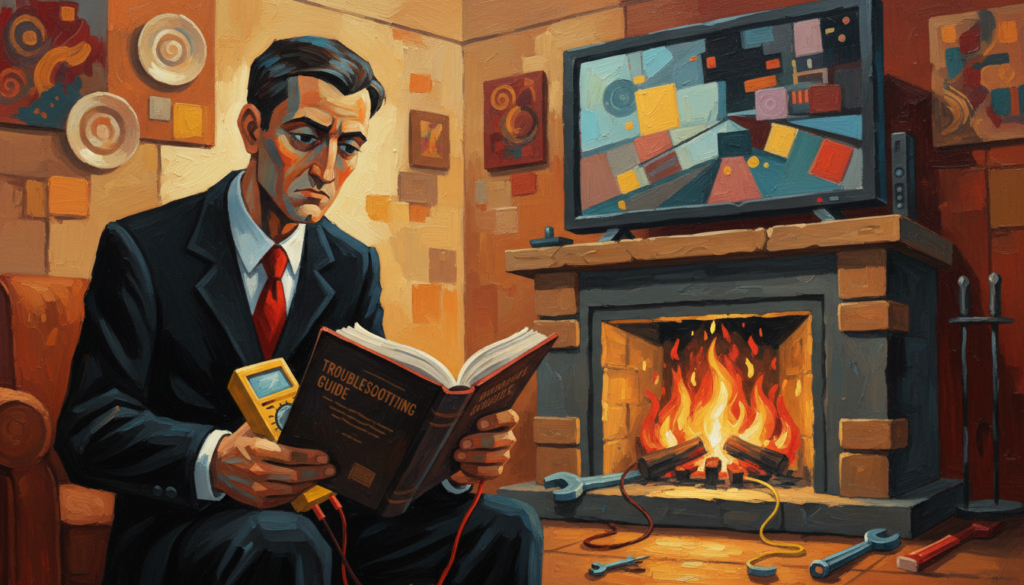
Troubleshooting Cold Air Output
If your unit blows cold air, don’t worry. First, check if you’ve picked the right heating mode. Many models, like Duraflame and Twin Star, have a mode for flame effect without heat. This can confuse many people.
Also, make sure the thermostat is set higher than the room’s current temperature. If it’s not, the heater won’t turn on.
A bad thermostat can also cause cold air. One good tip is to use a separate room thermometer to check if the built-in sensor works right.
Resolving Overheating Issues
Overheating is a safety issue. Here’s what to do:
- Make sure the unit has at least 3 inches of space on all sides for air to flow.
- Clear any objects blocking the air intake or exhaust vents.
- Look for any damage or discoloration on the heating element.
If the unit overheats after clearing blockages, the thermostat might be faulty. You’ll need to replace it.
Fixing Inconsistent Temperature Control
Temperature swings usually point to a few main problems. Here’s how to fix them:
| Symptom | Likely Cause | Quick Fix |
|---|---|---|
| Heat cycles on and off rapidly | Unit placed near a drafty window or door | Relocate away from drafts |
| Room never reaches set temperature | Thermostat set incorrectly or miscalibrated | Recalibrate or replace thermostat |
| Temperature spikes before shutting off | Faulty thermostat sensor | Replace the thermostat module |
With these tips, you can handle heating problems before moving on to other issues. Next, we’ll look at flame effect and display problems.
Repairing Flame Effect and Display Malfunctions
A fireplace TV stand without its flame effect is just a fancy shelf. I’ve seen this problem more times than I can count. The fix is often simpler than you’d think. When you troubleshoot electric fireplace stand display issues, start with the basics before panicking.
If your flame display is completely dead, check two things first. Make sure the power supply works and confirm the flame effect setting is actually turned on. It sounds obvious, but many fireplace tv stand repair jobs end with a flipped switch.
For flickering or unsteady flames, the culprit is usually a loose wire connection or a worn-out flame motor. Open the access panel and inspect every connection point. Tighten anything that wiggles. If the motor spins unevenly or makes grinding sounds, it’s time for a replacement.
Here’s a quick reference guide for common flame and display symptoms:
| Symptom | Likely Cause | Fix |
|---|---|---|
| No flame display at all | Power issue or disabled setting | Check power supply and toggle flame setting |
| Flickering or unsteady flames | Loose connection or bad motor | Secure wires or replace flame motor |
| Wrong flame color | Faulty LED bulb | Adjust light settings or swap bulbs |
| Dim or faded display | Aging LEDs or bad display panel | Replace bulbs or panel |
Flame color problems almost always point to LED lights on the fritz. Before buying replacements, cycle through the light settings on your unit. Some models from brands like Dimplex and Twin Star offer multiple color modes that might resolve the issue instantly.
A dim or faded display means your LED bulbs are aging out. This fireplace tv stand repair is straightforward — just match the bulb specs from your owner’s manual. Once you’ve tackled the display, you’ll be ready to move on to addressing any structural or physical damage your stand might have.
Addressing Structural and Physical Damage
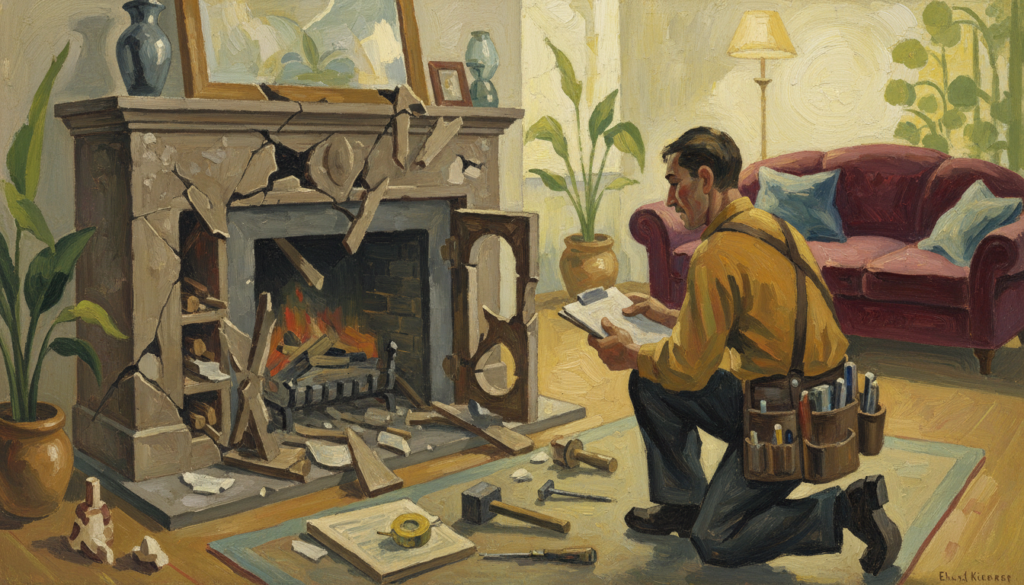
A fireplace console not working can be due to more than just electronics. Often, it’s because of physical wear and tear. I’ve seen units that look like they’ve been through a lot — scratched surfaces, wobbly frames, and doors that barely stay on. Let’s fix the physical damage first before we look at the remote and control panel issues.
Fixing Scratches and Dents
Minor scratches are simple to fix. I use a touch-up marker to cover them up. For deeper scratches, wood filler is the way to go. I apply it, let it dry, and then sand it smooth. A coat of matching paint or stain finishes the job.
Reinforcing Loose Components
Loose screws are common when fixing fireplace consoles. I start by tightening all visible screws. If a screw won’t stay, the hole is stripped. I use wood glue on a toothpick to fix it, then reinsert the screw once dry. For broken shelves or doors, wood glue and clamping overnight do the trick.
Stabilizing Wobbly Stands
A wobbly unit is a safety hazard. I use a level to check if it’s stable. Adjustable feet usually solve the problem. If not, I use shims to level it out. Adding L-shaped brackets for extra support helps too.
| Damage Type | Repair Method | Estimated Time | Difficulty Level |
|---|---|---|---|
| Minor Scratches | Touch-up marker | 5 minutes | Easy |
| Deep Scratches/Dents | Wood filler, sand, refinish | 2–4 hours (with drying) | Moderate |
| Stripped Screw Holes | Toothpick and wood glue | 30 minutes | Easy |
| Broken Shelves/Doors | Wood glue and clamping | Overnight | Moderate |
| Wobbly Frame | Shims and support brackets | 20 minutes | Easy |
Solving Remote Control and Control Panel Issues
Pressing a button and getting no response is really frustrating. When your remote or control panel stops working, it feels like your whole unit is broken. But, most of these problems are easy to fix without calling a technician.
Troubleshooting Unresponsive Controls
First, check if the unit has power. Make sure the outlet is working and the cord is plugged in well. If the panel is unresponsive, try a full reset. Unplug the unit for at least 60 seconds, then plug it back in and try again.
If the control panel doesn’t work after resets, it might need a new one. This is a common part of electric fireplace stand maintenance that many owners forget about.
Decoding Error Messages
Error codes are not random. They tell you something specific. Here’s a quick guide for common brands like Duraflame and Twin Star:
| Error Type | Likely Cause | Recommended Action |
|---|---|---|
| Overheat warning | Blocked vents or dust buildup | Clean vents and allow cooldown |
| Sensor fault | Faulty temperature sensor | Replace sensor per manual |
| General technical error | Internal circuit issue | Reset unit; contact support if persistent |
Always check your user manual for model-specific codes.
Battery and Sensor Fixes
Dead batteries are the number one reason for unresponsive remotes. Here are some tips to fix broken fireplace tv cabinet remote issues:
- Use the exact battery type specified in your manual (typically AAA or CR2025)
- Replace batteries every 6–12 months as part of electric fireplace stand maintenance
- Remove obstructions between the remote and the infrared sensor
- Stay within 10–15 feet of the unit when pairing
- Keep other infrared devices away to avoid signal interference
“A clean sensor window can mean the difference between a working remote and a fancy paperweight.”
Electrical Component Troubleshooting and Replacement
Electrical issues can be spicy in a bad way. They’re serious and can cause fires. So, pay close attention and respect electricity.
First, unplug your unit and check the wiring. Look for frayed, discolored, or melted insulation. If you see exposed wires, use electrical tape temporarily. But, it’s best to replace damaged wiring completely.
If your circuit breaker trips often, your fireplace might be on a shared circuit. This is a problem. Plug it into a dedicated circuit. Most electric fireplaces use 1,500 watts, which can overload a shared 15-amp line.
Here are signs of electrical trouble:
- Buzzing or humming sounds during use
- Flickering that’s not part of the flame effect
- A burning smell near the power cord or outlet
- Unit powers off randomly without overheating
If a part like the heating element or motor fails, check your manual for replacement parts. Brands like Dimplex and Twin Star International sell parts directly. Make sure the new parts fit your model before installing them.
When in doubt, call a licensed electrician. No tv stand fireplace troubleshooting tips article — including this one — replaces professional expertise for persistent electrical problems.
After fixing electrical issues, keep them from coming back. The next section on preventive maintenance will help you stay ahead of future problems.
Preventive Maintenance for Long-Term Performance
Maintenance is like a secret trick for the lazy. A bit of effort now saves you from big problems later. Keeping your unit in good shape is easier than fixing it when it breaks.
Regular Cleaning Routines
Always turn off and cool your unit before cleaning. Use a soft cloth and mild glass cleaner on the display. Avoid harsh chemicals to prevent damage.
“An ounce of prevention is worth a pound of cure.” — Benjamin Franklin
Dust can quietly harm your unit. I dust my stand weekly and vacuum vents monthly to prevent damage.
Component Inspection Schedules
Inspect your unit every six months. Check the heater, fan, and motor for wear. Tighten loose parts to avoid big repairs.
| Task | Frequency | Tools Needed |
|---|---|---|
| Dust exterior and vents | Weekly | Microfiber cloth |
| Clean glass display | Monthly | Mild glass cleaner, soft cloth |
| Tighten screws and bolts | Every 3 months | Screwdriver, wrench set |
| Inspect heater, fan, motor | Every 6 months | Flashlight, manufacturer manual |
| Clean electrical components | Every 6 months | Compressed air, dry cloth |
Heat Damage Prevention Strategies
Never put heat-sensitive items on your stand. Heat can warp materials and damage objects. If you see damage, sand it and apply a heat-resistant wood finish to fix it.
Conclusion
I’ve shown you how to fix electric fireplace stand issues, from power problems to wobbly legs. Most repairs are easy and don’t need a lot of knowledge. Just be patient, use the right tools, and stay safe.
Regular maintenance is key. Clean dust, check wiring, and inspect parts to avoid bigger problems later. This keeps your fireplace in top shape.
When your fireplace console stops working, don’t panic. Follow the care instructions for your model, like those from Dimplex or Walker Edison. Use coasters and placemats to protect the surface. Avoid direct sunlight and heavy items on top.
But know when to call a pro. If you face serious electrical issues, get a certified technician. Safety is more important than DIY pride. With proper care and quick action, your fireplace TV stand will keep your home cozy and stylish for years.
How do I fix a fireplace TV stand that won’t turn on at all?
Why is my electric fireplace stand blowing cold air instead of heat?
How do I troubleshoot an electric fireplace stand with no flame display?
What’s the best way to repair scratches and dents on my fireplace console?
How can I fix a wobbly or unbalanced fireplace TV cabinet?
My remote control won’t work with my electric fireplace stand — what should I do?
What do error codes on my fireplace TV stand mean?
How often should I perform maintenance on my fireplace entertainment center?
Can I use an extension cord with my fireplace TV stand?
When should I call a professional instead of trying to fix my broken fireplace TV cabinet myself?

giveitlegs@live.com
Contributing writer covering Honest reviews & buying help for fireplace TV stands and electric media consoles..